
Quick answer
A first-time homeowner should organize maintenance by frequency rather than trying to fix everything at once. Check safety devices and visible leaks monthly, service heating and cooling equipment seasonally, inspect the roof and exterior twice a year, and handle plumbing, electrical, or structural problems early. Keep a simple log, follow manufacturer instructions, and call a qualified professional when a repair involves serious risk.
Key takeaways
- Use monthly, seasonal, and annual tasks instead of relying on memory.
- Replace smoke-alarm batteries or units according to the manufacturer’s instructions, and test alarms regularly.
- Change HVAC filters based on the system and household conditions, not an arbitrary calendar alone.
- Small leaks, damaged seals, and clogged gutters are usually easier to address before they cause expensive damage.
Build a maintenance system before you need one
Home maintenance becomes manageable when every task has three details: what to inspect, how often to inspect it, and what action follows. Create a note on your phone or a paper calendar with three headings: monthly, seasonal, and annual. Add the equipment’s model numbers, filter sizes, shutoff-valve locations, and the dates of completed work.
Walk through the house once with a flashlight. Look under sinks, around toilets, near the water heater, beside the furnace, and along ceilings below bathrooms or roof valleys. You are not trying to diagnose every problem. You are creating a baseline so a new stain, drip, smell, or noise is easier to notice.
For a broad beginner reference, 100 Things Every Homeowner Must Know can be useful as a starting point for common household repairs and upkeep. Treat it as general guidance, not a replacement for local building requirements, equipment manuals, or a licensed professional.
Monthly checks that prevent common problems
Monthly maintenance should be quick enough that you will actually do it. Start with safety and water, because those problems can escalate quickly.
- Test smoke and carbon monoxide alarms. Press each test button and replace batteries or the entire unit when the manufacturer calls for it. Do not disable an alarm because it is inconvenient or sounds during cooking.
- Look for water. Check cabinet floors, supply-line connections, toilet bases, the washing-machine area, and the ceiling below bathrooms. A dry paper towel can reveal a slow drip that is difficult to see.
- Check the HVAC filter. Hold it up to the light. If it is visibly loaded with dust or the system is struggling, replace it with the correct size and type listed by the manufacturer.
- Clear obvious airflow and drainage problems. Keep supply vents and return grilles open, and remove leaves from exterior drains or window wells.
- Confirm that shutoffs are accessible. Everyone in the household should know where the main water shutoff and electrical panel are located. Never force a stuck valve.
Seasonal maintenance checklist
Seasonal work is about preparing the home for changing weather. Pick one weekend in spring and one in fall, then walk around the exterior before starting indoor projects.
| Timing | Inspect or do | Why it matters |
|---|---|---|
| Spring | Clean gutters, inspect roof edges, check exterior caulk, test the air conditioner, and look for winter damage. | Moves water away from the home and catches damage before hot weather increases cooling demand. |
| Summer | Check attic or crawl-space ventilation, inspect hoses and outdoor faucets, and watch for pests or standing water. | Helps identify moisture, heat, and plumbing issues while they are easier to reach. |
| Fall | Service heating equipment as recommended, replace worn weatherstripping, clean leaves from drains, and protect exposed pipes where appropriate. | Reduces drafts and prepares systems for colder temperatures. |
| Winter | Monitor freeze risk, keep vents clear of snow or debris, and inspect ceilings after heavy rain or snow. | Early detection limits frozen-pipe and water-intrusion damage. |
Do not climb onto a roof or use an unstable ladder simply to complete a checklist. From the ground, you can often spot missing shingles, sagging gutters, damaged flashing, or overhanging branches. Leave steep, wet, or high work to a qualified professional.
Annual inspections worth scheduling
Once a year, review the systems that are expensive, safety-sensitive, or easy to ignore. Read the manuals for your furnace, heat pump, water heater, sump pump, and major appliances. Maintenance intervals vary, so the manual is more reliable than a universal rule.
Have fuel-burning heating equipment inspected according to the manufacturer’s recommendations and local requirements. Keep combustion appliances and vents clear, and take unusual odors, soot, repeated shutdowns, or carbon monoxide alarms seriously. Leave the home and contact the appropriate emergency or service professional when there may be an immediate safety hazard.
Inspect the exterior grading around the foundation. Soil should direct water away rather than toward the house. Check that downspouts discharge far enough from the foundation for local conditions, and confirm that basement or crawl-space pumps operate safely. Look at bathroom and kitchen caulk, then repair failed seals before water reaches framing.
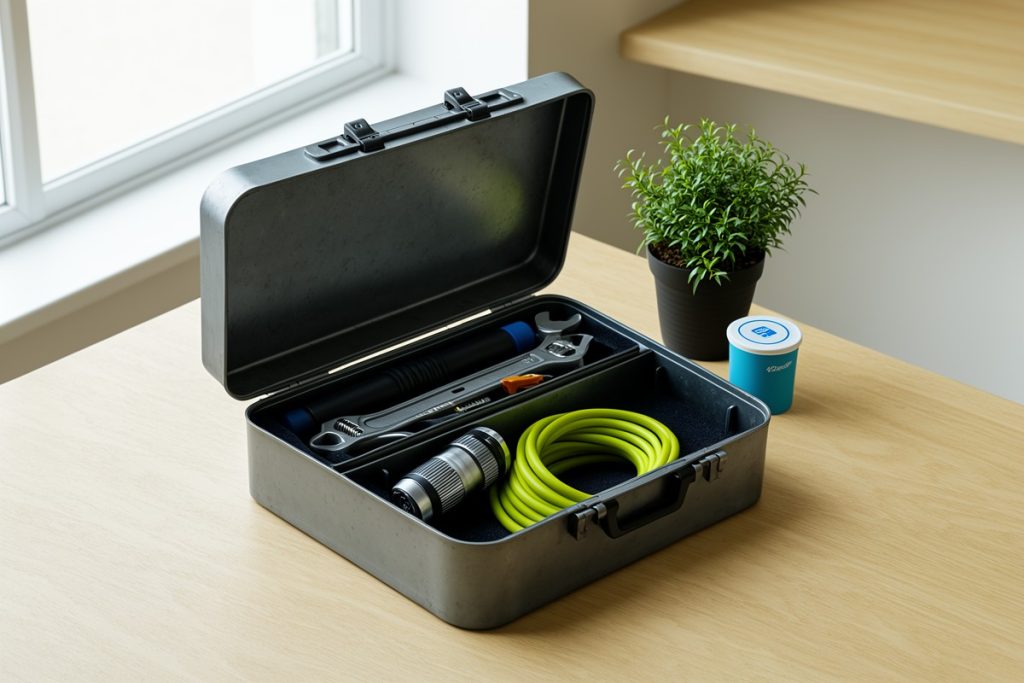
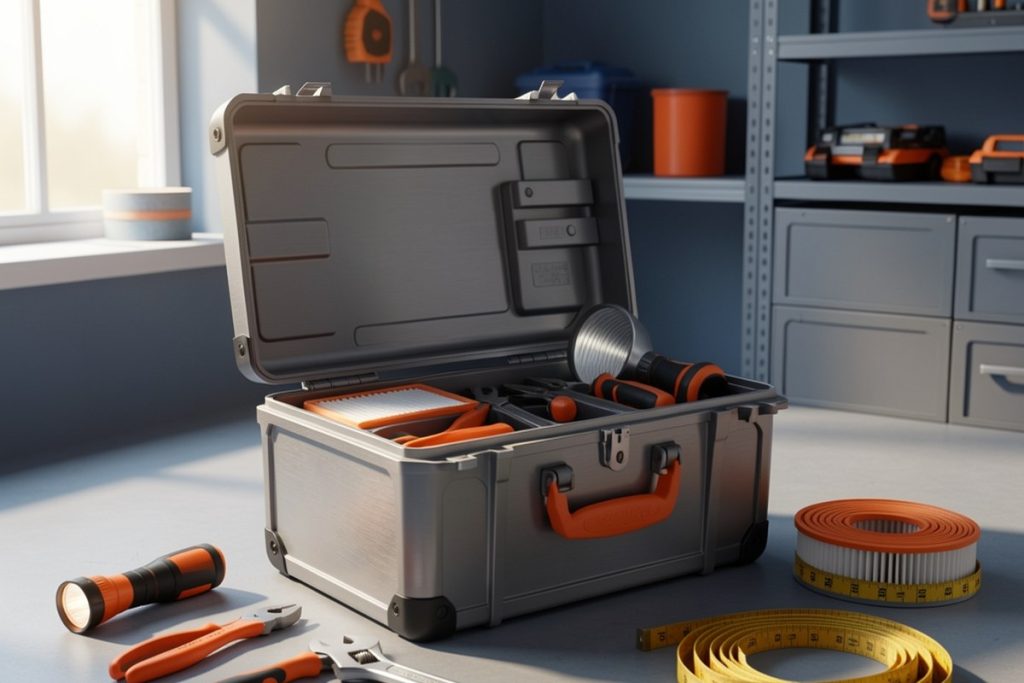
Review your emergency supplies, including a fire extinguisher, basic hand tools, spare batteries, and a shutoff plan. If you have a septic system, private well, fireplace, solar equipment, or an older electrical system, add the relevant professional inspections to your calendar instead of assuming a standard home checklist covers them.
Know which repairs to handle yourself
Simple maintenance usually involves observation, cleaning, tightening an accessible connection, replacing a filter, or following a clearly written manual. Stop when the task requires opening a sealed appliance, working inside an electrical panel, handling refrigerant, disturbing suspected asbestos or lead-based materials, entering a confined space, or working at a dangerous height.
For plumbing, know the difference between a replaceable washer or visible supply line and a hidden leak inside a wall. For electrical work, a tripped breaker may be a symptom rather than the problem. If a breaker trips repeatedly, an outlet feels hot, lights flicker, or you smell burning, stop using the affected circuit and arrange professional help.
Before hiring someone, describe the symptom rather than insisting on a diagnosis. Ask what is included, whether permits are needed, and what parts or follow-up work may be required. Keep invoices, inspection reports, paint colors, appliance manuals, and repair dates in one place.
A practical 20-minute homeowner routine
- Walk through the kitchen, bathrooms, laundry area, and basement or utility space.
- Look and listen for leaks, dripping faucets, unusual equipment noises, damp smells, or new stains.
- Press the test buttons on safety alarms and note any unit that needs attention.
- Check the HVAC filter and visible exterior drains.
- Record one issue, take a photo for your records, and decide whether it needs immediate action, a scheduled repair, or monitoring.
The goal is not a perfect house. It is a reliable feedback loop: notice changes, document them, and act before a minor defect becomes an emergency.
Last reviewed: 2026-08-24