
Quick answer
If you want faster prep for onions, fruits, and everyday vegetables, a six-in-one chopper can be practical when you value repeatable cuts and a built-in container. The Fullstar model is worth considering for small kitchens and batch cooking, but it is not a replacement for a chef’s knife, food processor, or careful mandoline technique. Check cleaning, storage, safety, and cut-size needs before buying.
Key takeaways
- A manual chopper can reduce repetitive knife work for common meal-prep ingredients.
- The six-in-one design is most useful if you regularly chop, slice, or prepare several types of produce.
- A collection container can keep cut ingredients together, but it also adds another component to clean.
- Use extra care with exposed blades, especially when slicing firm vegetables or changing inserts.
Why a vegetable chopper can make meal prep easier
The most frustrating part of cooking is often not the recipe. It is the repeated preparation: peeling an onion, slicing a cucumber, dicing vegetables for soup, and then trying to keep the cutting board from becoming overcrowded. A compact vegetable chopper addresses that specific problem by combining several cutting functions in one countertop tool.
For someone who cooks several meals at home each week, the benefit is mainly workflow. You can prepare ingredients in a container rather than moving them from a cutting board into a bowl after every step. That may be especially useful for salsa, salads, stir-fries, omelets, soups, and packed lunches.
The important qualifier is that convenience depends on your ingredients and expectations. A manual tool is most helpful for moderate quantities and ordinary kitchen tasks. It will not replace the flexibility of a good knife, the capacity of a food processor, or the speed of an electric appliance for large batches.
What the six-in-one design includes
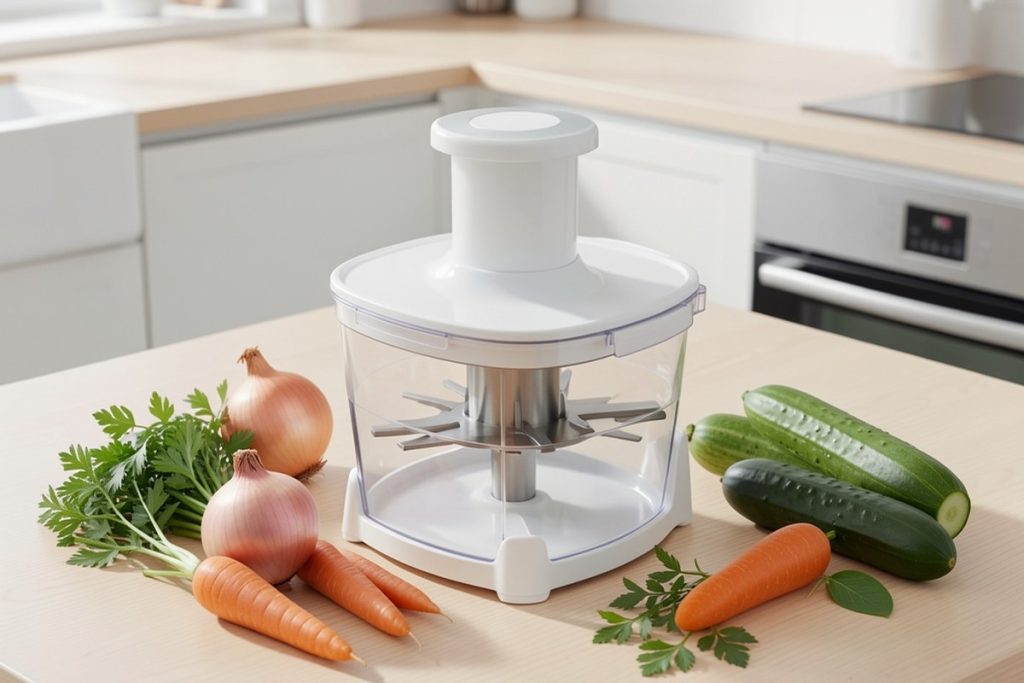
The Fullstar Pro Original Vegetable Chopper & Mandoline Slicer is listed as a six-in-one meal-prep tool with stainless-steel blades and a collection container. Its feature set is aimed at people who want more than one cutting style without buying separate gadgets for chopping, slicing, and preparing onions or fruit.
That combination makes the most sense when you actually use multiple functions. If your usual routine involves only one onion every few days, a knife may be simpler. If you frequently prep several vegetables at once, having the appropriate insert available can reduce the number of separate steps.
Because this assessment is based on the verified feature information rather than personal hands-on testing, treat the exact results as dependent on technique, ingredient firmness, and how evenly pieces are prepared before cutting. “Six-in-one” describes the tool’s versatility; it does not guarantee that every cut will suit every recipe.
How to decide whether it fits your kitchen
Before buying, focus less on the number of attachments and more on whether the tool matches your cooking habits. These questions can help:
| What to check | Why it matters |
|---|---|
| Typical ingredients | Firm vegetables and fruit may work differently from soft, watery, or irregular produce. |
| Batch size | A compact container suits everyday portions better than very large meal-prep sessions. |
| Cut sizes | Recipes requiring a particular dice or slice may still need a knife for final adjustments. |
| Storage space | Multiple inserts are useful only if you have a dry, accessible place to store them safely. |
| Cleaning routine | More parts can mean more washing, drying, and careful handling after use. |
Also consider who will use the tool. A confident adult cook may appreciate the speed and consistency of a manual cutter, while a beginner may need time to learn how much pressure to apply. Anyone with limited grip strength should check whether the required pressing motion feels manageable. If the appliance is intended for shared household use, safe storage matters as much as cutting performance.
A practical meal-prep workflow
A chopper saves the most time when you organize the work around it instead of repeatedly stopping to clean the counter. Try this simple sequence:
- Wash and dry the produce before cutting, then clear enough counter space for stable use.
- Group ingredients by recipe so onions, salad vegetables, and soup vegetables do not get mixed together.
- Cut oversized produce into pieces that fit the tool rather than forcing it through.
- Use steady pressure and pause if an ingredient jams instead of pushing harder.
- Transfer the prepared ingredients to the pan, bowl, or storage container, then disassemble and clean the tool.
Do not treat the container as long-term food storage unless the product instructions specifically say it is suitable for that purpose. Its main advantage is keeping freshly cut ingredients contained during preparation.
Blade safety and cleaning considerations
Any tool with sharp stainless-steel blades deserves the same respect as a kitchen knife. Keep fingers away from the cutting surface, use the intended pusher or protective component when available, and never reach into the blade area to clear stuck food while the insert is in place. Handle inserts by their edges or designated grips, not by the cutting surface.
For produce safety, the U.S. Department of Agriculture advises rinsing fruits and vegetables under running water and scrubbing firm produce when appropriate. The FDA also recommends washing produce before cutting or peeling it and avoiding soap or commercial produce washes. These steps matter because cutting can move surface dirt or bacteria into the interior of the food.
After use, separate removable parts according to the product instructions. Rinse away food residue promptly, pay attention to corners around the container and blade insert, and allow components to dry fully before storage. Do not assume a part is dishwasher-safe unless the manufacturer’s instructions confirm it. A tool that is difficult to clean may end up saving little time in practice.
Who should buy it—and who should skip it
This style of chopper is a reasonable fit for apartment kitchens, busy home cooks, and people preparing several simple meals each week. It can also help cooks who dislike repetitive onion or vegetable prep but still prefer a manual tool over an electric processor. The built-in container is useful when counter space is limited and you want fewer bowls in rotation.
It is less compelling for people who mostly cook one- or two-ingredient meals, need restaurant-level precision, or regularly prepare large quantities for a family. A chef’s knife remains better for trimming, mincing, and making customized cuts. A food processor is usually more practical for large batches, while a dedicated mandoline may be preferable if thin, uniform slices are your main goal.
Bottom line
The best reason to choose a six-in-one vegetable chopper is not the attachment count by itself. It is the possibility of making frequent, repetitive prep more organized and less tedious. This model has a sensible feature combination—multiple cutting functions, stainless-steel blades, and a collection container—for cooks who prepare moderate quantities of produce.
Buy it if those functions match your weekly recipes and you are comfortable with careful blade handling and post-use cleaning. Skip it if you want one tool for every kind of cutting or if your cooking volume demands an electric appliance. Used within its limits, it can be a useful meal-prep shortcut rather than another gadget left in a drawer.
Last reviewed: 2026-08-28