
Quick answer
For a small home, the most effective back-to-school reset is not a whole-house purge. Give the items that cause daily friction—bags, water bottles, toiletries, activity gear, and spare supplies—one visible destination near where they are used. An over-door organizer can add storage without using floor space, provided it fits the door and is loaded within its instructions.
Key takeaways
- Watch where clutter collects for three days before buying storage.
- Assign each seasonal category a home near its point of use.
- Use vertical storage for lightweight, frequently handled items.
- Keep heavy, breakable, and child-safety-sensitive items in more appropriate storage.
By Dash Miller, Trend Forecaster
Last reviewed: 2026-08-28
Find the back-to-school storage problem first
Back-to-school clutter rarely arrives as one dramatic mess. It builds through small handoffs: bags land beside the door, water bottles gather on the kitchen counter, hair accessories disappear into bathroom drawers, and activity supplies migrate between rooms.
That makes it tempting to buy containers immediately. A better approach is to observe the household for three ordinary days. Note what gets moved more than once, what someone asks for while everyone is rushing, and what repeatedly blocks a surface or walkway. These patterns reveal the actual storage problem.
If the same items cause the same interruption, they need a permanent home. If an item appears only once, do not design an entire organization system around it. The goal is not a picture-perfect house. It is fewer decisions during the busiest part of the morning.
Match storage to the way items are used
Organize by routine rather than by room. A useful seasonal setup follows the order in which items are handled.
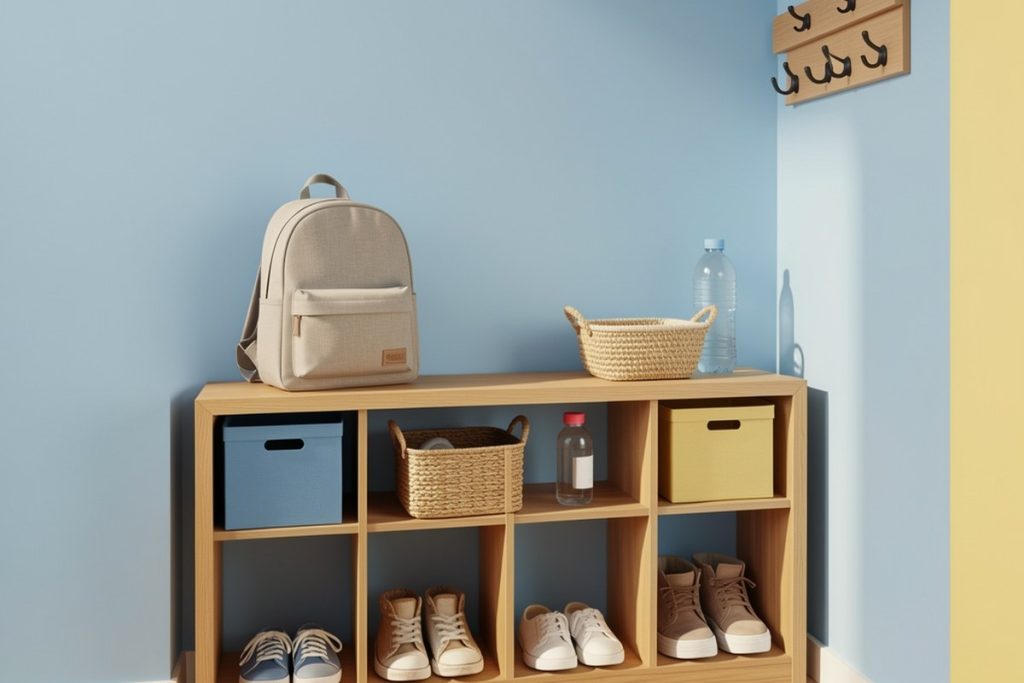
- Launch zone: Keep bags, shoes, outerwear, and anything leaving the house near the exit.
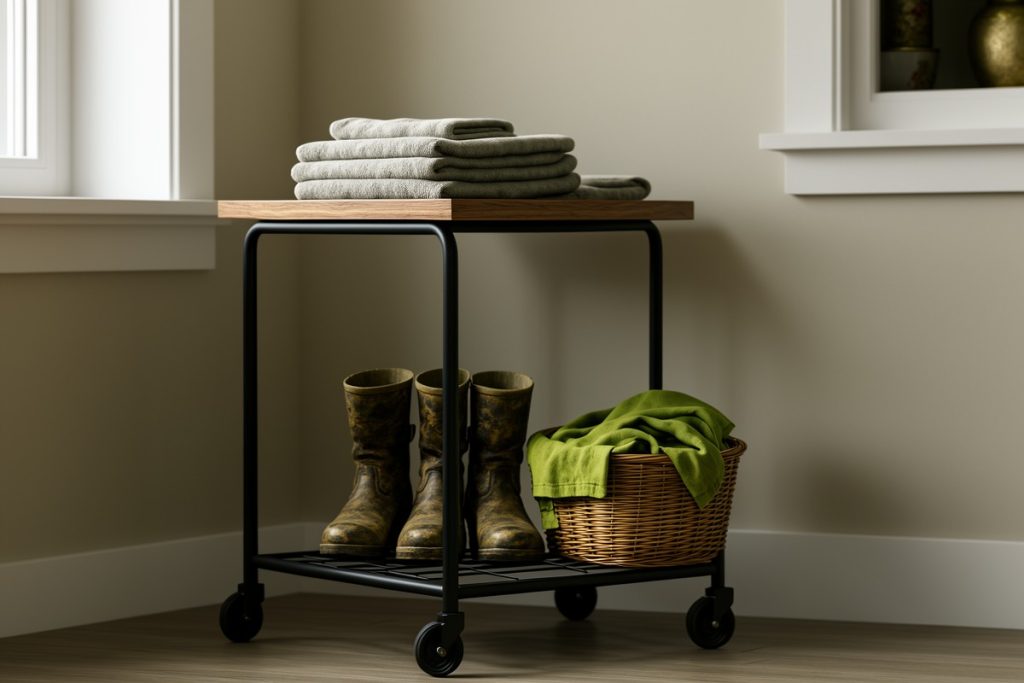
- Return zone: Give wet, dirty, empty, or rechargeable items a separate place to be cleaned and reset.
- Refill zone: Store spare toiletries, snacks, batteries, and household supplies where they can be replenished easily.
Group complete kits instead of isolated objects. A sports kit might include a bottle, small towel, and hair ties. A rainy-day kit might include an umbrella and compact jacket. The exact contents will vary, but the principle is consistent: items used together should be stored together.
For pantry and bathroom areas, use broad categories that remain understandable when someone is in a hurry, such as backup toiletries, cleaning cloths, snack supplies, or hair accessories. Avoid creating so many tiny categories that putting something away requires a decision every time.
Use vertical storage when floor space is limited
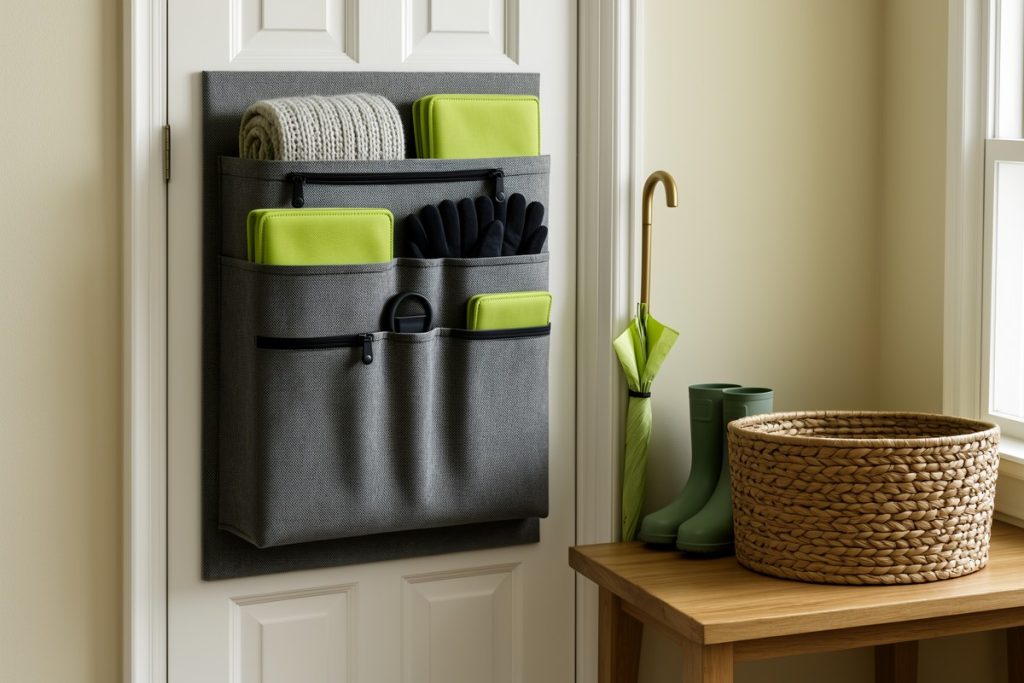
Doors are often overlooked storage surfaces, especially in smaller bedrooms, bathrooms, pantries, and nurseries. An over-door organizer can turn that unused vertical area into a compact supply station while leaving the floor available for walking, baskets, or furniture.
It works best for lightweight objects that benefit from visibility and quick access. Examples include hair accessories, rolled cloths, small stationery supplies, travel-size toiletries, craft materials, and sealed household items. It is less suitable for dense books, glass bottles, sharp objects, or anything that could swing, spill, or fall when the door moves.
One option to consider is the JARLINK Over the Door Organizer for Bedroom, Pantry, Bathroom, 5 Shelf Grey. Its listing describes five large-capacity pockets, an anti-tilt design, and a 44-pound load capacity. Those are listed specifications, not a guarantee that every door or frame can safely support the same load. Measure the door and trim, follow the product instructions, and confirm that the door closes and opens freely before filling it.
Begin with the lightest useful items in the upper pockets. Distribute the contents instead of putting everything heavy in one section, and keep heavier goods low. Check that hooks do not interfere with hinges, latches, weather stripping, or the door’s normal clearance.
Choose the right storage location
| Clutter category | Best location | What to avoid |
|---|---|---|
| Daily bags and shoes | Open storage near the exit | Deep containers that hide the next-day essentials |
| Bathroom accessories | Accessible, dry storage inside the bathroom | Overloading a door near water or heat |
| Light activity supplies | Door-level pockets near the work area | Sharp or fragile objects within easy reach of young children |
| Food and pantry items | Clean, dry storage near meal preparation | Placing food where temperature or moisture could damage it |
A storage solution should reduce friction rather than create another obstacle. If a door scrapes, cannot open fully, or causes contents to fall, move the organizer or choose another system. In a nursery or child’s room, keep small objects, cords, and potentially hazardous supplies out of reach, and follow the product’s safety guidance.
Complete a 30-minute seasonal reset
- Walk through the home and identify the three places where back-to-school clutter collects.
- Remove damaged, expired, duplicated, outgrown, or unused items.
- Group what remains by use instead of by color or container size.
- Give each group one home near the point where it is used.
- Place daily-use items at a comfortable height and occasional items higher up.
- Leave a little spare capacity in every bin, shelf, or pocket.
- Walk the main routes with a full bag or basket and remove anything narrowing an exit.
- Set a five-minute evening reset and a weekly refill time.
Do not skip the safety check. The U.S. Fire Administration recommends keeping escape routes clear and planning how household members will get out during a fire. Storage should never narrow a hallway, obstruct a door, or cover an exit. For freestanding dressers, bookcases, or other tip-prone furniture, use proper anchoring guidance; a hanging organizer is not a replacement for furniture restraint.
Make the system survive the rest of the season
The first week is a trial, not a final judgment. Look for three failure patterns: items placed beside the storage instead of inside it, categories that are too broad to search, and categories so narrow that they feel annoying to maintain.
Fix the location or category before buying more containers. If everyone drops clean towels beside the bathroom organizer, the storage may be too far from the point of use. If a pocket contains unrelated objects, split the group only when that makes retrieval easier. If an item is never used, it may not deserve prime storage space.
During a weekly review, empty anything that belongs elsewhere, wipe washable surfaces, inspect bottles for leaks, and refill only what the household actually used. For pantry supplies, consult reliable food-storage guidance rather than guessing from appearance or a single date label. Discard food that shows signs of spoilage.
A small “not sure yet” basket can prevent indecision from spreading throughout the home, but give it a deadline. At the end of the month, assign those items a home, donate them, recycle them appropriately, or dispose of them safely.
The strongest seasonal organization system is deliberately ordinary. It places the right objects where the next habit begins, leaves enough room to put them away quickly, and adapts when schedules change. Start with one bottleneck, test one zone, and expand only after the routine works.