
Quick answer
The easiest way to control muddy fall laundry is to create a short, repeatable path from the door to the washer: remove dirt outside, separate wet items immediately, air out footwear and outerwear, and wash only when a full load is ready. A narrow rolling cart can serve as a temporary staging point without turning your entryway into a permanent laundry pile.
Key takeaways
- Deal with wet and muddy clothing at the entryway instead of carrying it through the house.
- Keep boots, coats, and washable clothing in separate categories so each gets the right care.
- Air-dry damp items promptly; moisture is the main problem behind musty odors and mold growth.
- Use full, appropriately sorted loads and follow garment care labels rather than washing everything together.
Why fall laundry needs a different system
Fall creates a messy combination that summer laundry usually avoids: wet sidewalks, muddy fields, cool-weather layers, rain jackets, heavier socks, and shoes that cannot simply be tossed into a dryer. The challenge is not necessarily having more clothes. It is managing several different kinds of “dirty” at once.
A pair of jeans with dried mud needs a different first step from a damp fleece. A raincoat may need wiping rather than machine washing. Boots need ventilation and a safe place to dry. If all of these items go into one hamper, the result is often a heavy, damp pile that smells worse while waiting for laundry day.
The solution is a small entryway workflow. Think of it as a holding pattern: dirty clothing moves toward the washer, while wet gear gets time to dry and shoes stay near the door. That simple distinction keeps outdoor mess contained and makes the next load easier to plan.
Set up a three-zone fall laundry flow
You do not need a dedicated mudroom. Three clearly defined zones can work in a hallway, bathroom corner, utility room, or the space beside your washer.
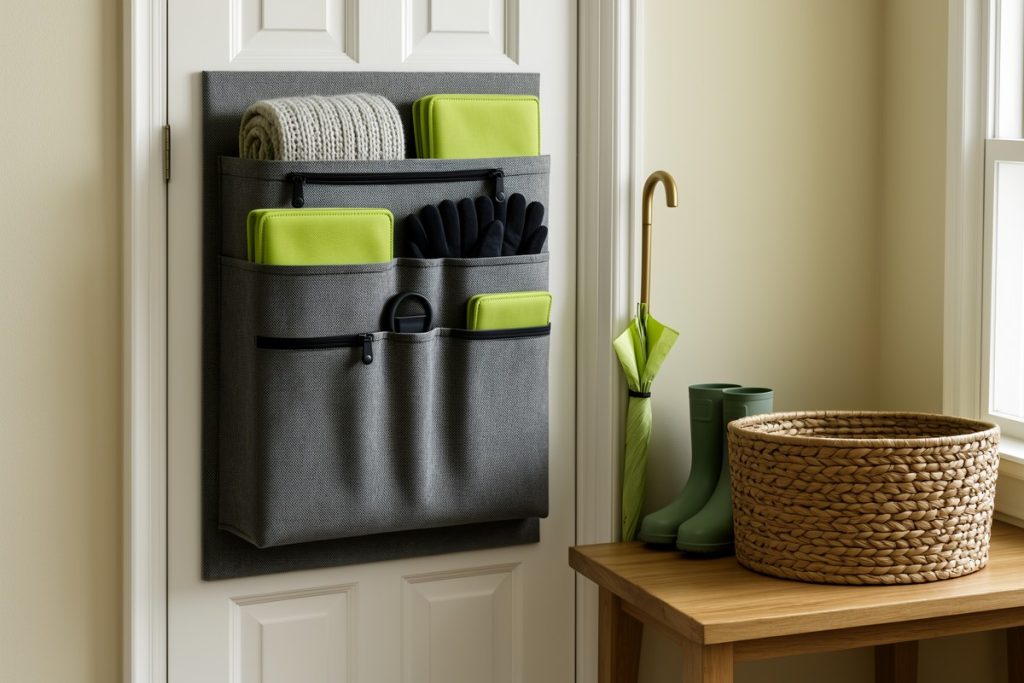
- Drop zone: This is where muddy shoes, coats, and outdoor layers arrive. Use a washable mat or tray beneath footwear to catch loose soil and water.
- Air zone: Damp items should be spread out or hung with enough space for air to circulate. Do not bury wet socks or gloves under dry laundry.
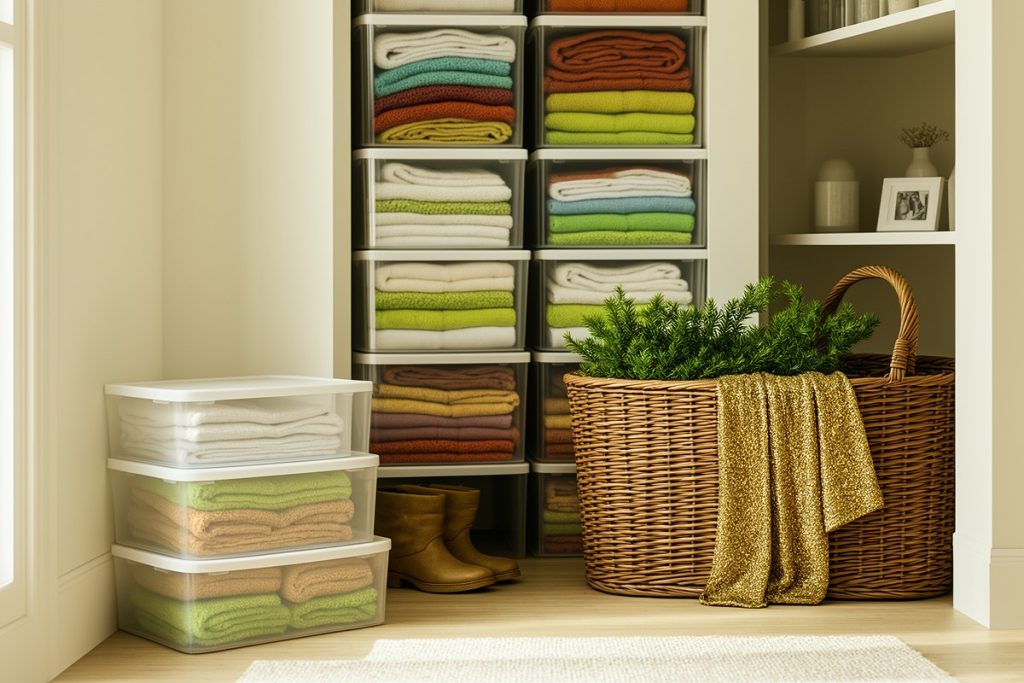
- Wash zone: Keep a hamper or basket for machine-washable clothing close to the washer. The goal is to avoid making a second pile on the floor.
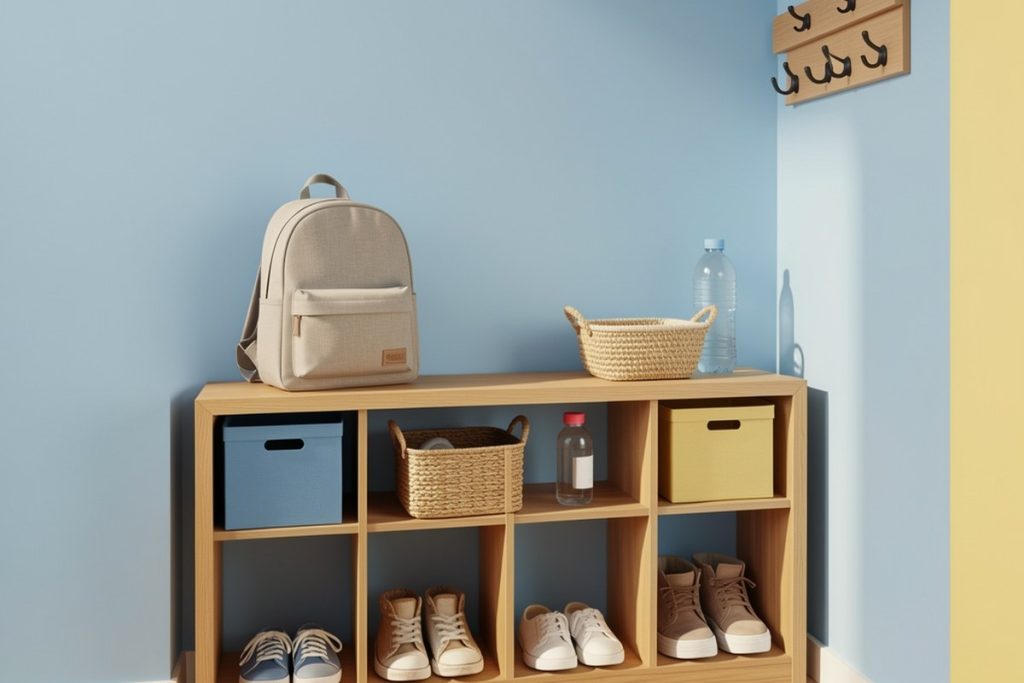
In a very narrow home, the zones can be vertical rather than wide. Hooks handle coats, a boot tray handles footwear, and one slim rolling container holds clothing waiting for a wash. Wheels are useful when the same container needs to move between an entryway and laundry area, but it should not block an exit or become a place where wet items are forgotten.
Use this order when muddy clothes come inside
A consistent order prevents small messes from becoming a full cleaning project. Start with the item most likely to spread moisture or dirt.
- Remove loose mud: Let wet soil fall onto the mat or dry first if possible, then brush or shake it off outdoors. This keeps grit out of the washer and reduces the chance of grinding dirt into fabric.
- Separate wet from merely dirty: Put damp socks, gloves, and base layers in the air zone. Place dry, muddy trousers or washable tops in the wash zone after removing loose debris.
- Check pockets and closures: Empty pockets, close zippers, and fasten hook-and-loop tabs before washing. These quick checks protect other garments and make sorting faster.
- Read the care label: Waterproof shells, wool, insulated pieces, and structured outerwear may need special cycles or hand care. Do not assume every autumn layer belongs in the regular load.
- Choose the next load: Group items by color, fabric, and care requirements. A full load is generally more efficient than repeatedly washing a few pieces, but do not overfill the machine.
What to do with wet coats, boots, and gloves
Wet gear should not be sealed in a closed hamper. The U.S. Environmental Protection Agency explains that mold grows when spores land on wet or damp areas, and it advises drying water-damaged items within 24 to 48 hours to help prevent growth. That does not mean every damp coat will develop mold, but it does make prompt drying a sensible household habit.
Hang coats with space between them rather than layering them over a chair. Open gloves so their interiors can dry. Remove insoles from washable or compatible footwear if the manufacturer permits it, and keep boots away from direct high heat unless their care instructions specifically allow it. A fan can improve air circulation, but avoid pointing strong heat at materials that may warp, shrink, or lose their protective finish.
For rainwear, begin with the care label and the manufacturer’s instructions. Some pieces only need a wipe-down, while others can be machine washed on a specific setting. Never combine wet outerwear with a hamper full of dry clothing simply because the next wash is not ready.
A compact cart can solve the staging problem
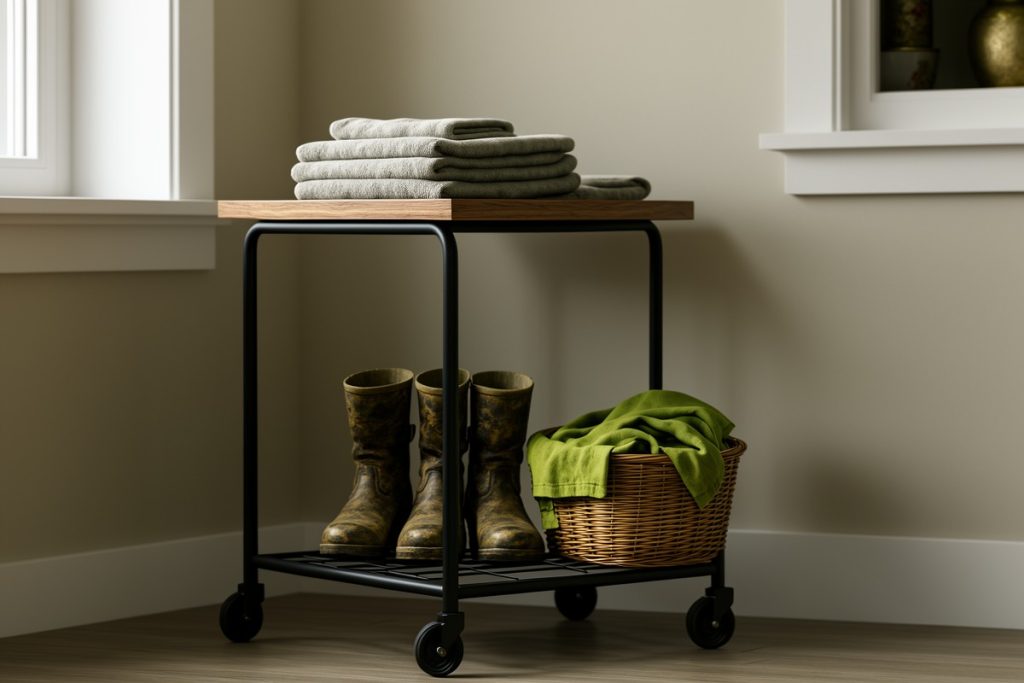
If your entryway is short on floor space, the Vivihomety 4-Tier Slim Utility Rolling Laundry Cart with Wheels is a reasonable option to consider as a movable staging station. Its listed 7.1-inch width, handle, lockable wheels, metal frame, and wood top panel suit a narrow gap beside a washer or cabinet. The tiers could separate clean towels, washable clothing, and accessories waiting to be sorted.
It is not a substitute for a ventilated drying rack, and a slim cart will not hold an unlimited amount of bulky coats or wet shoes. Treat it as a transport and sorting aid, not a place to store damp laundry indefinitely. Before buying, measure the gap, check the cart’s load guidance, and make sure the route to the washer is wide enough for safe movement. Lock the wheels when it is being used as a stationary staging point.
Make laundry day more efficient
Once muddy items are contained, the actual wash can be simpler. ENERGY STAR says certified clothes washers use about 20% less energy and 30% less water than regular washers, and its washer guidance recommends full loads, cold water when suitable, and high-spin settings when appropriate. Those recommendations are useful even if you are not replacing an appliance.
Use cold water for ordinary fall clothing when the care label allows it, reserving warmer settings for situations that specifically require them. A higher spin speed can remove more moisture before drying, which may shorten dryer time. For front-loading machines, ENERGY STAR recommends leaving the door ajar after use so trapped moisture can evaporate; keep the door open only when children and pets cannot access the drum.
Do not chase efficiency by mixing incompatible items. A smaller, correctly sorted load is better than forcing delicate wool, waterproof fabric, and muddy cotton through the same cycle. The aim is fewer repeat washes, less re-sorting, and fewer damp items abandoned in the wrong place.
Five-minute fall laundry checklist
- Shake or brush loose mud off outdoors.
- Move wet items to an airy hanging spot.
- Place boots on a washable tray, not inside the hamper.
- Check care labels, pockets, and closures.
- Start the next full load only after sorting by fabric and color.
Repeat this sequence whenever you come home from a rainy walk, sports practice, yard work, or a weekend outdoors. The routine works because it handles moisture first and washing second. That keeps the seasonal mess near the door, where it is easier to see and easier to control.
Last reviewed: 2026-08-31
Sources
- Mold and Health — U.S. Environmental Protection Agency
- Clothes Washers — ENERGY STAR