
Quick answer
An essential oil diffuser can make a bedtime routine feel more intentional by adding a familiar scent and gentle ambient light. It is not a treatment for insomnia, and research on aromatherapy benefits is still limited. Use a diffuser as one calming cue alongside dim lights, a regular schedule, and screen-free time—not as a substitute for healthy sleep habits or medical care.
Key takeaways
- Use a diffuser to create a consistent wind-down cue, not to force sleep.
- Choose one mild scent and stop using it if you develop irritation, headache, coughing, or nausea.
- Keep indoor humidity around 30–50% when using a humidifying device.
- Clean the water reservoir regularly and follow the manufacturer’s instructions.
By Luna Reyes, Mindful Wellness Guide
What an essential oil diffuser can realistically do
Evening routines work partly because repetition teaches your brain what comes next. Turning down the lights, putting your phone away, and using the same gentle scent each night can become a recognizable transition from activity to rest. A diffuser may support that transition by changing the atmosphere of a room, but the effect is best understood as a behavioral cue rather than a guaranteed sleep aid.
The National Center for Complementary and Integrative Health notes that aromatherapy uses essential oils through inhalation or topical application, while research findings vary by oil, method, and condition. That means it is sensible to keep expectations modest. A pleasant smell may help you feel more settled, but it cannot correct an inconsistent sleep schedule, untreated pain, medication side effects, or a sleep disorder.
A simple 15-minute diffuser bedtime routine
Start about 15 minutes before you want to get into bed. The goal is to make the routine easy enough to repeat, even on a busy evening.
- Reset the room. Put away the most obvious visual clutter, lower the lights, and set your phone to silent or leave it outside the bedroom.
- Prepare the diffuser carefully. Add fresh water to the marked fill line. If the device is intended for essential oils, use only the amount and type recommended in its instructions.
- Choose one familiar scent. A mild, consistent scent is more useful for habit-building than changing oils every night. There is no universally best oil for sleep.
- Pair scent with a quiet activity. Try gentle stretching, reading a paper book, breathing slowly, or writing down tomorrow’s first task.
- End the session. Use a timer if available, or switch the device off before sleep if that feels safer for your room and household.
If scent feels distracting, skip the oil and use the diffuser only as a humidifying device when appropriate. A calming routine should reduce stimulation, not add another thing to monitor.
Match the setup to your actual goal
| Your goal | Useful approach | What to watch |
|---|---|---|
| Create a wind-down cue | Use the same mild scent for a short, timed session | Stop if the aroma feels overpowering |
| Relieve a dry-room feeling | Check room humidity before adding moisture | Excess humidity can encourage mold and dust mites |
| Make the bedroom feel calmer | Dim lights, reduce noise, and keep surfaces simple | Bright LED colors may disturb some sleepers |
| Address persistent poor sleep | Track symptoms and discuss them with a clinician | A diffuser should not delay medical advice |
Choosing a diffuser without overbuying
For a bedroom routine, focus on practical controls rather than dramatic promises. A timer can prevent the device from running longer than intended. Adjustable mist settings let you use less output in a small room. A reservoir that is easy to empty and clean matters more than decorative lighting, because standing water and residue can become a maintenance problem.
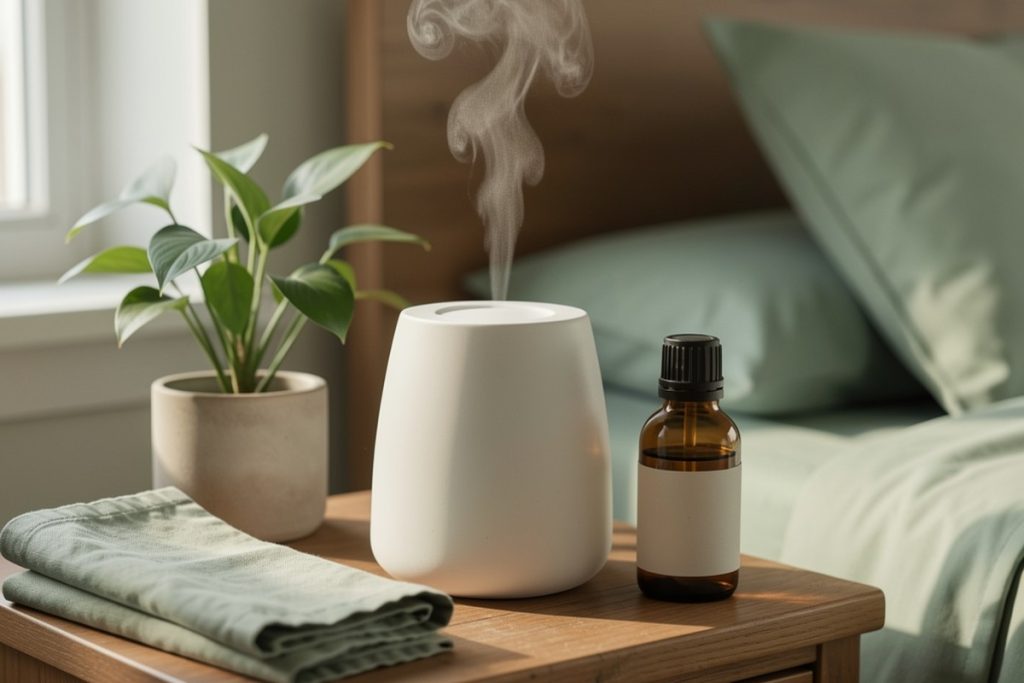
One option in this category is the HealthSmart 500ML Essential Oil Diffuser for Large Rooms, Cool Mist Humidifier and Aromatherapy Diffuser, Adjustable Timer, Mist Mode and 7 LED Light Colors, White (Pack of 1). Its listed features include adjustable timing, mist modes, and seven LED light colors. Those controls may suit someone who wants flexibility, but the “large rooms” wording should not be treated as proof that it will humidify every large space effectively. Room size, ventilation, climate, and placement all matter.
Before buying, measure the space, decide whether you truly need added humidity, and check whether the device’s cleaning requirements fit your routine. If you are sensitive to fragrance, a plain humidifier—or no device at all—may be the better choice.
Essential oil diffuser safety basics
Essential oils are concentrated substances, so “natural” does not automatically mean harmless. Do not ingest them, apply them directly to skin unless properly diluted and appropriate for that use, or assume that a scent safe for one person is safe for everyone. Ventilate the room if the aroma becomes strong, and stop using the oil if you notice breathing discomfort, skin irritation, dizziness, headache, or nausea.
Take extra care around children, pregnant people, anyone with asthma or fragrance sensitivity, and pets. The ASPCA advises caution with essential oils around animals because exposure can cause harm depending on the oil, concentration, and route of exposure. Keep oils secured, avoid letting pets access spilled liquid, and ask a veterinarian about specific risks before diffusing around an animal.
Moisture requires its own precautions. The Environmental Protection Agency recommends keeping indoor relative humidity between 30% and 50% and cleaning portable humidifiers according to the manufacturer’s directions. Empty leftover water, wipe the reservoir, and allow components to dry as instructed. If you see condensation on windows or damp patches near the device, reduce use and improve ventilation.
Bedtime diffuser checklist
- Check the room humidity if the device adds moisture.
- Use fresh water and never exceed the fill line.
- Follow the device manual for essential oil compatibility and dosage.
- Place the diffuser on a stable, water-resistant surface away from bedding.
- Use a timer or switch it off before sleeping.
- Clean and dry the reservoir on the schedule recommended by the manufacturer.
- Stop immediately if anyone in the room feels unwell.
When to look beyond aromatherapy
If you regularly need more than 30 minutes to fall asleep, wake repeatedly, snore loudly, gasp during sleep, or feel exhausted during the day, a diffuser is unlikely to address the underlying issue. Keep a brief sleep record and speak with a healthcare professional. Persistent sleep difficulties can have many causes, and identifying the cause is more useful than continually adding products to the bedroom.
The most effective diffuser routine is therefore a small, repeatable ritual: low light, a comfortable room, limited stimulation, and a scent you genuinely enjoy. Use the device only when it makes that routine easier. If it creates maintenance, irritation, or worry, leave it out.
Last reviewed: 2026-08-31