
Quick answer
Essential oils can be used in some humidifiers, but only when the manufacturer explicitly permits them; many humidifiers are designed for water alone. Check the manual, use the product’s recommended amount, ventilate the room, and never treat scented mist as a cure for congestion. Clean the humidifier carefully, keep oils away from children and pets, and stop if irritation occurs.
Key takeaways
- Read the humidifier manual before adding any essential oil.
- Use a separate diffuser when your humidifier is designed for water only.
- Keep indoor humidity at or below 50 percent and prevent damp surfaces.
- Essential oils are fragrances, not proven treatments for colds, allergies, or respiratory conditions.
Why humidifiers and diffusers are not interchangeable
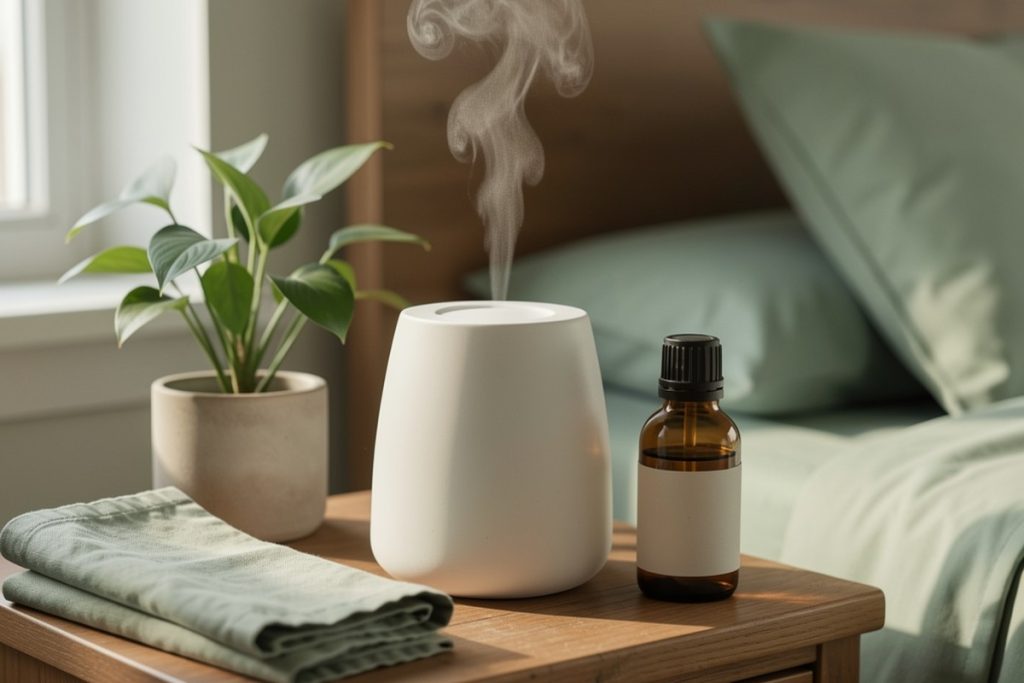
A humidifier adds moisture to indoor air. A diffuser is designed to disperse fragrance, usually from a small quantity of essential oil mixed with water or carried by another system. Although some products combine both functions, many humidifiers are built only for water. Adding oil to the wrong reservoir can damage internal parts, leave an oily film, interfere with filters, or cause residue to disperse into the air.
The safest starting point is simple: find the model’s manual and look for instructions about essential oils, aroma trays, or compatible additives. If the manufacturer says to use only water, follow that direction. Do not assume that a removable aroma pad or a product marketed as “cool mist” means oil can go directly into the tank.
This distinction also helps set realistic expectations. Moisture may make dry air feel more comfortable, while fragrance can make a room feel calming or refreshing. Neither automatically treats a cough, cold, sinus problem, asthma, or allergy. If breathing symptoms are persistent, severe, or appear to worsen around a device, stop using it and seek appropriate medical advice.
How to use essential oils more carefully
- Confirm compatibility. Check the manual or manufacturer’s support information. Use only the compartment, pad, or reservoir specifically intended for fragrance.
- Follow the product directions. More oil is not better. Start with the smallest amount recommended for the device and the blend, especially in a bedroom or other small room.
- Keep the room comfortable, not damp. Use a hygrometer if necessary. The U.S. Environmental Protection Agency advises against raising indoor relative humidity above 50 percent because excess moisture can encourage mold and dust mites.
- Provide airflow. Avoid running a scented device in a tightly closed room for long periods. Stop if the aroma causes headache, throat irritation, coughing, wheezing, or skin symptoms.
- Store the bottle securely. Essential oils should remain out of the sight and reach of children and pets. Never swallow them or apply an undiluted oil to skin unless the product directions specifically support that use.
Where a eucalyptus blend may fit
If you want a noticeable botanical scent during a quiet evening routine, a blend intended for compatible humidifiers or diffusers can be more practical than improvising with a pure oil. The listing for Breathe Essential Oil Blend 30 ml – Eucalyptus, Menthol for Humidifiers | Breathe Easy Aromatherapy Blend with Eucalyptus, Peppermint, Rosemary and Niaouli Oils for Diffusers – Nexon Botanics describes it as a eucalyptus, peppermint, rosemary, and niaouli blend for humidifiers and diffusers.
That description explains where it may fit, but it does not establish that the blend treats congestion or improves breathing. Consider it a fragrance option, not a medicine. Its mentholated, herbaceous scent may feel refreshing to some people and too intense for others. If you are sensitive to strong fragrances, begin briefly and at a low amount, following the device and product directions.
Do not use the blend in a humidifier that prohibits oils, and do not pour it into a water tank simply because the label mentions humidifiers. The device’s instructions determine the correct application method. A dedicated diffuser may be the better choice when the main goal is scent rather than added humidity.
Cleaning matters as much as the oil
Standing water can support the growth of microorganisms, and some ultrasonic or impeller humidifiers can disperse minerals from tap water into indoor air. The EPA recommends emptying portable humidifier tanks daily, wiping surfaces dry, and cleaning portable units every third day. It also recommends using water with low mineral content, such as distilled water, to reduce mineral buildup.
Follow the manufacturer’s cleaning instructions and unplug the unit before handling it. If a cleaning agent is used, rinse the tank thoroughly so residue is not released during operation. Never mix essential oil with a cleaning solution, and do not rely on fragrance to cover a stale or musty smell. That odor is a reason to stop, clean the unit, and inspect it for buildup or damaged parts.
Watch the area around the device while it runs. Condensation on windows, damp carpeting, wet furniture, or a persistently humid room indicates that the output or operating time should be reduced. A clean, correctly adjusted device is more useful than one running continuously.
A short safety checklist
- ☐ The manual permits essential oils or provides an aroma compartment.
- ☐ The oil is being used only in the intended compartment or method.
- ☐ The room has reasonable ventilation and stays at or below 50 percent humidity.
- ☐ The tank is emptied daily and cleaned on the recommended schedule.
- ☐ The bottle and device are inaccessible to children and pets.
- ☐ You will stop immediately if the scent causes irritation or breathing discomfort.
When to skip essential oils altogether
Skip scented mist if anyone in the home reacts poorly to fragrances, or if the device is being used around a baby, a person with a respiratory condition, or an animal that may be sensitive to airborne oils. Extra caution is also sensible when someone takes medication or has a history of allergic reactions. Essential oils are concentrated substances: Poison Control notes that misuse can cause poisoning, skin reactions, and serious effects if swallowed.
Never use an essential oil as a substitute for prescribed treatment or urgent care. If someone swallows an oil, contact Poison Control in the United States at 1-800-222-1222 or use its online guidance. For a daily wellness routine, the lower-risk choice may simply be clean humidity, fresh air, and a scent-free room.
Last reviewed: 2026-09-25