
Quick answer
You can build an effective, sustainable home workout with resistance bands by training all major movement patterns two or three times weekly, starting with controlled sets and progressing one variable at a time. Choose resistance that leaves roughly two good repetitions in reserve, keep sessions short enough to repeat, and stop for sharp pain. Secure anchoring and regular band inspection also matter.
Key takeaways
- Train your legs, hips, pushing muscles, pulling muscles, and core rather than repeating one exercise.
- Start with two full-body sessions weekly and add volume only when recovery is reliable.
- Progress through more repetitions, greater tension, slower lowering, or increased range of motion.
- Inspect bands before use and avoid improvised anchors that could release unexpectedly.
By Coach Amy Lin, Sustainable Fitness Coach
Why resistance bands work for a sustainable home routine
The best workout is one you can repeat consistently. Resistance bands take up little space, require minimal setup, and can support strength work in a living room, bedroom, or travel bag. They also allow you to adjust difficulty without buying a full rack of weights.
For general health, the U.S. physical activity guidelines recommend muscle-strengthening activity on at least two days each week, alongside regular aerobic movement. The guidelines do not require a particular piece of equipment. Bands can be a practical way to meet the strengthening portion when they challenge your muscles through a controlled range of motion.
They are not automatically easier than weights. Band tension usually increases as the band stretches, so an exercise may feel most difficult near the end of the movement. That can be useful, but it also means you should avoid rushing through repetitions or letting the band snap back.
Build the workout around five movement patterns
A sustainable routine does not need a long list of exercises. Cover these patterns and choose one movement for each:
- Squat: Use a bodyweight squat first, then add a band under your feet and held securely near shoulder level when you need more challenge.
- Hinge: Practice a banded hip hinge or deadlift by pushing your hips back while keeping your spine controlled.
- Push: Use a banded overhead press. A chest press is another option only when the band is attached to a solid, purpose-built anchor.
- Pull: Perform a row with the band around your feet or attached at a stable point near torso height.
- Core and lateral movement: Add a Pallof press with a secure anchor or lateral band walks for hip stability.
For beginners, one or two sets of eight to twelve controlled repetitions is enough to learn the movements. Leave roughly two repetitions in reserve, meaning you could complete two more good repetitions if necessary. As your technique improves, use two or three sets.
Progress without making every workout harder
Progressive overload means gradually asking your muscles to do more work. It does not mean turning every session into a test. Change one variable at a time so you can tell what is helping and recover well.
| Progress option | What to change | When to use it |
|---|---|---|
| More repetitions | Add one or two clean reps per set. | When your current range feels comfortable. |
| More tension | Use a stronger band or shorten the working length slightly. | When you can exceed your target reps with good form. |
| More control | Lower the band slowly for two or three seconds. | When heavier resistance is not available. |
| More range | Move farther through a comfortable, pain-free range. | When technique remains stable from start to finish. |
Keep a simple record of the band used, repetitions completed, and how difficult the final set felt. If your form changes substantially, the resistance is probably too high. Resting at least a day between challenging full-body sessions works well for many people, but soreness, sleep, stress, and other training should guide your schedule.
A repeatable 25-minute resistance band workout
Start with four minutes of easy movement: march in place, perform slow bodyweight squats, practice hip hinges, and make controlled arm circles. Then complete two rounds of the following exercises:
- Band squat: 8–12 repetitions
- Band row: 8–12 repetitions
- Band hip hinge: 8–12 repetitions
- Overhead press: 8–12 repetitions
- Lateral band walk: 10–15 steps in each direction
Rest for about 45–75 seconds between exercises when needed. Beginners can stop after one round, while experienced trainees can complete three rounds if their form and recovery remain strong. Finish with a few minutes of easy walking and relaxed breathing rather than forcing an aggressive stretch.
Schedule the workout on two nonconsecutive days, such as Tuesday and Friday. If you also run, cycle, play sports, or perform demanding physical work, begin with less volume and increase gradually.
Safety checklist for band training
- Inspect the band for cuts, cracks, thinning, sticky areas, or unusual stiffness before each session.
- Keep bands away from sharp edges, excessive heat, and rough surfaces that could damage the material.
- Use only a stable anchor designed for exercise, and test it with gentle tension before committing to a full repetition.
- Keep the band’s return path clear and control both directions of every movement.
- Stop if you feel sharp pain, numbness, tingling, or pain in a joint rather than ordinary muscular effort.
If you have a recent injury, a condition affected by exercise, or uncertainty about a movement, ask a qualified healthcare professional for individual guidance.
When a band set is the right choice
Resistance bands suit people who want portable equipment, simple home sessions, and several ways to adjust difficulty. They are less suitable if your main goal requires precise load tracking, heavy maximal lifting, or a setup that your space cannot safely support.
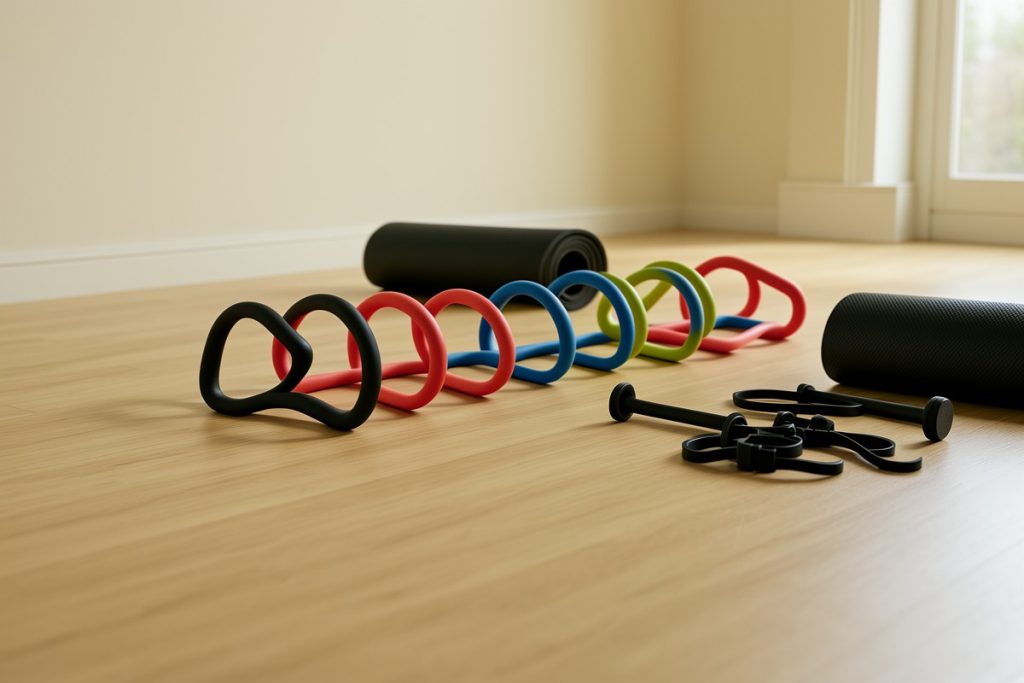
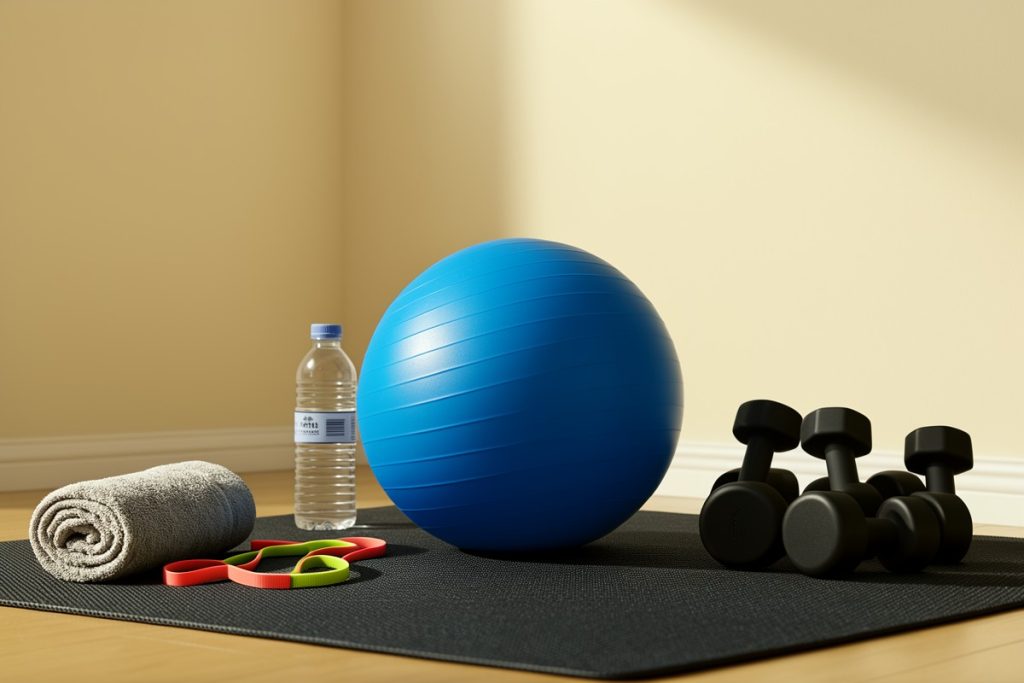
For someone seeking multiple resistance options at home, Resistance Bands for Working Out, 5-Level Elastic Exercise Bands | Pull Up Assistance Bands Set for Men & Women, Stretch Bands for Exercise, Home Workouts, Fitness, Training & Physical Therapy may be worth considering because the listing describes five resistance levels and pull-up assistance use. Check the listing for the exact band style, included accessories, and resistance specifications before buying. A set like this can expand exercise choices, but it does not replace safe technique, progressive programming, or a secure training area.
Last reviewed: 2026-09-21
Sources
- Physical Activity Guidelines for Americans, 2nd edition — U.S. Department of Health and Human Services
- WHO Guidelines on Physical Activity and Sedentary Behaviour — World Health Organization
- Progression Models in Resistance Training for Healthy Adults — American College of Sports Medicine position stand