Quick answer
A sustainable home strength routine needs to be simple enough to repeat, challenging enough to progress, and flexible enough for busy weeks. Start with two or three full-body sessions, use a few dependable movement patterns, and increase repetitions or resistance gradually. An adjustable bench can expand your exercise options, but consistency, recovery, and safe setup matter more than owning a large amount of equipment.
Key takeaways
- Begin with two full-body strength sessions per week and add a third only when recovery is reliable.
- Build each workout around a squat, hinge, push, pull, and core movement.
- Progress by adding a repetition before adding weight, especially when training alone.
- Choose equipment that fits your space, budget, experience, and willingness to use it regularly.
Start with a routine you can repeat
The best home strength plan is not the most ambitious one. It is the one you can still complete when work runs late, motivation dips, or your schedule changes. For most beginners, two full-body workouts per week are a practical starting point. Leave at least one rest day between them, such as training on Tuesday and Friday.
Each session can take 30 to 45 minutes. Begin with five minutes of easy movement, then complete four or five exercises. Perform one or two comfortable sets at first, stopping with a few controlled repetitions still available. Your goal is to practice technique and finish feeling capable, not exhausted.
Public health guidance recommends muscle-strengthening activity on at least two days each week, alongside regular aerobic activity. That does not mean every workout needs to be intense. A moderate routine performed consistently can provide a stronger foundation than occasional sessions that leave you too sore to continue.
Use five movement patterns to cover your whole body
You do not need a complicated split routine to train effectively at home. Choose one exercise from each of these movement patterns. If a movement causes sharp pain, stop and select an easier variation or seek advice from a qualified health professional.
| Movement pattern | Beginner-friendly options | Simple progression |
|---|---|---|
| Squat | Chair squat, goblet squat | Add repetitions, then light resistance |
| Hinge | Hip hinge drill, Romanian deadlift | Improve range and control before load |
| Push | Incline push-up, dumbbell press | Lower the incline or add small weight |
| Pull | Resistance-band row, supported row | Add repetitions while keeping shoulders controlled |
| Core | Dead bug, side plank | Increase time or repetitions gradually |
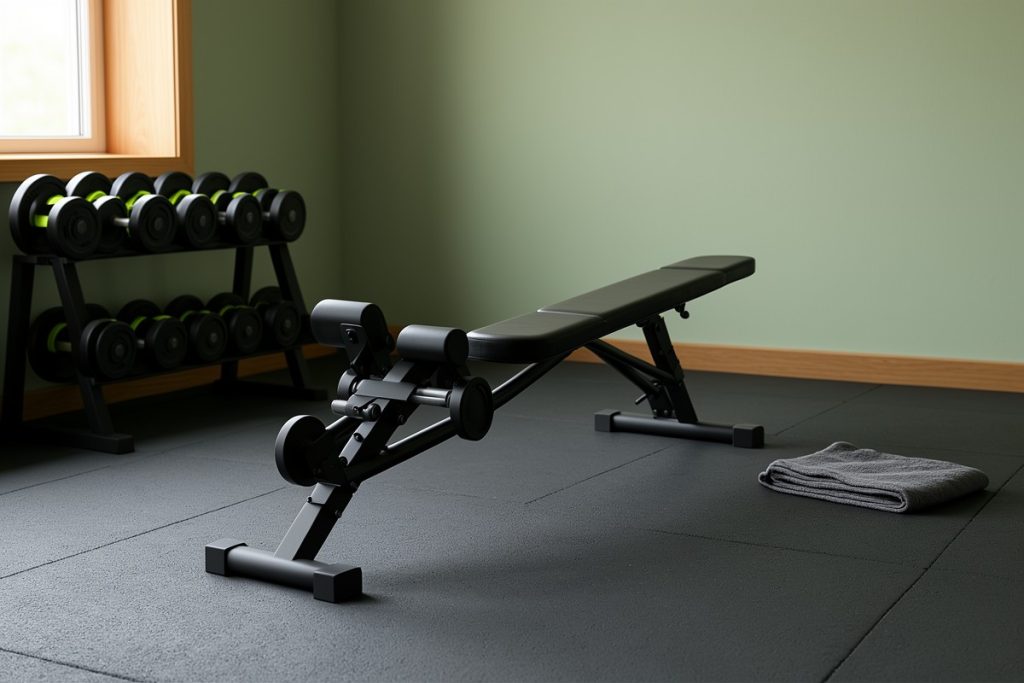
A bench can make several of these patterns easier to organize. It can support a dumbbell press, provide a stable surface for a supported row, and offer a target for controlled squats. The bench itself is not the program; it is a tool that can reduce setup friction and give you more exercise choices.
Progress without turning every workout into a test
Progressive overload means gradually asking your muscles to do a little more work. “More” might mean an extra repetition, another set, a slightly heavier load, a slower lowering phase, or a larger range of motion. You do not need to increase everything at once.
Try a repetition range such as 8 to 12 for many strength exercises. When you can complete all your sets at the top of that range with steady form, increase the resistance by the smallest practical amount and return to the lower end of the range. For bodyweight exercises, you might move from a higher incline to a lower one or add a pause.
Keep a brief training log with the exercise, resistance, repetitions, and how it felt. A note such as “two sets of 10, controlled, moderate effort” is enough. This prevents guesswork and helps you notice progress that is easy to miss when you focus only on appearance or the number on the scale.
Make home equipment earn its place
Before buying a bench or barbell setup, measure the training area. Check the ceiling height, floor surface, storage space, and the amount of room needed to lift and move safely. Equipment that has to be dragged out of a closet every time may become a barrier, even if it offers many exercise options.
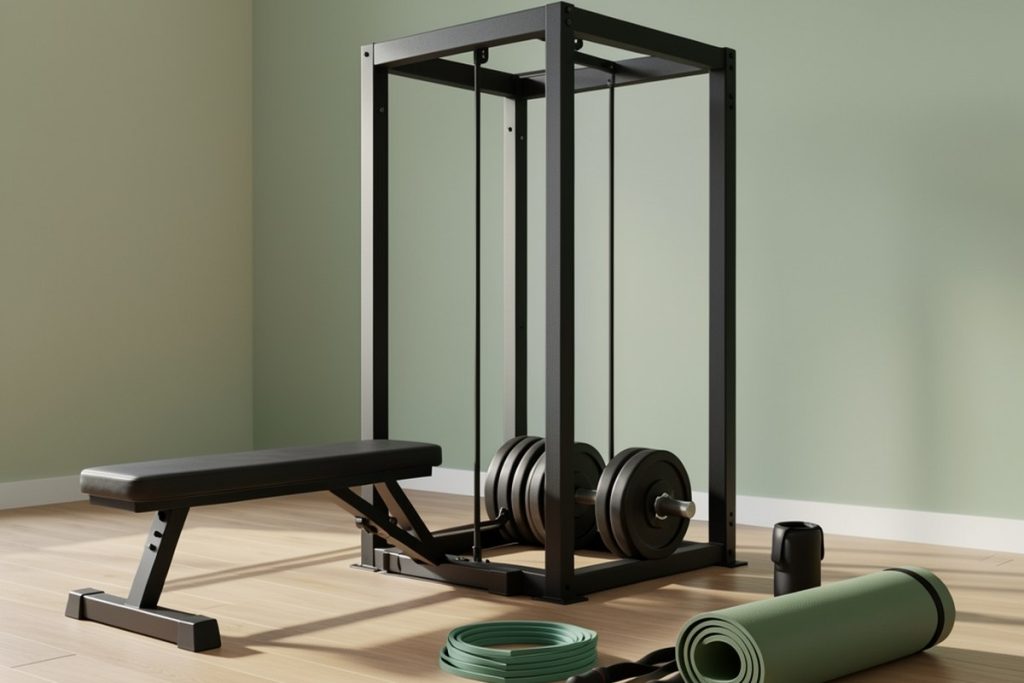
The Weight Bench Set with adjustable bench, leg extension, barbell rack, safety bar catches, and foldable design may suit someone who wants a more structured home strength station rather than separate pieces of equipment. Those listed features could support exercises such as bench presses, supported rows, and leg extensions. Before purchasing, confirm the current dimensions, included bar and plates, adjustment positions, assembly requirements, warranty, and return terms. A high stated capacity does not replace careful setup, appropriate technique, or checking that the equipment fits your space.
If you are new to barbell training, start with an empty bar or a light load and practice the movement pattern. Train with safety catches positioned correctly, keep the floor clear, and avoid testing a maximum lift alone. A simpler set of resistance bands or adjustable dumbbells may be a better choice if your main goal is quick, low-friction workouts.
Use a flexible weekly plan
A sustainable schedule should have a default version and a backup version. Here is a simple example:
- Session A: squat variation, dumbbell or barbell press, row, hip hinge, and dead bug.
- Session B: split squat or step-up, overhead press, supported row, glute bridge, and side plank.
- Optional Session C: repeat the easier session or perform a short circuit using lighter resistance.
Complete two or three sets of each exercise, resting long enough to regain control of your breathing and technique. If you have only 15 minutes, perform one set of three movements and stop. That shortened session still protects the habit. On a low-energy day, reduce the weight, repetitions, or number of exercises rather than abandoning the week entirely.
Protect recovery and make the habit last
Muscles adapt during recovery, not only during training. Aim for regular sleep, eat enough to support your activity, and leave time between demanding sessions for the same muscle groups. A short walk, gentle mobility work, or ordinary daily movement can complement strength training without adding another punishing workout.
Use a quick pre-session checklist:
- Is the floor dry, stable, and clear of trip hazards?
- Are the bench, bar, and catches adjusted for the exercise?
- Can you complete the first set with controlled breathing and steady form?
- Do you have a lighter option if the planned resistance feels wrong today?
- Have you scheduled a rest day before the next challenging session?
Stop and reassess if you feel chest pain, faintness, unusual shortness of breath, or sudden severe pain. People with a medical condition, recent injury, or long break from exercise should ask a qualified clinician how to resume safely. Sustainable fitness is not about proving how much discomfort you can tolerate. It is about building enough confidence and structure to keep showing up.
Last reviewed: 2026-11-23
Sources
- Physical Activity Guidelines for Americans, 2nd edition — U.S. Department of Health and Human Services
- WHO Guidelines on Physical Activity and Sedentary Behaviour — World Health Organization
- Adult Activity: An Overview — Centers for Disease Control and Prevention