
If you are shopping for backup power, you have probably seen solar generators advertising built-in panels. The pitch sounds perfect: one device that generates and stores its own power with no extra pieces to buy or compatibility charts to study. But is a solar generator with built-in panels actually worth the money, or are you better off sticking with the traditional route of buying a separate power station and external panels?
The short answer is that it depends on how you plan to use it. Built-in panels add convenience and cut down on setup time, but they also limit flexibility and usually charge the battery more slowly than modular systems. For casual campers, apartment preppers, and anyone who wants a true grab-and-go emergency kit, an integrated unit can be a smart, practical buy. If you need maximum solar input, want to tilt panels toward the sun all day, or plan to expand your system later, a modular setup is usually the better long-term investment.
What “Built-In Solar Panels” Actually Mean
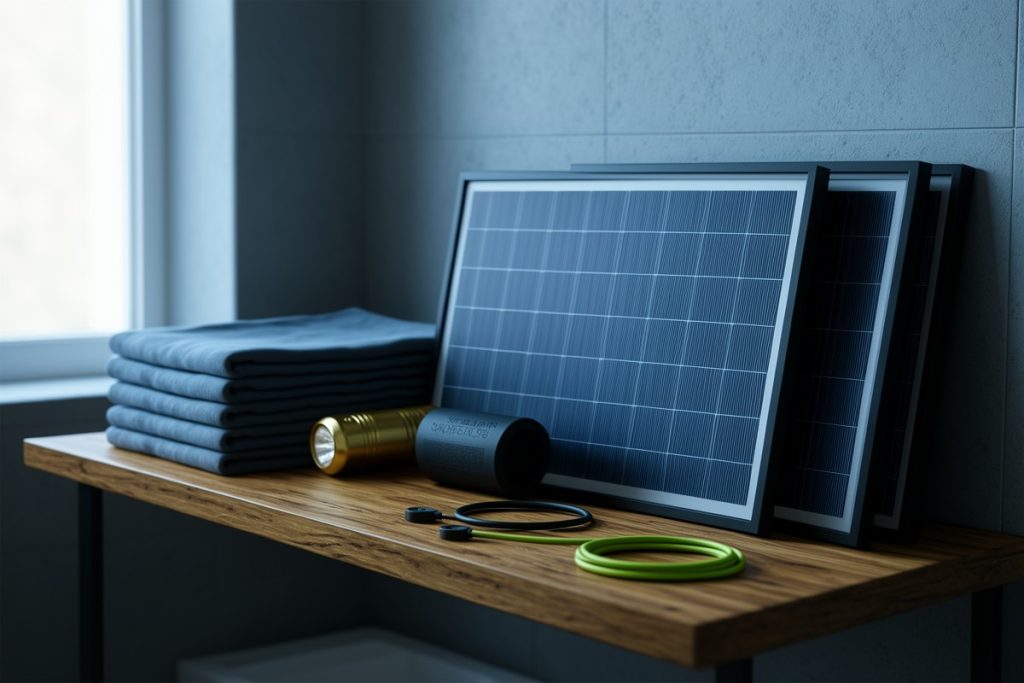
Most solar generators are sold as two separate purchases: the power station battery and the folding solar panels that feed it. A built-in panel model merges those parts into a single chassis. Some units have panels attached to the exterior that fold out like wings, while others use a briefcase-style lid or a top surface that angles toward the sky. The goal is the same: you do not need to unpack cables, match connectors, or worry about whether your panels are compatible with the built-in charge controller.
The trade-off is physics and portability. A unit that still needs to be lifted and carried can only hold so much solar surface area before it becomes unwieldy. While a standalone panel array might offer 200 watts or more in a relatively light package, the built-in panels on portable units are often smaller to keep weight and size reasonable. That means they work great for trickle-charging or topping off a battery over a weekend, but they rarely pull in enough wattage to recharge a depleted large power station quickly during a single day of sun.
When an Integrated Design Actually Helps
There are clear scenarios where the all-in-one approach shines. If you live in an apartment, condo, or small home with limited storage, having one device instead of a battery block plus a folded solar blanket and cable bag is genuinely helpful. You are more likely to grab it during a sudden blackout if you do not need to hunt for MC4 cables in a closet or figure out which adapter fits your particular unit.
Campers and RV weekenders also benefit from the streamlined design. When you pull into a campsite in the late afternoon, you can set the unit on a picnic table, unfold the attached panels, and start charging immediately. There is no guesswork about panel angles, extension cords, or connection sequences. For short trips where you are mainly running LED lights, smartphones, and a small 12-volt cooler, the slower recharge rate is rarely a problem because your overall energy draw is modest and intermittent.
The Trade-Offs You Should Know Before Buying
Convenience comes with real compromises. First, charging speed is usually the biggest limitation. Because the built-in panel surface area is constrained by the unit’s body, these systems can take a full day of strong, direct sunlight to refill a mid-size battery from half empty. If a storm rolls in and you drain the unit overnight running a CPAP or refrigerator, you may not get back to a full charge the next day.
Second, you lose the ability to upgrade or repair components independently. With a modular system, you can add a larger panel later, replace one that fails, or leave the power station in the shade while placing just the panels in the sun. If the built-in panel on an integrated unit cracks, delaminates, or loses efficiency over time, the entire device may need professional service.
Finally, built-in models often carry a price premium compared to buying a basic power station by itself. You are paying for the integration even if you later decide you want external panels anyway, which means you could end up owning redundant solar hardware.
Built-In vs. Modular: How They Compare
To see the difference in practical terms, consider how the two designs stack up on the factors that matter most during real-world use.
| Feature | Built-In Panel Generators | Modular Station + External Panels |
|---|---|---|
| Setup Time | 1–2 minutes | 5–10 minutes |
| Typical Solar Input | Lower (often 50–100W) | Higher (200W or more) |
| Storage Footprint | Single unit | Battery, panels, and cables |
| Upgrade Path | None | Add or replace panels anytime |
| Best Use Case | Short trips, home backup | Off-grid living, heavy daily use |
For someone who wants the fastest possible recharge or dreams of powering an off-grid cabin, modular is the clear winner. For the person who wants a single appliance they can store under a bed and deploy in thirty seconds, built-in has its place.
Who Should Consider an All-in-One Solar Generator
A built-in panel model is best suited for users who prioritize simplicity over raw performance. Think of it as the emergency flashlight of solar power: you hope you never need it, but when you do, it works without a manual.
Good candidates include urban and suburban households that want basic backup for phones, routers, and medical devices during short outages. Car campers who stay near their vehicle and want to run small electronics for a weekend also fit this category. On the other hand, van lifers, off-grid homesteaders, and anyone running high-draw appliances like power tools or induction cooktops will quickly outgrow the slower input rates of most integrated designs.
A Balanced Option to Consider
If the built-in approach fits your needs, the BROWEY 1600W Portable Power Station is one model that packages the concept into a usable, travel-friendly form. It pairs a 1024Wh LiFePO4 battery with an integrated solar panel, offering a 1600W continuous output and a 3200W peak capacity. The unit includes a 100W USB-C PD port, which is useful for charging modern laptops directly, and it is marketed for camping, RV trips, and home backup scenarios. You can view the unit here: https://www.amazon.com/dp/B0F8QRW8XK?tag=getwitty-20.
It is not the right tool for running an entire household during a prolonged outage, but as a dedicated emergency or camping unit, it solves the exact problem all-in-one buyers face: fewer cables, zero compatibility concerns, and a single device to keep charged between uses.
Quick Buying Checklist
If you are still on the fence, run your planned use through these questions:
- Do I need to power devices for more than two days without grid access?
- Will I have time to reposition external panels to track the sun?
- Is my storage space so limited that one device is strongly preferable?
- Am I comfortable with slower recharging in exchange for faster setup?
- Do I plan to expand my solar capacity within the next two years?
If you answered yes to the first, second, or last question, a modular power station with separate panels is likely the smarter buy. If you answered yes mainly to the middle questions, a built-in panel generator probably fits your lifestyle.
Solar generators with built-in panels are not a gimmick, but they are not a universal solution either. They work best when convenience, speed of deployment, and compact storage matter more than maximum charging speed or future expansion. Match the design to your actual habits and real backup needs, not your idealized ones, and you will end up with backup power you actually use when it counts.
Last reviewed: 2026-08-05