
Quick answer
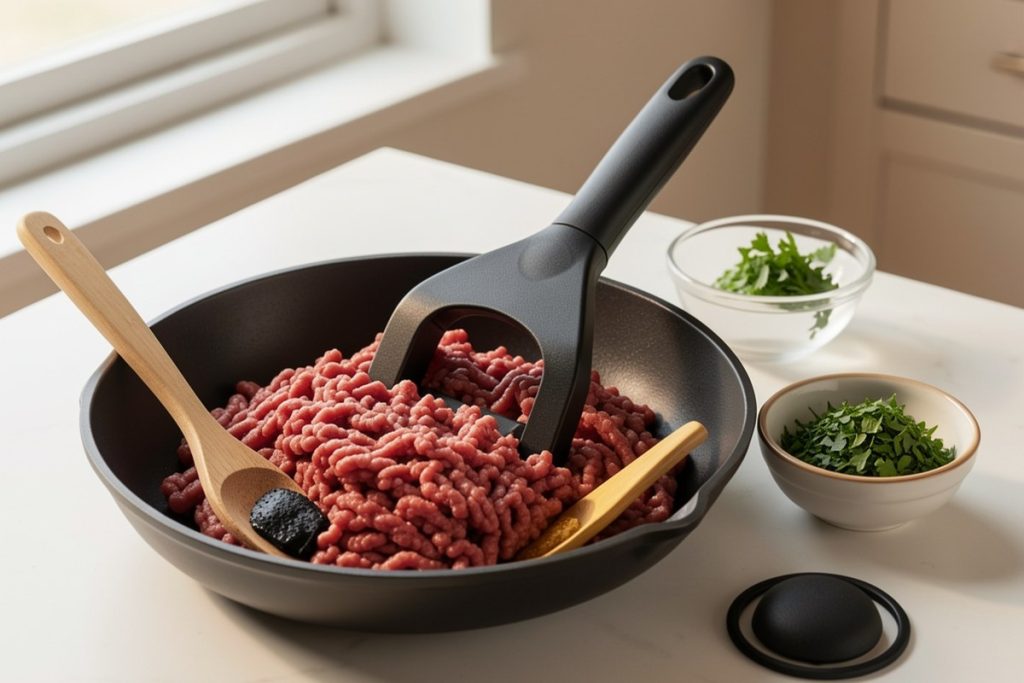
If you regularly cook ground beef in a skillet, a nylon meat chopper can make crumbling and mixing faster and less awkward than using a single flat utensil. The key is not a “best” label but fit: look for a sturdy, heat-resistant head, comfortable grip, easy cleaning, and compatibility with your cookware. The listed black nylon chopper is a reasonable option to investigate, but verify care instructions before buying.
Key takeaways
- A meat chopper is most useful for breaking ground beef into smaller pieces while it cooks.
- Choose a tool with a heat-resistant head and a shape that reaches the corners of your skillet.
- Nylon can be a sensible choice for coated cookware, but avoid assuming every model is dishwasher-safe or suitable for very high heat.
- Use the tool for texture and mixing; rely on a food thermometer, not appearance, to confirm ground beef is safely cooked.
What a meat chopper actually helps with
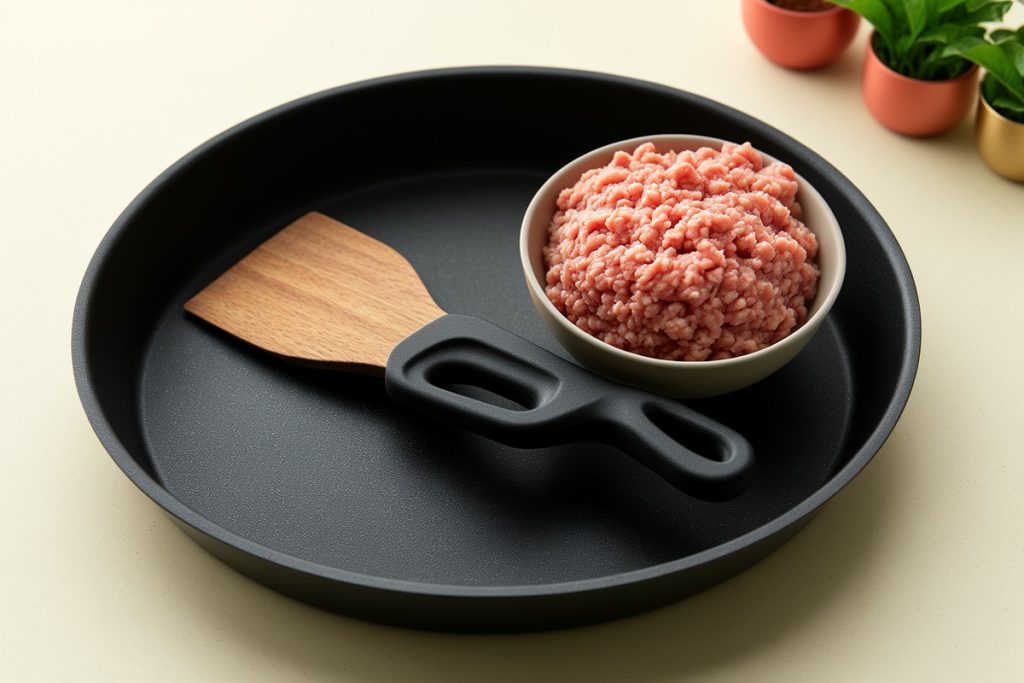
Ground beef often enters a hot skillet as one dense block. A wooden spoon can break it apart, but the process may require repeated pressing, scraping, and stirring. A meat chopper uses several short edges or fins to divide the meat into smaller pieces with a downward pressing motion. That can be useful when you want evenly sized crumbles for tacos, pasta sauce, chili, casseroles, or burger filling.
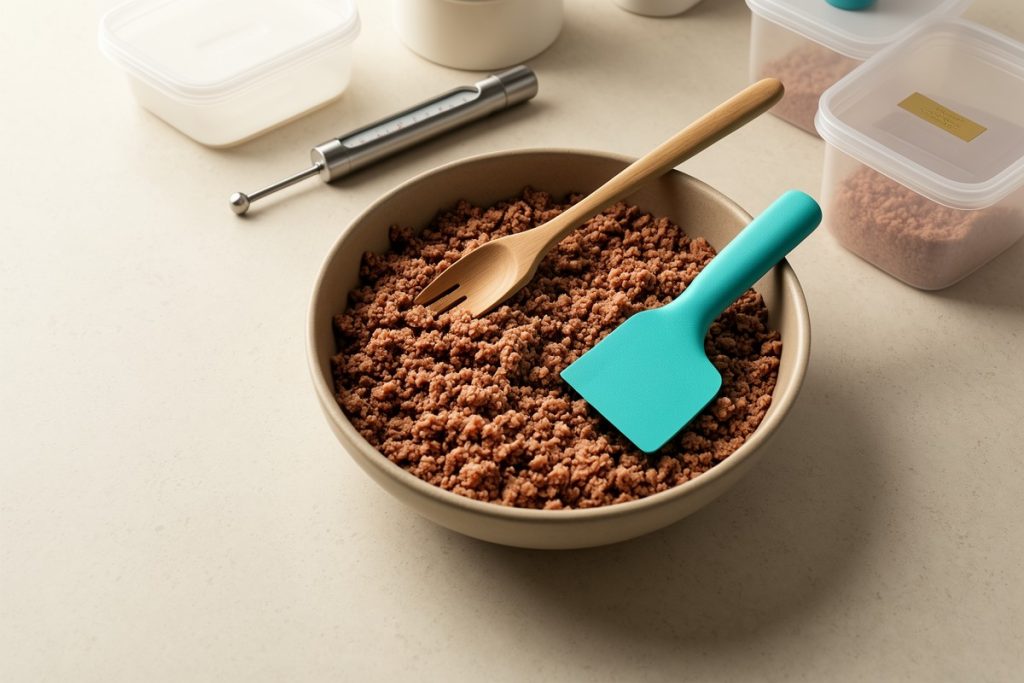
The tool is also helpful after browning, when you need to mix seasonings, vegetables, beans, or sauce through the meat. It gives you more control than aggressively dragging a fork across the pan, while keeping the task simple enough for everyday cooking. It will not replace a spatula for flipping, a spoon for serving, or a thermometer for checking doneness.
That distinction matters because a meat chopper is a convenience tool, not a cooking shortcut. It may reduce the effort involved in breaking up a batch, but the result still depends on pan temperature, batch size, timing, and how finely you want the meat crumbled.
Features that matter when choosing one
Head material and cookware compatibility
The head should be strong enough for pressing into cooked ground meat without flexing excessively. Nylon is commonly used for cooking tools because it is lightweight and less likely than bare metal to scratch many coated pans. Still, cookware finishes vary, and “heat resistant” does not tell you the exact maximum temperature. Check the product instructions and your pan manufacturer’s guidance, especially if you cook over high heat.
Shape and edge design
Look for a head that can reach into the corners of your skillet. Divided edges are useful for crumbling, while a broad surface can help mash softer ingredients such as potatoes. A tool that is too wide for your pan may feel clumsy; one that is too small may require extra passes through the same food.
Handle comfort
Breaking up a large batch takes repeated pressure, so the handle should feel secure and comfortable when held with a firm grip. A smooth, balanced handle is generally easier to control than a thin one that forces you to squeeze tightly. If the listing does not provide handle dimensions or close-up photos, treat that as missing information rather than assuming the tool will fit your hand.
Cleaning and storage
Ground meat leaves fat and small particles around seams and edges. A simple, mostly one-piece design is easier to clean than a tool with deep joints. Do not assume dishwasher compatibility unless the manufacturer specifically states it. After cooking, wash the tool thoroughly with hot, soapy water, and store it where the head can dry completely.
How the listed black nylon chopper fits the use case
The approved candidate, 1Pcs Meat Chopper Hamburger Masher Heat Resistant Nylon Tool for Cooking | Meat Chopper, Hamburger Masher, Premium Heat Resistant Smasher for Ground Beef, Burger Chopper Nylon Potato Mix Tool – Black, is positioned for two related tasks: breaking up ground beef and mashing or mixing softer foods such as potatoes.
That makes it a natural match for cooks who want one compact utensil for skillet meals and basic food preparation. Its listed nylon construction may also make it a more cookware-friendly choice than an uncoated metal utensil, although you should still confirm compatibility with your specific pan. The catalog information does not establish its exact temperature limit, dishwasher guidance, handle dimensions, or long-term durability, so those are sensible points to check before purchase.
The balanced recommendation is straightforward: consider it if you want an inexpensive, dedicated tool for crumbling meat and occasionally mashing soft ingredients. Skip it if you need a multipurpose turner, a precision utensil for delicate foods, or detailed care specifications that are not clearly provided. A wooden spoon or heat-safe spatula may already be enough for occasional ground-beef cooking.
Meat chopper versus common kitchen tools
| Tool | Best fit | Trade-off |
|---|---|---|
| Meat chopper | Breaking ground meat into crumbles and mixing skillet ingredients | Less useful for flipping, serving, or delicate foods |
| Wooden spoon | Stirring, scraping, and general cooking | May take more effort to break dense clumps |
| Heat-safe spatula | Turning food and scraping the pan | Its broad edge may not divide meat as efficiently |
| Potato masher | Mashing soft potatoes and similar foods | Can be bulky for smaller skillets |
For a kitchen with limited storage, the most practical option is the tool that performs a task you repeat often. If you make ground-beef meals once a month, a wooden spoon may be the better value because it already handles several jobs. If you cook crumbled beef weekly and dislike chasing large clumps around the pan, a dedicated chopper has a clearer purpose.
A practical buying checklist
- Confirm the material and any stated maximum heat rating.
- Check whether the head is appropriate for your cookware surface.
- Look for a handle that appears comfortable and securely attached.
- Inspect the head for deep grooves where food and grease could collect.
- Verify cleaning instructions instead of assuming it is dishwasher-safe.
- Decide whether you need only crumbling or also mashing and mixing.
These checks are more useful than relying on a product name or an isolated marketing phrase. They focus on whether the tool fits your pan, cooking habits, and cleanup routine.
Use it safely with ground beef
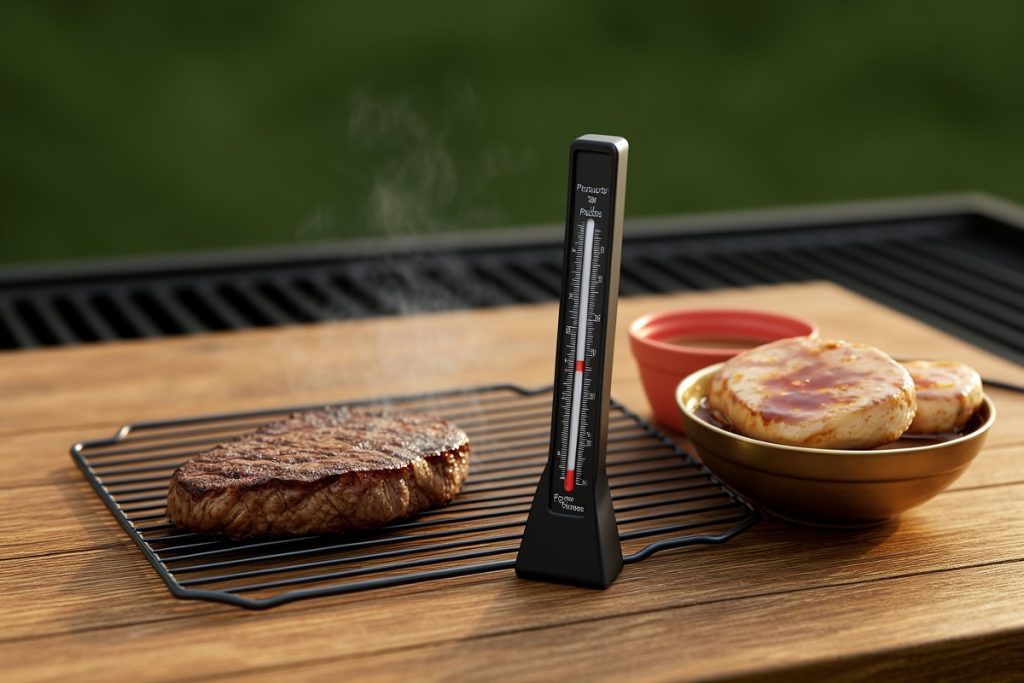
Breaking meat into small pieces can make it easier to mix and brown, but small pieces are not automatically safe to eat. The U.S. Department of Agriculture recommends cooking ground beef to an internal temperature of 160°F (71°C). Check the thickest part of the food with a reliable food thermometer rather than judging doneness by color alone.
Prevent cross-contamination by keeping raw meat and ready-to-eat foods separate. Wash utensils, cutting boards, counters, and hands after contact with raw ground beef, then clean the chopper thoroughly after use. If you use the tool in a coated skillet, press and chop with controlled movements rather than using it as a scraper against the pan.
One final habit improves both results and cleanup: avoid overcrowding the skillet. When too much meat is packed into a small pan, it can steam instead of brown, and the chopper has less room to work. Cook in a suitable batch size, break the meat apart as it firms, and then stir in the other ingredients.
Last reviewed: 2026-08-21