
Quick answer
For a calming bedroom scent without candles, start with a low-intensity, waterless diffuser, use a fragrance you tolerate, and run it briefly while keeping the room ventilated. Scent is an atmosphere cue, not a proven sleep treatment. Avoid fragrance exposure if it aggravates asthma, migraines, or sensitivities, and keep oils and equipment away from children and animals.
Key takeaways
- Choose scent as an optional relaxation cue, not a substitute for sleep habits or medical care.
- Waterless diffusers avoid an open flame, but fragrance exposure can still bother sensitive people.
- Start with short sessions, low intensity, and fresh airflow before using scent overnight.
- Never assume “natural” means risk-free; follow the diffuser and oil manufacturer’s instructions.
Why choose a bedroom scent without a candle?
A candle can make a room feel special, but it also brings an open flame and combustion into a space where people may fall asleep. Burning candles can contribute particles to indoor air, so avoiding combustion is a reasonable choice for a bedroom, especially when the goal is a simple evening ritual rather than decoration.
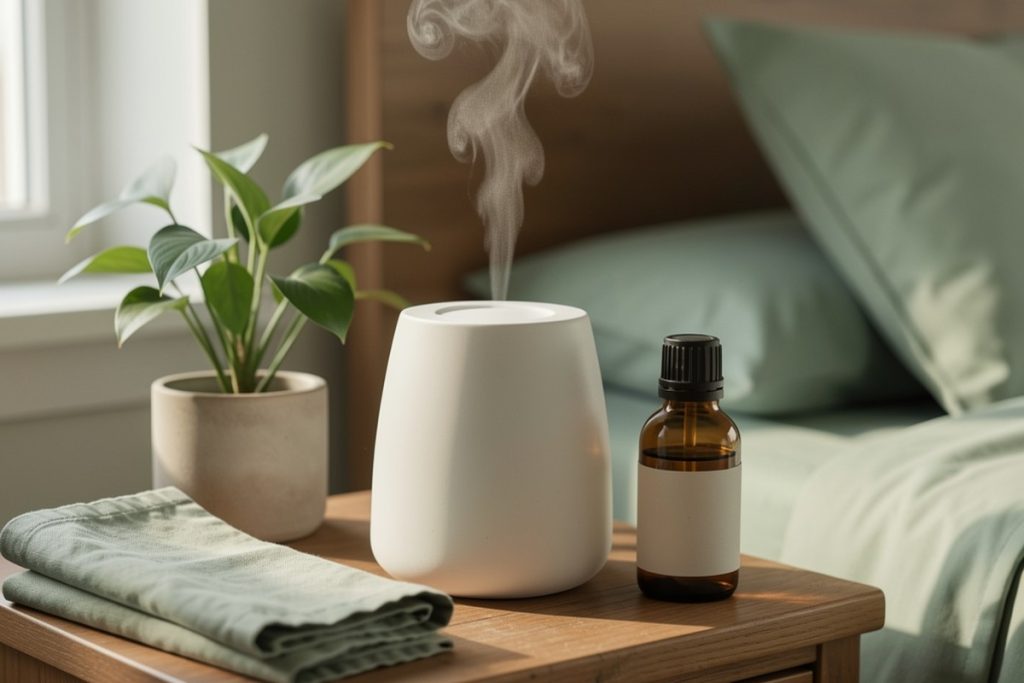
A waterless diffuser offers a different kind of experience. Instead of heating wax or adding water to a reservoir, it disperses fragrance oil through a dedicated device. That may suit someone who wants a controlled scent without a flame, visible smoke, or extra humidity. It does not make every fragrance suitable for every person, however. A flame-free setup can reduce one concern while leaving another: the possibility of irritation from the fragrance itself.
Set a realistic goal for aromatherapy
Many people associate lavender, cedar, citrus, or other aromas with rest. That association can be useful as a personal cue: the same gentle scent used during a wind-down routine may help signal that the day is ending. But aromatherapy is not a guaranteed treatment for insomnia, anxiety, pain, or any other health condition. Research on specific benefits remains limited, and individual responses vary.
Think of scent as one small environmental adjustment. It works best alongside habits with clearer practical value, such as keeping a consistent bedtime, dimming bright lights, limiting stimulating activities, and making the bedroom comfortable. If you regularly struggle to sleep, wake gasping, or feel exhausted despite enough time in bed, investigate the underlying problem rather than relying on a diffuser.
How to choose the right scent setup
| Option | Best for | Trade-off |
|---|---|---|
| Unscented room with fresh airflow | People with fragrance sensitivity or uncertain preferences | Provides no aroma ritual |
| Candle | Occasional visual ambiance while awake | Uses an open flame and involves combustion |
| Waterless diffuser | Flame-free, adjustable scenting | Still releases fragrance and requires compatible oil |
| Reed diffuser | Passive, continuous scent | Less control and greater spill risk |
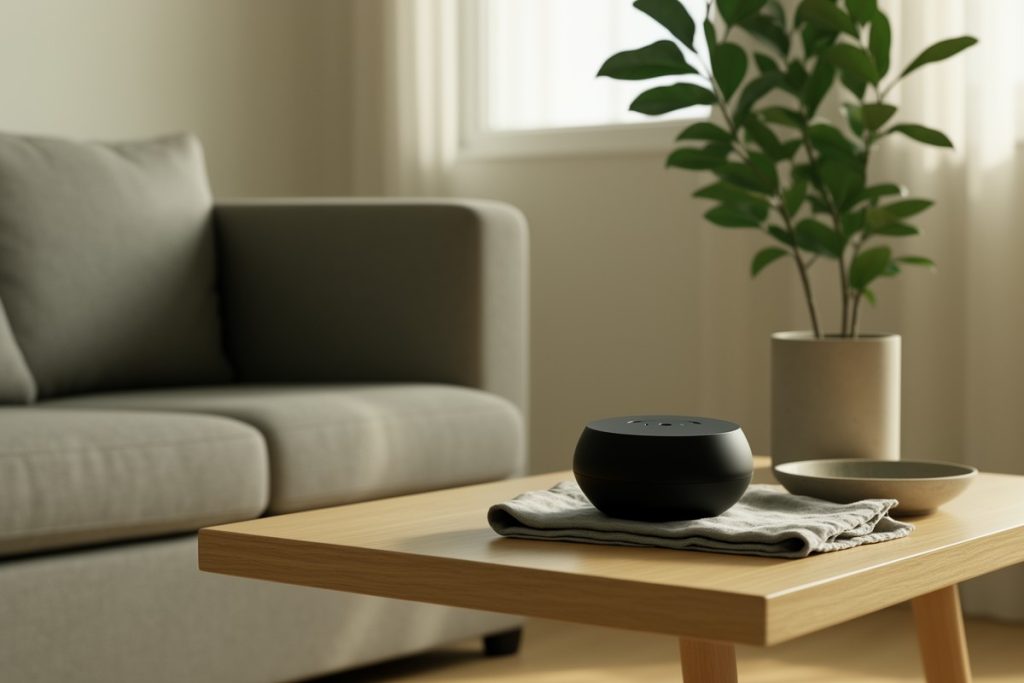
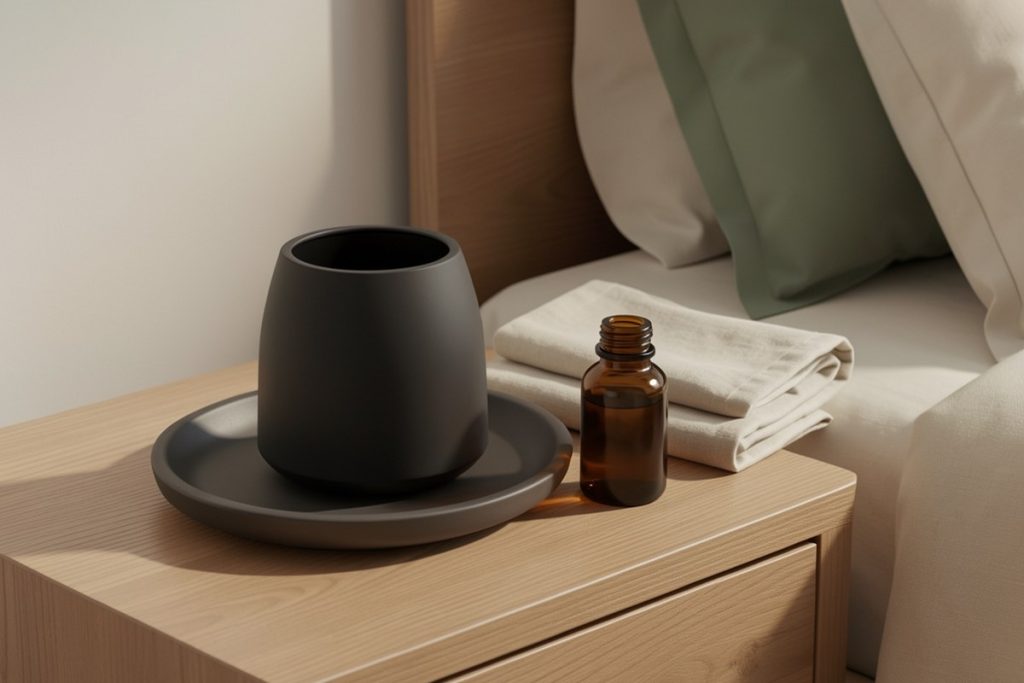
If you want to explore the waterless option, the AirScent Waterless Diffuser is one product to consider. Its listed design is a black cold-air scent diffuser for home, office, hotel, and spa use; fragrance is not included. That makes it a potentially practical choice if you already have a compatible fragrance oil and want to avoid an open flame. Check the manufacturer’s instructions for oil compatibility, operating duration, placement, and cleaning before use. The product alone cannot determine whether a particular scent will feel comfortable in your bedroom.
A low-risk way to introduce fragrance
Do not begin by running a new scent all night. First, test it while you are awake and able to notice how your body responds. Use the smallest practical amount and the shortest setting available. If the aroma feels heavy, causes a headache, irritates your throat, or makes breathing uncomfortable, stop using it and air out the room.
Testing outside the bedroom is also useful. A scent that seems pleasant for five minutes may feel overwhelming after an hour. Try it in a living area during the daytime, then decide whether it belongs in a smaller sleeping space. If you share the room, ask the other person before making fragrance part of the nightly routine.
- Keep the diffuser on a stable, ventilated surface away from bedding, curtains, heaters, and the edge of a table.
- Use only the oil or fragrance type permitted by the device instructions.
- Run it for a brief wind-down period rather than automatically leaving it on while sleeping.
- Keep concentrated oils secured and out of reach of children and animals.
- Clean the device as directed so old residue does not build up or alter the scent.
Be especially cautious with sensitive households
Fragrance is not neutral for everyone. People with asthma, allergies, migraine triggers, chemical sensitivities, or respiratory irritation may feel worse around scented products. The most considerate choice in a shared bedroom may be no fragrance at all. You can still create a calming atmosphere with clean bedding, warm lamps, quiet music, a cool room, or a few minutes of slow breathing.
Essential oils are concentrated substances, not automatically harmless because they come from plants. Avoid applying undiluted oils to skin, ingesting them, or improvising mixtures for a diffuser. If you are pregnant, caring for a young child, managing a respiratory condition, or using medication and have questions about a specific oil, ask a qualified healthcare professional or pharmacist.
Pets also deserve consideration. Animals can respond differently to concentrated fragrances, and a pet that cannot leave a scented room has no way to opt out. Keep products inaccessible and consult a veterinarian if you are unsure whether a fragrance is appropriate for your household.
Build the ritual around the scent
The most useful bedroom routine is not the device; it is the repeatable sequence around it. About 20 to 30 minutes before bed, lower the lights, put away work, open the room briefly for fresh air if weather allows, and use a familiar scent only if it remains comfortable. Pair the aroma with one quiet activity, such as reading a paper book, stretching gently, or writing tomorrow’s top three tasks.
Then turn the diffuser off before sleep unless the manufacturer specifically supports longer operation and you have already confirmed that the scent does not bother anyone. Over time, you may find that the ritual works just as well without fragrance. That is a useful result: the goal is a bedroom that helps you settle, not dependence on a particular product.
Simple decision checklist
- Does everyone who sleeps in the room agree to use fragrance?
- Can you identify an oil that is compatible with the diffuser?
- Have you tested the scent while awake and in a larger, ventilated room?
- Can you use a short session instead of continuous overnight diffusion?
- Would an unscented alternative be more comfortable for anyone in the household?
If any answer raises concern, skip the diffuser. A clean, quiet, unscented bedroom is not a lesser wellness routine; for many people, it is the better one.
Last reviewed: 2026-08-28
Sources
- Indoor Particulate Matter — U.S. Environmental Protection Agency
- Aromatherapy — National Center for Complementary and Integrative Health
- Essential Oils — National Capital Poison Center