
Quick answer
Choose a wearable AI companion robot for a specific use, such as brief playful conversations or a tangible alternative to another screen-based gadget. Before buying, check whether it needs a phone, Bluetooth, Wi-Fi, or a cloud account; review its privacy controls; and confirm charging, compatibility, age guidance, and support details. Treat personality features as entertainment, not as professional advice or human-level understanding.
Key takeaways
- Start with the problem the device should solve rather than its novelty.
- Confirm connectivity, app requirements, battery details, and future software support.
- Review how voice, chat, account, and device data are collected and deleted.
- A companion robot can add playful, screen-light interaction, but it is not a therapist, emergency tool, or guaranteed productivity assistant.
What a wearable AI companion robot is actually for
A wearable AI companion robot sits between a digital assistant, a collectible gadget, and a small social object. Its value is not necessarily the number of features it lists. The appeal may be that interaction feels more tangible than opening an app: the device is nearby, has a physical presence, and may respond with sounds, movements, or changing expressions.
That makes this category most suitable for light, low-stakes use. A person might want a playful conversation during a break, a desk companion that feels more personal than a speaker, or a gift that introduces someone to conversational AI without making a phone the center of attention.
It is a weaker fit if your main goal is reliable research, serious scheduling, accessibility-critical reminders, offline operation, or confidential conversation. Those jobs require capabilities that a product listing may not guarantee.
Match the gadget to a concrete reader problem
Before comparing designs, write down one sentence beginning with “I want this device to…” If the answer is “make short breaks more playful,” a companion robot may make sense. If the answer is “help me manage my entire day,” look for a dedicated assistant with clearly documented calendar, reminder, accessibility, and reliability features instead.
Also consider who will use it. Adults may appreciate the novelty and collectibility. A child or teenager raises additional questions about parental controls, account ownership, voice-data handling, purchasing permissions, and age-appropriate conversations. If those policies are difficult to find, pause before buying.
For couples, friends, or character lovers, the physical charm may be part of the appeal. However, “personality” is a design feature, not proof that the system understands feelings, remembers context accurately, or can provide emotionally safe guidance.
Check how the AI connects before you buy
A small robot can look self-contained while depending heavily on another device or online service. Look for clear answers to these questions:
- Does it work by itself, or does it require a smartphone app?
- Is Bluetooth enough, or does conversation require Wi-Fi and an internet connection?
- Which operating systems and phone versions are supported?
- What happens when the app, server, or internet connection is unavailable?
- Are software updates automatic, optional, or necessary for core functions?
- Can the device be reset before it is sold, gifted, or returned?
These details affect daily usefulness more than a clever product description. A device that requires frequent charging or a phone connection may be enjoyable at home but less practical as a truly wearable companion.
Evaluate privacy without guessing
Conversational products can involve more than the robot itself. Depending on the design, information may pass through an app, an account system, speech-recognition software, cloud infrastructure, or outside AI services. Do not assume that a cute physical design means minimal data collection.
Read the privacy policy and look specifically for voice recordings, transcripts, device identifiers, contact information, location data, usage history, and information about children. Check whether conversations are retained, whether they are used to improve services, how deletion requests work, and whether data is shared with service providers.
Use practical boundaries. Do not provide passwords, financial details, medical information, private workplace material, or another person’s personal information. If the product will be used around guests, consider whether its microphone can be muted and whether that mute state is obvious.
The NIST AI Risk Management Framework is a useful general reference for thinking about AI risks, transparency, privacy, and accountability. It is not a product review, but its questions help consumers look beyond novelty.
Separate entertainment from dependable assistance
AI conversation can feel natural while still producing incomplete, incorrect, or unsuitable responses. A companion device should therefore be treated like an entertainment product with conversational features, not an authority. Verify important claims independently, especially when they involve health, legal matters, money, safety, or another person’s privacy.
It is also worth setting expectations about emotional use. A robot may encourage routines or make a room feel less empty, but it cannot replace a trusted person, clinician, caregiver, or emergency service. Anyone experiencing serious distress should use appropriate human support and emergency resources rather than relying on an AI character.
This distinction does not make the category pointless. Play, curiosity, and a physical object that invites occasional interaction are legitimate benefits. The key is to buy it for those benefits rather than expecting a small gadget to solve loneliness, organization, or mental-health needs on its own.
A practical buying checklist
- Purpose: Can you name the one recurring situation where you will use it?
- Connectivity: Is the required app, phone, Wi-Fi, or account acceptable?
- Privacy: Are collection, retention, deletion, and microphone controls explained clearly?
- Maintenance: Are charging, battery replacement, updates, repairs, and returns documented?
- Fit: Is the size, attachment method, sound level, and appearance suitable for the intended user?
- Limits: Would you still value it if its conversations were occasionally generic or inaccurate?
Where this particular gadget fits
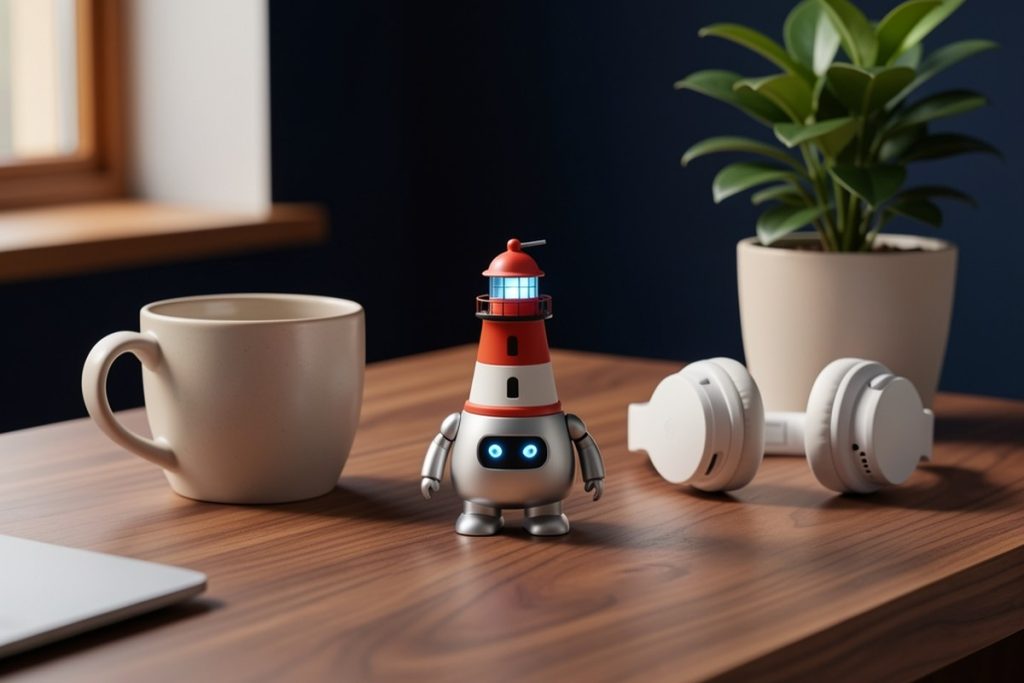
Eiliko – Your Tiny Companion Robot is presented as a wearable collectible charm with AI conversations, expressive faces, and living personalities. Based on that description, its clearest use case is casual, character-driven interaction in a compact physical form. That could suit someone who wants a playful gift or a small companion for breaks rather than a full productivity system.
There are important unknowns to verify on the current listing and manufacturer information before purchase: the companion app and phone requirements, internet dependence, battery performance, privacy practices, supported languages, age guidance, and what features remain available if the service changes. We have not independently tested this product, so its conversational quality, durability, responsiveness, and long-term software support should not be assumed from the description alone.
That balanced view is useful for the whole category. A wearable AI robot is a reasonable choice when physical charm and low-stakes interaction are the goal. It is not the right tool when you need guaranteed accuracy, private conversations, robust offline access, or professional support.
How to make the purchase more sensible
Set a small trial goal before ordering: for example, use the robot during five-minute breaks for one week and note whether it is genuinely enjoyable or quickly becomes clutter. Decide where it will live, how it will charge, and who will manage the associated account. If it is a gift, explain its AI limitations and privacy settings rather than presenting it as a friend with human understanding.
Finally, retain the packaging and review the return policy after setup. Test the core connection, mute controls, charging behavior, and reset process early. Those checks reveal whether the product fits your routine far faster than promotional language does.
Last reviewed: 2026-08-31
Sources
- AI Risk Management Framework — National Institute of Standards and Technology
- Privacy and Security Guidance for Businesses — Federal Trade Commission
- Recommendation on the Ethics of Artificial Intelligence — UNESCO