
Quick answer
To use peppermint essential oil in a diffuser safely, follow the diffuser’s own water and oil instructions, begin with the smallest recommended amount, and run it in a ventilated room for a limited period. Never swallow the oil or apply it undiluted to skin. Store it securely away from children and pets, and stop using it if irritation or breathing symptoms occur.
Key takeaways
- Read the diffuser and oil labels before adding anything.
- Use only the amount recommended for your specific diffuser.
- Ventilate the room and use a timer instead of diffusing continuously.
- Peppermint oil is not a proven treatment for stress, sleep, pain, or illness when diffused.
- Keep essential oils locked away from children and pets.
By Luna Reyes, Mindful Wellness Guide
What peppermint oil in a diffuser can realistically do
Peppermint oil is often chosen for its crisp, cooling scent. Diffusing it can make a room feel fresher and may become a pleasant cue for starting a morning routine, stretching session, or short breathing practice. That is a reasonable wellness use: creating an environment you enjoy.
It is different from saying that peppermint aromatherapy treats a health condition. The National Center for Complementary and Integrative Health says research on peppermint oil is limited and has focused mainly on specific uses, including enteric-coated capsules for some irritable bowel syndrome symptoms. Evidence is not strong enough to draw conclusions about many other conditions. A diffuser should therefore support a routine, not replace medical care, prescribed treatment, sleep habits, or professional advice.
Choose the oil and diffuser with care
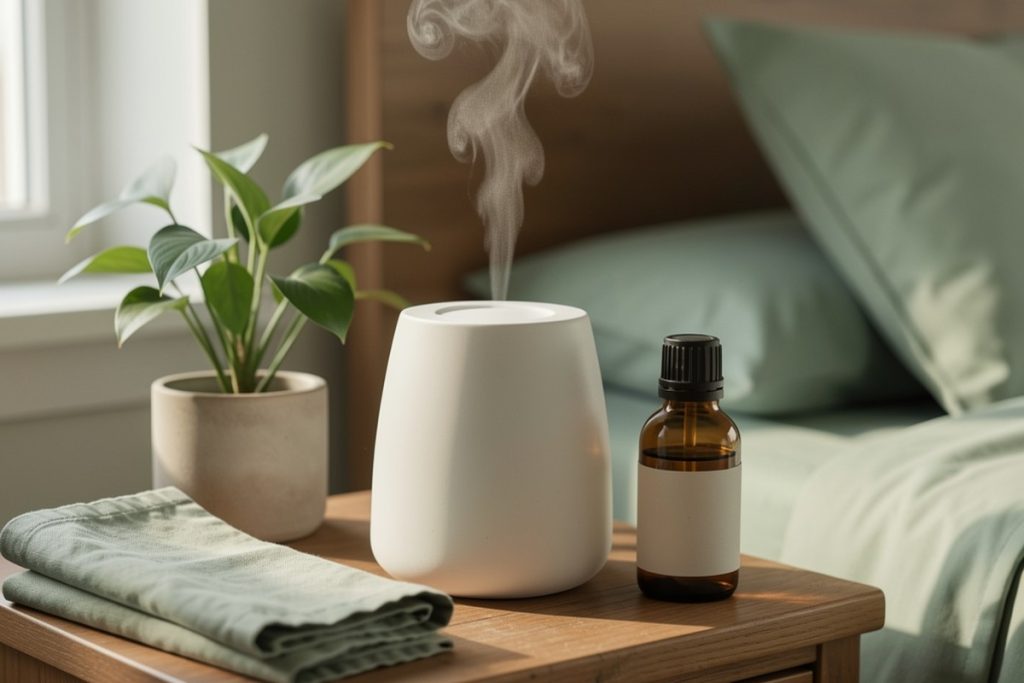
Start with the device, not the bottle. Some diffusers use water, while nebulizing models may use oil without water. Check the manufacturer’s instructions for compatible oils, reservoir capacity, cleaning, and recommended run time. Adding extra drops does not necessarily improve the experience; it can simply make the scent overwhelming or increase the chance of irritation.
Read the essential oil label as well. Look for the plant name, intended use, warnings, storage guidance, and ingredient information. “Natural” does not automatically mean harmless. The FDA explains that plant-derived fragrance ingredients can still be irritating, toxic, or capable of causing allergic reactions, and that intended health claims affect how an aromatherapy product is regulated.
If you want a larger bottle for diffuser use, the Handcraft Blends Peppermint Essential Oil listing describes a 4-fluid-ounce, 100% pure product and names diffuser use among its intended applications. That makes it relevant to this use case, but a larger bottle is not automatically safer or better. Confirm the current label directions, seal, ingredients, and diffuser compatibility before buying.
How to diffuse peppermint oil safely
- Read both sets of instructions. Follow the diffuser manual and the oil label. If they differ, choose the more cautious direction or contact the manufacturer.
- Prepare the device correctly. Use the recommended water type and fill level for a water-based diffuser. Do not pour oil into a water reservoir if the device is designed for another method.
- Begin with the minimum amount. Use the smallest number of drops recommended for the room and device. If no guidance is available, ask the diffuser manufacturer rather than guessing.
- Place it thoughtfully. Keep the diffuser on a stable, water-resistant surface with space around it. Avoid placing it beside a child’s bed, near food, on delicate wood, or where it can be knocked over.
- Use ventilation and a timer. A cracked door or window can prevent the aroma from becoming overpowering. A short timed session is more sensible than leaving the diffuser running continuously.
- Clean it after use. Residue can build up inside a diffuser and affect future aromas. Turn the device off, unplug it, and clean it exactly as the manual recommends.
Never treat a diffuser as a humidifier, nebulizer, or medical device unless the manufacturer specifically says it is designed for that purpose. Also avoid adding peppermint oil to drinking water, tea, or food simply because the bottle is labeled pure. Diffuser oil and food ingredients are not interchangeable.
Match the method to the goal
| Goal | More cautious approach | What to avoid |
|---|---|---|
| Enjoy a fresh room scent | Use a brief, ventilated diffuser session | Continuous diffusion in a closed room |
| Create a morning ritual | Pair a short session with journaling or breathing | Claiming the scent treats anxiety or fatigue |
| Use on skin | Only use if the label supports topical use and dilute as directed | Applying pure oil directly to skin |
| Use around children or pets | Keep the bottle and diffuser inaccessible | Leaving spilled oil or an open bottle within reach |
Do not transfer diffuser directions to skin or massage
A product that can be diffused is not automatically safe to apply directly to the body. Essential oils are concentrated, and Poison Control recommends dilution in a carrier oil when topical use is appropriate. Not every essential oil is suitable for every person or body area, so the product label matters.
If peppermint oil contacts skin and causes a rash or irritation, stop using it and wash the area with soap and water. Avoid applying it to damaged skin. Keep peppermint oil away from an infant’s or young child’s face; the menthol component can create serious breathing concerns in very young children.
Do not ingest diffuser oil. Peppermint oil taken by mouth can cause side effects such as heartburn, nausea, abdominal pain, or dry mouth, and swallowing essential oils can result in poisoning. If someone swallows the oil, contact Poison Control in the United States at 1-800-222-1222 or use the webPOISONCONTROL tool.
Who should ask a professional first?
Speak with a healthcare professional before using peppermint oil medicinally, especially if you take medication, are pregnant or breastfeeding, or have a condition that could be affected by strong fragrances. NCCIH notes that safety information is limited for medicinal amounts during pregnancy and breastfeeding, and herbal products may interact with medicines.
Pay attention to your own response. A scent that feels refreshing to one person may cause headache, nausea, coughing, skin irritation, or an allergic reaction in another. Stop the session, move to fresh air, and seek urgent medical help for difficulty breathing or other severe symptoms.
A simple pre-diffusion checklist
- Is the oil intended for the way you plan to use it?
- Have you checked the diffuser’s instructions and maximum fill level?
- Are children and pets unable to reach the bottle or device?
- Can you ventilate the room?
- Have you set a short timer?
- Do you know how to clean the diffuser afterward?
Peppermint oil can be a refreshing addition to a mindful routine when used as a fragrance rather than a cure. Keep the amount modest, the room comfortable, and the claims realistic. Good wellness practice is not about using more; it is about creating a ritual that feels pleasant without ignoring basic safety.
Last reviewed: 2026-09-04
Sources
- Peppermint Oil: Usefulness and Safety — National Center for Complementary and Integrative Health, NIH
- Aromatherapy — U.S. Food and Drug Administration
- Essential Oils: Poisonous When Misused — National Capital Poison Center