
Quick answer
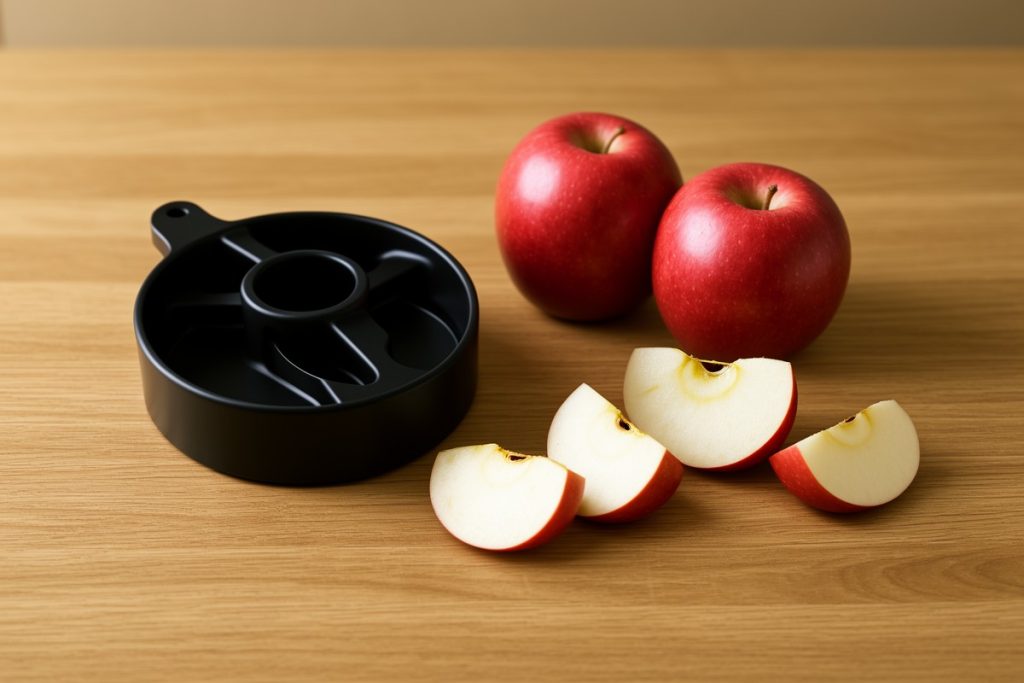
For fast apple prep, choose a slicer that combines a sturdy grip, sharp corrosion-resistant blades, and a centered corer. The SCHVUBENR 3.5 Inch Apple Slicer is a practical option for turning suitable apples into separated pieces with one downward motion. It is most useful for snacks, lunch boxes, and baking prep, but you should still check apple size, cutting pressure, and cleaning needs before buying.
Key takeaways
- An apple slicer is most valuable when you regularly prepare several apples at once.
- A centered corer and evenly spaced blades reduce repetitive knife work, but they do not replace safe handling.
- Match the slicer’s opening to the apples you actually buy; very large or especially firm fruit may be difficult to cut.
- Wash apples before cutting, even when you plan to remove the peel.
- For a household tool, easy storage and straightforward cleanup matter as much as blade count.
Why an apple slicer can be worth buying
An apple slicer solves a small but recurring kitchen problem: making one piece of fruit easier to eat, pack, or use in a recipe without repeatedly cutting around the core. A knife can do the job, but it takes more attention and usually leaves you with a less consistent result. That difference becomes noticeable when preparing fruit for several people or filling lunch containers on a busy morning.
The best reason to buy one is not novelty. It is repetition. If apples are a regular snack in your home, a dedicated cutter can make the preparation step quick enough that it does not become a reason to skip the fruit. The USDA includes fruit among the food groups that contribute to a balanced eating pattern, but the tool itself is only useful if it fits your routine and is easy to reach.
There are limits. A slicer is not a universal produce tool, and it is not automatically safer simply because it has a handle. Sharp blades still require controlled pressure, a stable cutting surface, and careful storage.
What to look for in an apple slicer
Start with the parts that affect everyday use rather than the most impressive-sounding specification.
- Blade construction: Stainless steel is a sensible choice for a tool exposed to fruit juice and frequent washing. Look for blades that appear securely fixed rather than loosely crimped or flimsy.
- Handle and grip: The handles should give you enough leverage to press straight down without twisting. A broad grip is generally more comfortable than a narrow wire handle, especially with firm apples.
- Opening size: The central ring needs to fit over the apple while leaving enough cutting area around the core. If you buy unusually large apples, compare their diameter with the tool’s stated dimensions before ordering.
- Corer design: A centered corer helps separate the edible sections from the core in the same motion. It should leave the core reasonably intact rather than forcing you to remove several small pieces afterward.
- Storage: Consider where the slicer will live. A tool that disappears in a crowded drawer is less useful than one that can be stored safely and accessed quickly.
Blade sharpness matters, but “sharper” is not the same as “better” in every household. A very aggressive cutting edge may require more care during washing and storage. The practical goal is a slicer that cuts cleanly with steady pressure and remains manageable between uses.
Where the SCHVUBENR slicer fits
The SCHVUBENR 3.5 Inch Apple Slicer – Professional Apple Cutter is aimed at people who want a dedicated apple cutter rather than another multipurpose gadget. Its listed design combines a 3.5-inch cutting size, stainless-steel construction, a central apple corer, and eight sharp blades. Those features make it relevant for quick snack preparation and repeatable apple portions.
Its strongest use case is a home kitchen where apples are prepared several times a week. It can also be useful for packing lunches or setting out fruit for children, provided an adult handles the cutting and checks that the pieces are an appropriate size. The tool may be less appealing if you usually buy very large apples, prefer thin slices, or only prepare fruit occasionally.
Do not treat the product description as proof of every real-world result. The cutting experience will depend on the apple’s diameter, firmness, ripeness, and how stable the cutting surface is. Before buying, verify the current listing details and consider whether the tool’s dimensions suit the fruit in your kitchen.
Apple slicer versus a kitchen knife
| Consideration | Dedicated slicer | Kitchen knife |
|---|---|---|
| Speed for repeated apples | Usually quicker once positioned | More steps for coring and portioning |
| Portion consistency | More uniform sections | Depends on cutting skill |
| Flexibility | Primarily suited to compatible apples | Works across many fruits and cuts |
| Storage | Requires a dedicated place | Already part of most kitchens |
| Safety needs | Sharp blades still need careful handling | Requires controlled knife technique |
The choice depends on what you value. A knife is more versatile and may be enough for a household that prepares one apple occasionally. A slicer earns its space when speed and repeatability are more important than flexibility.
A practical buying and use checklist
- Measure or estimate the size of the apples you buy most often.
- Confirm that the cutting ring and handle design look suitable for your grip.
- Use a clean, stable cutting board rather than cutting directly on a slippery counter.
- Wash the apple under running water before cutting, including when you plan to peel it.
- Position the corer over the center and press straight down with controlled force.
- Keep fingers away from the blade path and place the tool somewhere secure after use.
- Rinse and clean the slicer according to the manufacturer’s instructions, then dry it thoroughly.
The FDA recommends washing fresh produce under running water and notes that washing helps reduce bacteria but does not eliminate it. It also advises washing produce before cutting, because surface dirt and bacteria can transfer during peeling or slicing. Do not use soap or household detergent on the apple.
Who should buy one—and who should skip it
Buy an apple slicer if you want a faster way to prepare everyday snacks, appreciate consistent pieces, and have a safe storage spot for a sharp kitchen tool. It is especially reasonable for households that pack lunches, serve fruit frequently, or bake with apples often.
Skip it if counter space is scarce, you rarely eat apples, or you need a tool that handles many types of produce. A chef’s knife offers more long-term versatility. Also skip any model whose dimensions, grip, or cleaning instructions are unclear. A low-cost kitchen tool is not a value if it creates frustration or sits unused.
For most buyers, the decision is simple: compare the tool’s opening with your apples, assess whether the handle looks controllable, and choose the design that removes a repeated annoyance without adding a new storage or cleaning problem.
Last reviewed: 2026-09-04