
Quick answer
Organize a late-summer pantry by removing expired food, grouping items by how you use them, and placing everyday staples where they are easiest to reach. Reserve higher shelves for backups and lighter-use ingredients. Wire baskets can keep snack packets, baking supplies, and meal components together, but check shelf depth and avoid storing loose or delicate items where they can fall through.
Key takeaways
- Start with a full pantry reset rather than rearranging around expired or unwanted food.
- Group food by routine: breakfast, snacks, quick dinners, baking, and backstock.
- Keep older products toward the front and newly purchased items behind them.
- Use baskets for flexible categories, but leave enough clearance to lift them safely.
- Make the system seasonal so it can change as summer foods give way to fall staples.
Late summer is a useful moment to rethink your pantry. The season often brings a mix of fresh produce, grilling supplies, lunchbox snacks, picnic food, and ingredients left over from earlier in the year. By the time fall cooking begins, shelves can become a crowded collection of half-used bags and duplicate purchases.
A good pantry reset is not about making every shelf look perfect. It is about creating a system that answers three practical questions quickly: What do I have, what should I use first, and where does the next item belong?
Last reviewed: 2026-08-28
Why late summer is the right time for a pantry reset
Seasonal organization works best when it follows real changes in household routines. In late summer, cold drinks, grilling ingredients, cereal, snack foods, and quick lunches may be in heavier rotation. Soon, those categories may compete with soup ingredients, baking supplies, lunchbox staples, and holiday cooking items.
Resetting before the transition prevents two common problems. First, food gets buried until it is no longer useful. Second, a crowded pantry encourages you to buy duplicates because you cannot see what is already there. A short reset now can make the next several months easier without requiring a complete kitchen makeover.
Clear the shelves before choosing storage
Take everything out of one shelf or cabinet section at a time. Working in smaller zones keeps the task manageable and gives you a clear view of the space you actually need to organize.
Sort items into four groups: use soon, keep, relocate, and discard. “Use soon” is for open packages, ingredients nearing their quality date, and seasonal foods that should be incorporated into meals. “Relocate” is for items that belong elsewhere, such as serving supplies, pet food, or cleaning products.
Check packages for damage, moisture, pests, unusual odors, and dates. A date printed on a shelf-stable food does not always mean the item becomes unsafe that day; dates can relate to quality, depending on the product and labeling. When in doubt about a damaged or questionable item, follow food-safety guidance rather than relying on appearance alone.
Wipe shelves only after they are empty. Let them dry fully before returning food, especially if you are using a damp cloth or mild cleaner. This is also the easiest time to measure shelf width, depth, and vertical clearance.
Group the pantry by routine, not just by food type
Traditional categories such as grains, cans, and spices can help, but they are not always the most useful arrangement. Consider how your household reaches for food during a normal week.
- Breakfast: oats, cereal, coffee, tea, pancake mix, and spreads.
- Quick meals: pasta, rice, jarred sauces, canned beans, and broth.
- Snacks: crackers, granola bars, dried fruit, and lunchbox items.
- Baking: flour, sugar, baking powder, chocolate chips, and decorations.
- Backstock: unopened duplicates and less frequently used ingredients.
- Seasonal extras: picnic supplies, grilling ingredients, drink mixes, and preserves.
Place the categories used daily between waist and eye level when possible. Heavier cans and jars are safer on lower shelves, while lightweight backup items can go higher. If children regularly prepare their own snacks, create one clearly reachable snack zone rather than scattering individual items throughout the pantry.
Use baskets to contain flexible categories
Baskets are most helpful when a category contains several small packages that tend to spread across a shelf. They create a defined home for those items without requiring every package to be stacked precisely.
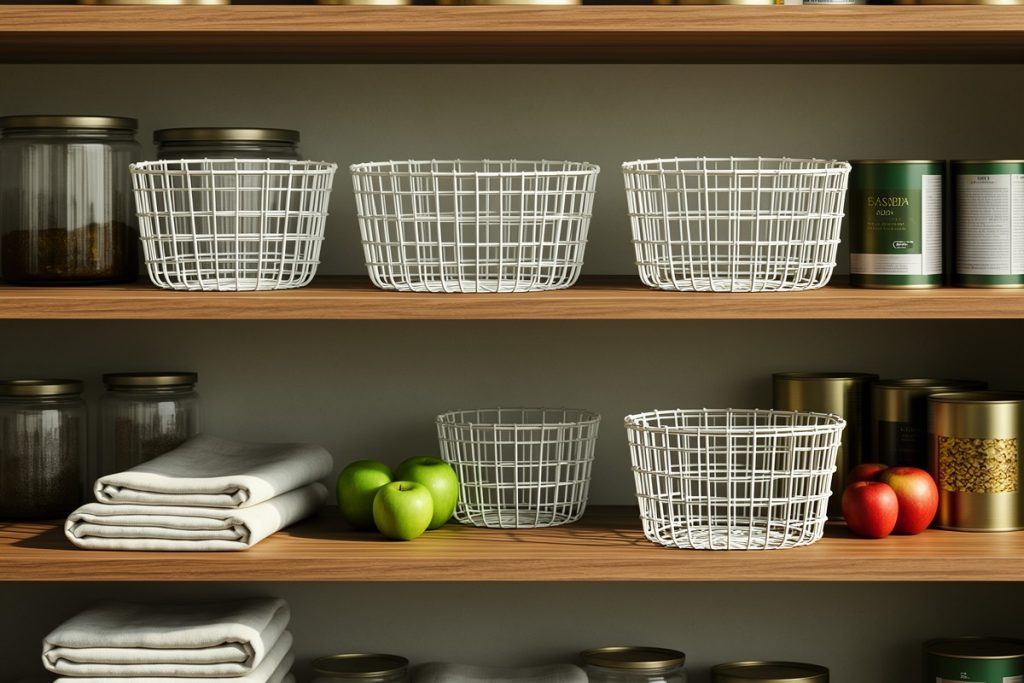
The 6 Pack Wire Baskets for Pantry Organization and Storage, Kitchen Organizer, 2 XXLarge & 2 XLarge & 2 Large is one option for households that need several basket sizes rather than a single uniform container. The mixed sizes could suit broad categories such as snacks, baking supplies, or meal components, provided the baskets fit your shelves.
It is not automatically the best choice for every pantry. Measure before buying, including the space needed to pull a basket forward. Wire sides may be less suitable for very small packets, soft bags, or items that could slip through openings. Avoid packing baskets so heavily that lifting or removing them becomes awkward. For a small pantry, a few well-chosen bins may be more useful than filling every shelf with containers.
A simple late-summer pantry organization checklist
| Task | Practical decision |
|---|---|
| Remove everything | Work one shelf or cabinet section at a time. |
| Check condition and dates | Discard damaged or questionable items and move older food forward. |
| Choose categories | Group items by meals, routines, or frequency of use. |
| Measure storage space | Record shelf depth, width, and clearance before buying baskets. |
| Return food strategically | Put daily-use items at eye level and heavy goods lower down. |
| Plan a use-soon meal | Use open packages and seasonal leftovers before restocking. |
Keep the system easy to maintain
The best organization method takes less effort to maintain than to undo. Leave a little empty space in each basket or category so new groceries have somewhere to go. When you bring home duplicates, place the older item in front and the newer item behind it.
Use broad categories instead of overly specific ones. A basket labeled in your own mind as “quick lunches” may be more useful than separate containers for crackers, wraps, and canned soup. The goal is to find food quickly, not create a filing system that requires constant sorting.
Once a month, scan the front of each shelf and pull forward anything that needs attention. Before a large seasonal grocery trip, check backstock first. That small habit can prevent duplicate purchases and make room for the ingredients you actually plan to use.
Prepare the pantry for the fall transition
As the weather changes, move fall ingredients into the most convenient zones gradually rather than reorganizing everything in one day. Bring frequently used baking supplies, grains, beans, and soup ingredients forward as they enter your meal rotation. Move summer-specific items to a secondary shelf only when you are unlikely to need them weekly.
Keep an inventory of only the items you genuinely forget, such as extra oils, specialty flours, or unopened canned goods. A short handwritten or digital list can help, but the pantry itself should remain understandable without one.
A late-summer pantry reset should leave you with fewer decisions, not more containers. Clear shelves, useful categories, sensible storage, and a modest amount of breathing room are enough to make everyday cooking feel calmer through the next season.
Sources
- Food Product Dating — U.S. Department of Agriculture, Food Safety and Inspection Service
- FoodKeeper App and Food Storage Guidance — FoodSafety.gov