
Quick answer
For people with arthritic hands, the most useful kitchen opener is not necessarily the most multifunctional one; it is the one that reduces twisting, pinching, and wrist strain without slipping. Look for a broad, non-slip grip, clear leverage, stable contact with the jar or cap, and easy cleaning. A combined jar-and-bottle opener can be practical, but confirm fit and force requirements first.
Key takeaways
- Choose tools that reduce twisting and fingertip pinching rather than simply adding more functions.
- A wide, textured handle and stable contact point matter more than a long feature list.
- Check the opener’s dimensions, mechanism, cleaning instructions, and suitable lid or cap sizes before buying.
- Persistent pain, swelling, warmth, or worsening stiffness deserves medical advice rather than a gadget-only solution.
By Zara Ahmed, Deep Research Reviewer
Last reviewed: 2026-09-14
Why ordinary jar and bottle openers can be difficult
Opening a jar looks like a small task, but it combines grip strength, finger pressure, wrist rotation, and steady positioning. If any one of those movements is painful or limited, a tightly sealed lid can turn meal preparation into a frustrating stop.
Arthritis is not one single condition. The National Institute of Arthritis and Musculoskeletal and Skin Diseases explains that osteoarthritis can affect the hands and cause pain, stiffness, swelling, and reduced movement. Rheumatoid arthritis can also affect the hands and may cause pain, tenderness, warmth, swelling, and stiffness that interferes with activities such as making a fist or buttoning clothes.
That variation matters when choosing a kitchen tool. Someone with reduced grip strength may need a larger handle, while someone with painful finger joints may benefit more from a design that reduces pinching. A tool that works well for one person may still be awkward for another.
Features that matter most in an arthritic-hand kitchen opener
Ignore exaggerated claims and start with the physical task the tool must make easier. These are the features worth checking:
| Feature | Why it matters | What to check |
|---|---|---|
| Wide, textured grip | Spreads pressure across the hand and may be easier to hold than a thin handle. | Look for rounded edges, a comfortable diameter, and a surface that does not feel slippery. |
| Mechanical leverage | Reduces the amount of force needed from the fingers and wrist. | Check how the tool engages the lid or cap and whether the motion is a lift, turn, or squeeze. |
| Stable contact | Helps prevent the jar or bottle from moving while force is applied. | Look for a secure grip on the lid and consider using a non-slip mat underneath the container. |
| Simple operation | A complicated mechanism can create extra steps and more opportunities for awkward hand positions. | Prefer a clear, repeatable motion that can be performed without precise fingertip control. |
| Easy cleaning | Kitchen tools collect food residue, especially around moving parts. | Confirm whether the tool is washable and whether hard-to-reach areas can be cleaned. |
Should you choose a multifunctional jar and bottle opener?
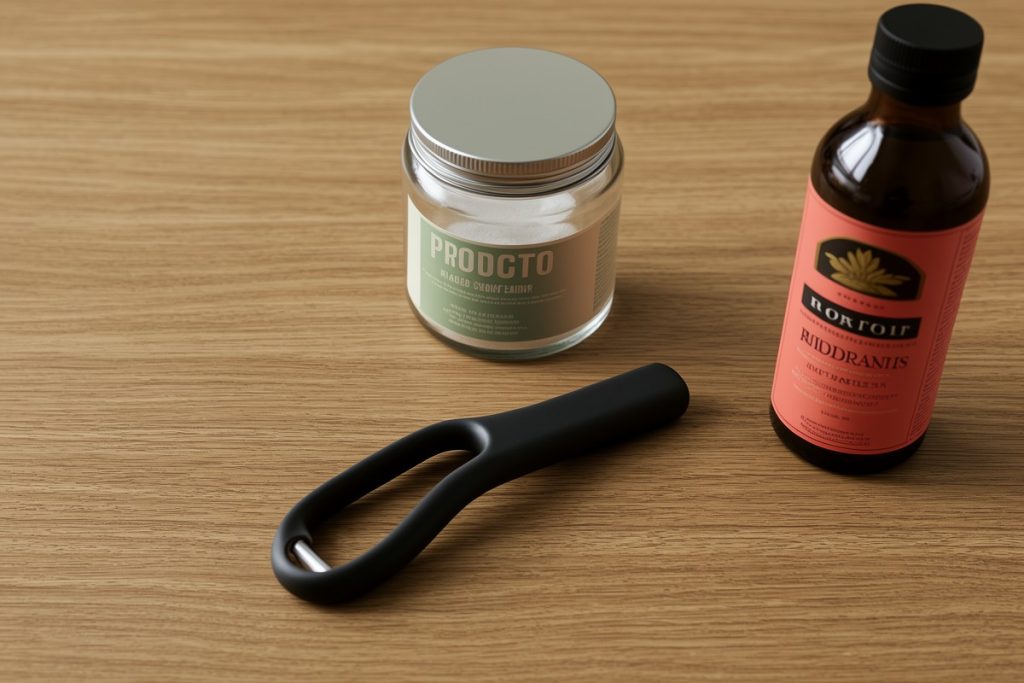
A multifunctional tool can make sense when the main goal is keeping fewer gadgets in the kitchen. One candidate in this category is a multifunctional bottle and jar opener listed for people with weak hands. Its relevance is straightforward: the listing positions it for both jar-opening and bottle-opening tasks, so it may suit someone who wants one tool for common kitchen obstacles.
That does not prove it will be comfortable or effective for every user. The listing alone does not establish the handle diameter, the amount of force required, the range of lid sizes, or how easily the mechanism can be cleaned. No hands-on performance claim is made here. Before buying, check the current product details and compare them with the user’s specific limitations.
A dedicated tool may be better if one task is especially difficult. For example, someone who regularly struggles with vacuum-sealed jars may prefer a jar opener designed around leverage, while someone who has trouble lifting metal caps may need a purpose-built bottle opener. Multifunctionality is useful only when the combined design remains comfortable and intuitive.
How to match the tool to the person using it
Start by identifying the movement that causes the problem. Is it twisting the wrist, squeezing the fingers, holding a container steady, or applying pressure with the thumb? Ask the user to describe the difficult step rather than assuming that “arthritis” automatically calls for the same type of product.
For limited grip strength, prioritize a full-hand hold and a non-slip surface. For painful finger joints, avoid tools that require a strong pinch between the thumb and index finger. For wrist discomfort, look for a design that uses leverage instead of repeated rotation. If the person has reduced sensation, be especially cautious with sharp edges, sudden release mechanisms, and tools that require substantial force.
Size is also important. A tool can be well designed but still unusable if it is too heavy, too small to hold securely, or difficult to position over the container. If possible, compare the product’s measurements with the user’s hand and storage space before ordering.
A short buying checklist
- What exact movement is painful or difficult?
- Can the user hold the handle without a tight pinch?
- Does the mechanism reduce force, or merely relocate it?
- Will it fit the jars and bottles used most often?
- Can it be cleaned without disassembly or delicate handling?
- Is there a practical alternative if the tool does not feel comfortable?
If the answers are unclear, a physical retailer may offer a better chance to assess the grip and mechanism before purchase. An occupational therapist can also suggest adaptive equipment for people whose hand function has changed significantly.
Use kitchen openers as support, not treatment
An adaptive opener can make one everyday task easier, but it cannot treat arthritis or prevent joint damage. NIAMS notes that osteoarthritis and rheumatoid arthritis can affect people differently, and symptoms may change over time. A new gadget should not be used to push through escalating pain.
Stop using a tool if it causes sharp pain, excessive wrist strain, skin irritation, or repeated slipping. Persistent swelling, warmth, significant stiffness, or declining ability to manage daily activities warrants a conversation with a healthcare professional. For someone with diagnosed rheumatoid arthritis or another inflammatory condition, worsening symptoms may require medical attention rather than a different kitchen accessory.
The best product choice is therefore practical and personal: reduce the difficult movement, make the grip secure, and choose the simplest tool that fits the user’s actual routine. A multifunctional opener can be a reasonable option, but comfort, control, and verified specifications should guide the decision.