
Quick answer
A fall bathroom reset works best when you remove expired or rarely used items, group everyday products by routine, and reserve easy-to-reach storage for the season ahead. Clear stackable drawers can help contain small cosmetics, beauty supplies, and accessories, but measure your shelves first and avoid storing damp items or heat-sensitive products where air cannot circulate.
Key takeaways
- Start by sorting everything into daily use, occasional use, seasonal use, and discard or relocate.
- Keep the products you use every morning within one easy reach zone.
- Use clear drawers for small, dry items that benefit from visibility and separation.
- Measure cabinet depth, shelf height, and drawer clearance before buying organizers.
- Build a five-minute weekly reset into your routine so clutter does not return.
By Dash Miller, Trend Forecaster
Last reviewed: 2026-09-14
Why fall is a useful time to reorganize the bathroom
Seasonal organizing is easier when it responds to a real change in behavior. As cooler weather arrives, many people shift from lightweight skincare and frequent outdoor routines to richer moisturizers, hair treatments, bath products, and slower evening rituals. That change creates a practical opportunity: move the products you are about to use into convenient locations before the countertop becomes crowded.
The goal is not to make the bathroom look like a showroom. It is to reduce searching, prevent duplicate purchases, and make cleaning simpler. A good system should still work on a rushed weekday morning. If an item requires three steps to reach, it will probably end up beside the sink again.
Begin with a four-zone seasonal sort
Do not start by buying containers. First, empty one drawer, cabinet, or shelf at a time and sort the contents. This prevents you from organizing products you no longer want and shows you what kind of storage is actually needed.
| Zone | What belongs there | Best location |
|---|---|---|
| Daily | Items used most mornings and evenings | Top drawer or open caddy |
| Occasional | Hair tools, masks, grooming accessories | Accessible cabinet shelf |
| Seasonal | Cold-weather products and travel-size extras | Higher shelf or labeled storage area |
| Remove | Expired, empty, leaking, or unwanted items | Dispose or relocate promptly |
Keep similar routines together rather than grouping only by product type. For example, an evening-care section might contain moisturizer, lip balm, and a sleep mask, while a hair section holds clips, brushes, and styling accessories. Routine-based grouping saves more time than a perfectly uniform arrangement.
Choose storage based on the item, not the trend
Bathroom storage has to deal with limited space, moisture, and frequent handling. Before choosing a bin or drawer, ask four questions: Is the item small? Is it dry? Do I need to see it? Will I use it often?
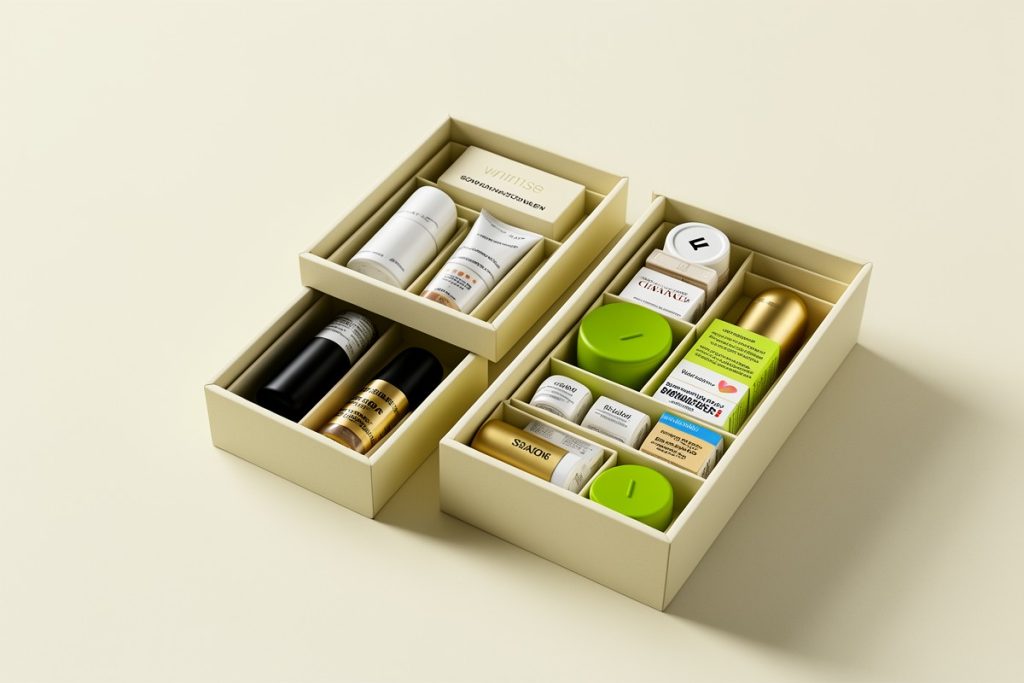
Clear drawers are most useful for collections of small, dry items that disappear easily in a deep cabinet. Cosmetics, hair accessories, sample-size products, cotton items, and grooming tools can each have a defined place. Visibility also makes it easier to notice when you already have enough of something.
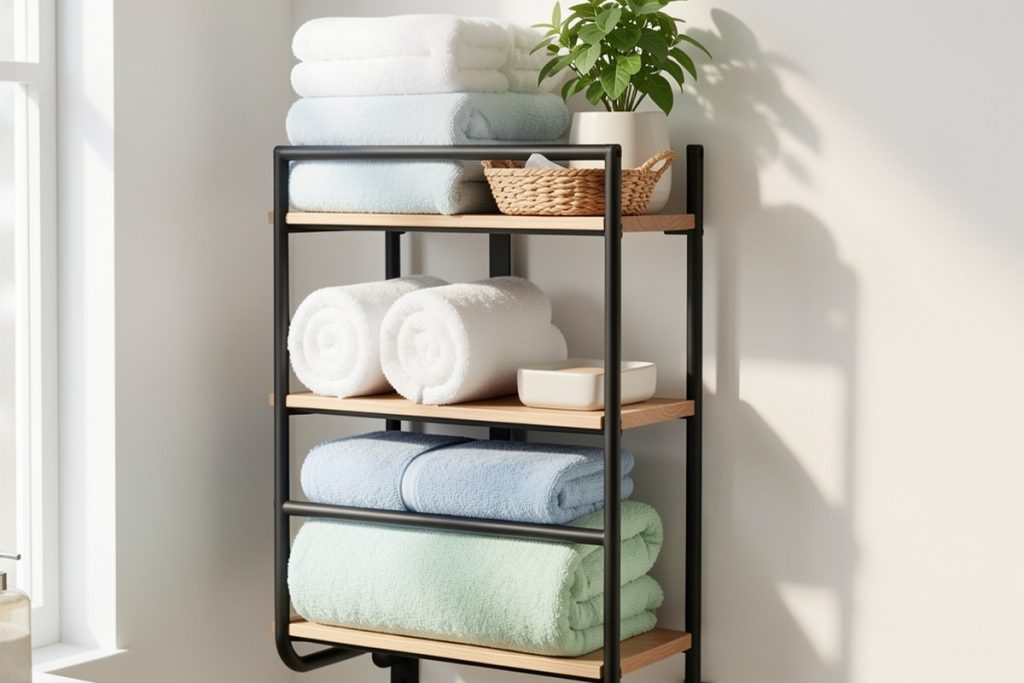
Open baskets work better for bulky items such as towels or spare toilet paper. A shallow tray is often more practical for daily products because it can be lifted out and wiped underneath. Tall bottles may need a shelf riser rather than a drawer, particularly if the drawer opening is narrow.
Where the Vtopmart drawer set may fit
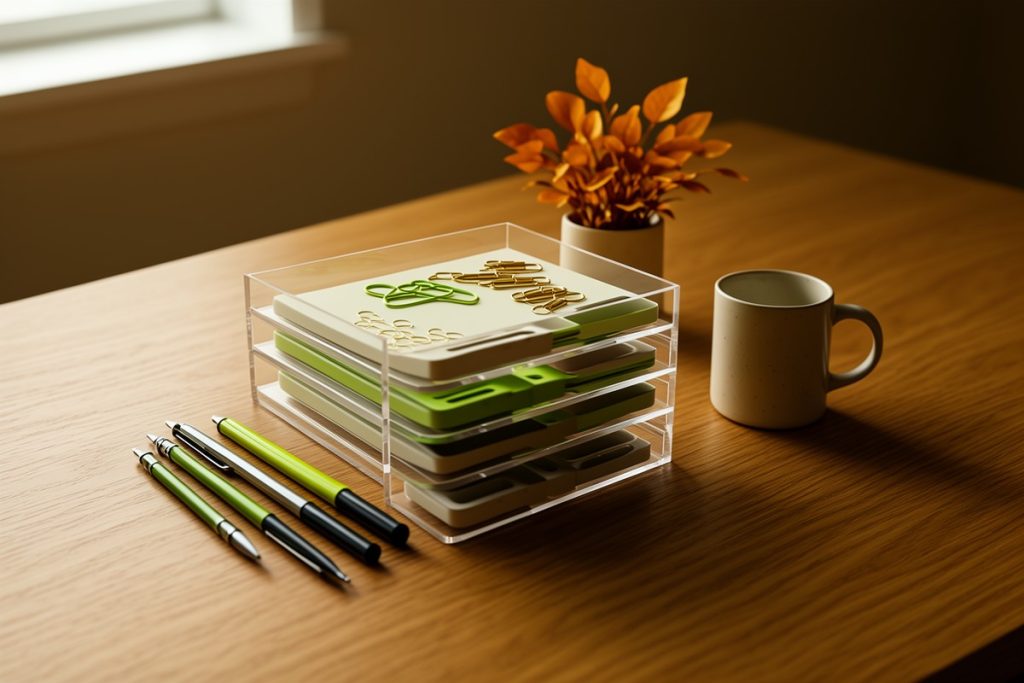
The Vtopmart Clear Stackable Storage Drawers Set of 4 is a reasonable option for a bathroom cabinet, vanity, or pantry area when the main problem is small-item separation. The listing describes clear, stackable plastic drawers intended for makeup, cosmetics, beauty supplies, and cabinet organization. That makes the set potentially useful for keeping seasonal accessories visible without spreading them across the counter.
It is not automatically the right choice for every bathroom. Stacking can make the lower drawer less convenient to reach, and clear plastic exposes visual clutter instead of hiding it. The drawers may also be a poor fit for tall bottles, wet tools, heavy containers, or products that need ventilation. Treat the set as a modular solution for compact dry items, not a universal replacement for shelves and baskets.
Before ordering, measure the full cabinet opening, usable depth, shelf height, and the space needed to pull each drawer forward. Compare those measurements with the product dimensions in the listing. Leave enough room to open the drawers without hitting the vanity edge or nearby bottles.
Build a fall setup in 20 minutes
Once you have sorted the contents, use this sequence to avoid overthinking the layout:
- Clear the surface. Move everything off the countertop and wipe it before returning anything.
- Pull out seasonal items. Bring forward the products you expect to use during cooler weather.
- Create one daily zone. Keep morning and evening essentials together, ideally at waist or eye level.
- Contain small categories. Give hair accessories, cosmetics, and grooming tools separate homes.
- Store backups elsewhere. Keep unopened extras out of the daily-use area so they do not compete for attention.
- Test the routine. Open each drawer or cabinet as you normally would. If anything catches, blocks access, or requires rearranging, fix it now.
A simple practical checklist can keep the reset focused:
- Measure before purchasing storage.
- Discard empty or damaged containers.
- Keep wet items separate from dry products.
- Place heavy items low and stable.
- Leave one small area open for future purchases.
Keep products clean, dry, and easy to inspect
Organization should not make personal-care products harder to use safely. Wipe containers before putting them away, close caps firmly, and avoid placing damp brushes, cloths, or sponges inside enclosed drawers. If a product has changed smell, color, or texture, treat that as a reason to check its condition rather than keeping it because the container looks attractive.
For cleaning, first determine whether a surface needs ordinary cleaning or a stronger disinfecting step. The U.S. Environmental Protection Agency explains that cleaning removes dirt and impurities, while disinfecting uses products intended to kill germs on surfaces. Follow the product label and never mix cleaning chemicals. Keep household cleaners physically separate from cosmetics and toiletries to reduce confusion and accidental contact.
Cosmetics also deserve a quick seasonal review. The U.S. Food and Drug Administration advises consumers to pay attention to changes in a cosmetic’s smell or appearance and to keep containers closed when not in use. A clear drawer helps with visibility, but it does not extend a product’s useful life or replace sensible storage.
Make the system stay organized through winter
Use a one-in, one-out rule for crowded categories. When you buy a new moisturizer, mascara, or styling product, decide where it will live before bringing it into the bathroom. If the drawer is full, the answer is not always a larger organizer; it may be time to remove an old or duplicate item.
Schedule a five-minute reset once a week. Return loose items to their zones, wipe the most-used surface, and move seasonal products that no longer match your routine. At the end of winter, repeat the same sort in reverse: bring spring and summer items forward, then store colder-weather products together. A seasonal system works when it changes with you instead of demanding constant perfection.
Sources
- Safer Choice — U.S. Environmental Protection Agency