
Quick answer
Organize a seasonal medicine cabinet by removing expired items, keeping medicines in their original containers, and grouping supplies by purpose rather than by package size. Store everything in a cool, dry, secure location away from children and pets. Keep frequently needed items easy to reach, but separate prescriptions and temperature-sensitive products from general first-aid supplies.
Key takeaways
- Do a seasonal medicine check four times a year, especially before winter travel or allergy season.
- Keep medicines in original containers and follow each product’s storage instructions.
- Use separate zones for daily medicines, seasonal relief, first aid, and travel supplies.
- A portable organizer can improve visibility, but it is not a replacement for locked, child-resistant storage.
By Dash Miller, Trend Forecaster
Why a seasonal medicine reset is worth doing
Most household medicine cabinets become difficult to use gradually. A cough syrup gets pushed behind sunscreen, spare bandages end up in a bathroom drawer, and an old prescription stays because nobody remembers whether it is still needed. The problem only becomes obvious when someone is sick, injured, or packing for a trip.
A seasonal reset turns that cluttered cabinet into a small, reliable household system. You are not trying to stock every possible remedy. You are checking what you already have, removing what should no longer be used, and placing useful supplies where the right person can find them quickly.
Spring is a useful time to review allergy and outdoor first-aid supplies. Before summer travel, check motion-sickness products, sunscreen, insect-bite care, and travel containers. In fall, review cold-weather and respiratory-care supplies. Before winter holidays, check the basics you may need when stores or pharmacies are less convenient.
Start with a safe sort, not a shopping list
Take everything out of the cabinet or drawer and sort it into four groups: everyday medicines, seasonal supplies, first-aid items, and items that need disposal or professional advice. This makes it easier to see duplicates and notice products that have been stored in the wrong place.
Check expiration dates, but do not rely on the date alone. MedlinePlus advises avoiding medicines that have changed color, texture, or smell, as well as pills that are cracked, chipped, unusually soft, or stuck together. If a product looks damaged or its storage history is uncertain, ask a pharmacist rather than guessing.
Keep medicines in their original containers whenever possible. The container preserves important instructions and helps prevent mix-ups between similar-looking products. Do not combine different medicines into one unmarked container, even if doing so appears to save space.
Choose a better location than the bathroom
A bathroom cabinet is convenient but often exposed to heat and moisture from showers, baths, and sinks. Those conditions can damage some medicines before their printed expiration dates. A cool, dry bedroom drawer, hallway cabinet, or closet shelf may be more suitable, provided it is out of sight and reach of children and pets.
Read the storage instructions for products that require special handling. Some items may need refrigeration, protection from light, or another specific temperature range. Keep those products separate from general supplies, and do not assume a portable organizer is appropriate for them.
Safety also depends on access. If children or visitors could reach the storage area, use a locked cabinet or an appropriate child-safety solution. A tidy arrangement is helpful, but organization alone does not make medicines safe.
Create four practical storage zones
Once the safe location is chosen, organize by use. The goal is to reduce searching without encouraging unnecessary medication use.
| Zone | What belongs there | Useful placement |
|---|---|---|
| Everyday | Currently used prescriptions and regularly used over-the-counter products | Easy for the responsible adult to access, secured from children |
| Seasonal | Products used during allergy, cold, travel, or outdoor seasons | Visible but separate from daily medicines |
| First aid | Bandages, gauze, gloves, antiseptic supplies, and basic wound-care items | Portable and easy to carry to the incident |
| Review or disposal | Expired, unwanted, damaged, or unidentified products | Separated from usable supplies until handled safely |
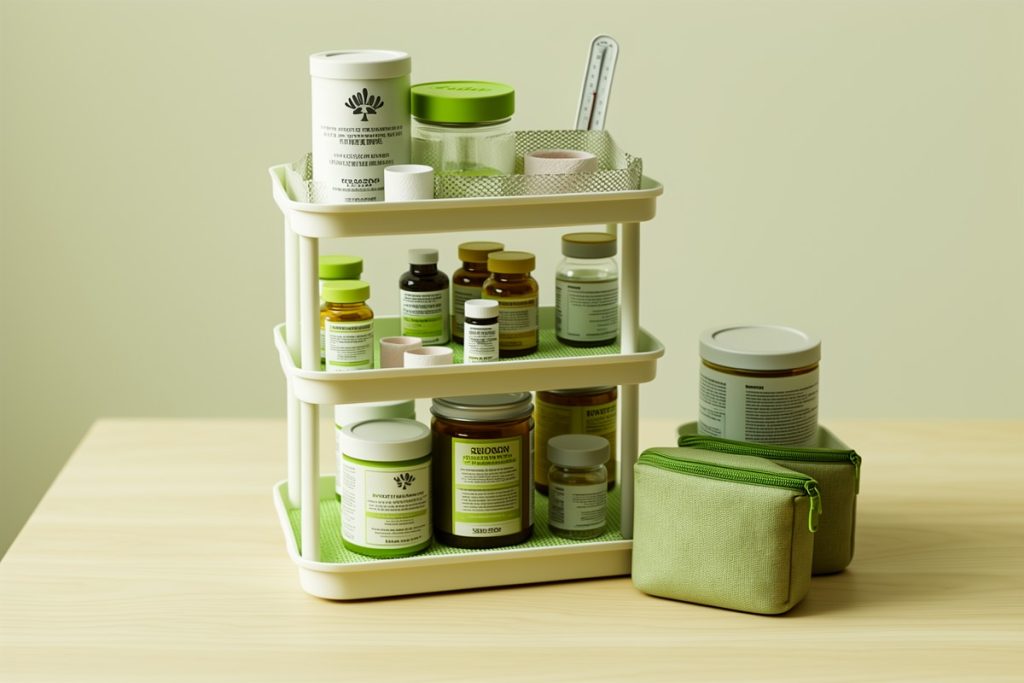
For households with limited storage, a small portable container can make the seasonal and first-aid zones easier to move. The CTIME 3-Tier Medicine Organizer is described as a portable, handled organizer with three tiers and space for medicine or first-aid supplies. It may suit a household that wants grouped items in one movable container, but check its dimensions, compartment arrangement, and closure before buying. It should not be used to override product-specific storage instructions or replace locked storage for medicines that require restricted access.
Use a simple seasonal checklist
A short checklist prevents the reset from turning into an all-day project. Set aside 20 to 30 minutes and work one category at a time.
- Remove every item from the cabinet or organizer.
- Check expiration dates, physical condition, and storage requirements.
- Return usable products to their original containers.
- Separate prescriptions from general household supplies.
- Move seasonal items into a clearly defined zone.
- Check that first-aid supplies are clean, sealed, and sufficiently stocked.
- Place the organizer somewhere cool, dry, and inaccessible to children and pets.
- Write a reminder for the next seasonal review.
Do not automatically throw medicines into the sink or toilet. The FDA recommends using a drug take-back location or mail-back option for many unwanted medicines. If those options are unavailable, follow the product instructions and FDA disposal guidance. Some medicines have specific flushing instructions, while others should be mixed with an undesirable substance, sealed, and placed in household trash according to the guidance.
What not to store in the same organizer
Separating supplies is especially important when a container will be carried around the home. Avoid placing loose pills, unidentified tablets, or medicines removed from their labeled packaging into shared compartments. Keep needles, sharp objects, and aerosol products separate and follow their disposal instructions.
Do not leave medicine in a car, especially during very hot or cold weather. Travel supplies should remain in original containers and, when flying, generally stay in carry-on luggage. If you are unsure about a prescription, dosage, interaction, or storage condition, ask a pharmacist or healthcare professional instead of relying on a cabinet label or memory.
Make the system easy to maintain
The best medicine cabinet is not the one with the most products. It is the one that makes safe decisions easier when someone is tired, rushed, or unwell. Keep frequently used supplies visible to the responsible adult, place seasonal items together, and avoid filling unused space with products nobody expects to use.
Set a recurring reminder for the start of each season. At every review, remove only what is expired, damaged, unwanted, or no longer appropriate, then replace essentials based on your household’s actual needs. That small habit keeps the cabinet current without turning seasonal preparation into panic buying.
Last reviewed: 2026-09-18
Sources
- Storing your medicines: MedlinePlus Medical Encyclopedia
- Where and How to Dispose of Unused Medicines from the U.S. Food and Drug Administration
- Drug Disposal: FDA’s Flush List for Certain Medicines