
Quick answer
Organize seasonal shoes by keeping the pairs you will wear in the next few weeks near the door and moving everything else to a clean, dry storage zone. Sort by real use, inspect each pair, and choose containers that fit your shelves without creating unstable stacks. A small active rotation is easier to maintain than storing every pair in the entryway.
Key takeaways
- Keep only near-term footwear in the entryway’s active rotation.
- Clean and completely dry shoes before placing them in closed storage.
- Measure shelves and footwear before buying stackable organizers.
- Store daily pairs at easy reach and heavier containers lower down.
- Review the rotation after two weeks and adjust it to your actual routine.
By Autumn Cole, Seasonal Lifestyle Curator
Start with a seasonal shoe rotation, not a bigger closet
A seasonal shoe changeover works best when it reduces decisions. Instead of trying to organize every pair at once, decide which footwear genuinely belongs within reach for the next two to four weeks. Weather, work, school, exercise, commuting, and weekend plans should guide the selection.
For a typical transitional season, the active group might include everyday sneakers, comfortable shoes for errands, one weather-resistant pair, and footwear for work or social occasions. Add boots, sandals, or athletic shoes only when you expect to use them soon. The right number depends on your household, but every pair in the entryway should have a clear near-term purpose.
Gather shoes from the entryway, closet floor, bedroom, and car. Put them into four groups: wear now, store for later, repair or clean, and donate or recycle. This prevents the common mistake of organizing pairs that no longer fit your lifestyle.
Prepare footwear before putting it away
Storage begins with clean, dry shoes. Brush away loose dirt and follow the care instructions for the material. Let damp shoes dry completely at room temperature before placing them in a closed container. The U.S. Environmental Protection Agency identifies moisture control as an important part of preventing mold, so sealing wet footwear can create a problem rather than solve one.
While each pair is out, inspect the soles, laces, fasteners, insoles, and heels. Set aside damaged shoes for repair instead of returning them to the active rotation. A small repair pile is useful only if it has a next step, such as visiting a cobbler or ordering replacement laces.
Be cautious with cleaning advice found online. A method that works for canvas may damage suede, leather, mesh, or specialty coatings. Manufacturer care instructions should take priority. Nike’s general shoe-care guidance, for example, recommends adapting cleaning methods to the shoe’s materials and avoiding harsh approaches that may cause damage.
Keep stored shoes away from direct sunlight, heaters, damp floors, and areas with large temperature swings. A cool, dry closet shelf is usually a better choice than a humid garage or an outdoor cabinet. If you use a closed box, make sure the footwear is fully dry before closing it.
Match storage to how often you wear each pair
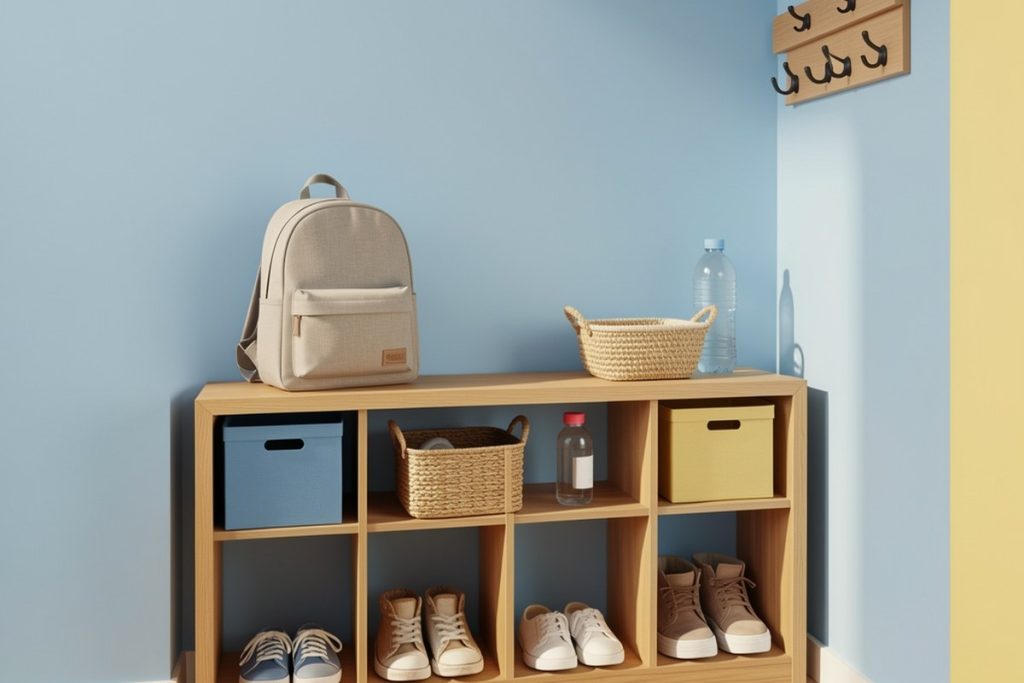
Not every shoe needs the same level of access. Place daily footwear at the easiest reach, occasional pairs on a higher shelf, and genuinely off-season shoes at the back of a closet or under the bed. Keep the heaviest containers low, and avoid building a tall stack that wobbles when someone removes a box from the bottom.
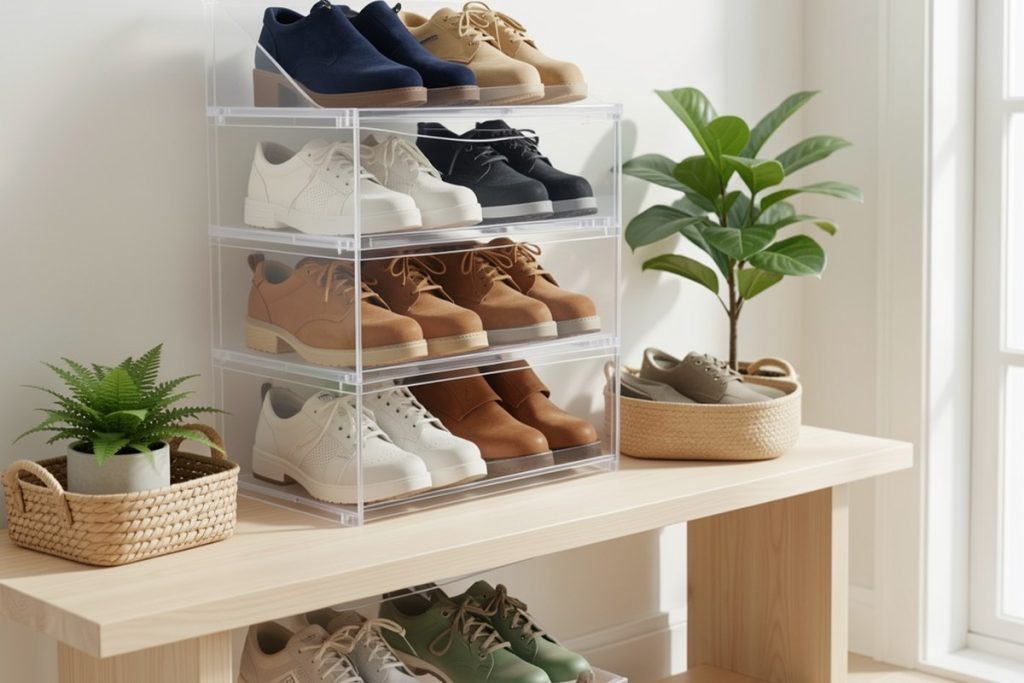
Containers are helpful when they protect the shoes, fit the available space, and allow you to retrieve a pair without unpacking several others. Clear stackable boxes with drop-front openings can make a closet, entryway, or under-bed arrangement easier to see and access. They are not automatically suitable for every shoe, however. Measure the storage area and compare those measurements with the internal space needed for boots, high-tops, wide shoes, or pairs with bulky details.
As an Amazon Associate, GetWitty may earn from qualifying purchases. If you need contained, visible footwear storage, the Kuject X-Large Shoe Storage Boxes 12 Pack, Clear Stackable Shoe Organizer is one option to compare. Its listed features include clear construction, stackability, a drop-front design, and a 12-box set. Those features may suit a compact organization system, but they do not guarantee that every shoe will fit. Measure first and consider whether closed storage is appropriate for the footwear you own.
Open trays can be better for shoes that are worn daily or may still be airing out. Closed organizers are more useful for clean, dry pairs that benefit from separation and a tidier footprint. Combining both approaches keeps frequently used footwear accessible without allowing the whole entryway to become a storage zone.
Use this simple changeover process
Set aside 30 to 45 minutes for the seasonal switch. Working in one session makes it easier to see duplicates, identify neglected pairs, and test whether your new arrangement is practical.
| Step | What to do | Useful decision rule |
|---|---|---|
| Gather | Collect shoes from every storage area. | Do not organize pairs you have not seen together. |
| Inspect | Clean, dry, and check each pair. | Repair or clean before storing. |
| Select | Choose footwear for the next few weeks. | Keep only pairs with likely near-term use. |
| Place | Arrange shoes by access level. | Daily pairs get the easiest reach. |
| Test | Remove and return one pair from each stack. | Change the layout if retrieval feels awkward. |
For shared entryways, give each person a defined active zone rather than allowing every shoe to spread across every shelf. For children, keep frequently worn pairs low enough to reach safely. For adults, reserve the most convenient locations for footwear used daily instead of automatically assigning them by ownership.
A practical checklist for seasonal shoe storage
- Check the coming weeks’ weather and calendar.
- Choose daily, work, exercise, and weather-backup footwear.
- Clean and completely dry every pair headed into storage.
- Inspect soles, laces, insoles, and closures.
- Measure shelves, containers, and bulky footwear before stacking.
- Keep heavy boxes low and test stack stability.
- Leave damp or frequently worn shoes in an open-air location.
- Reassess the rotation after two weeks.
That two-week review is where the system becomes genuinely useful. If one pair has not been worn, move it out of the active zone. If rain shoes keep blocking the doorway, give them a dedicated tray. If a stored pair is difficult to retrieve, change its location instead of treating the inconvenience as a personal failure.
Make the system easy to maintain
A good seasonal shoe setup should take minutes to use on an ordinary morning. Keep pairs together, return them to the same area, and avoid filling every available inch of the entryway. Leaving a little spare capacity makes it easier to handle muddy days, unexpected weather, or a new pair without starting over.
The most effective storage solution is not necessarily the largest set of containers or the neatest-looking arrangement. It is the one that protects clean, dry footwear while making the shoes you actually wear easy to find. Start with a small rotation, measure before purchasing organizers, and adjust the layout based on real habits rather than an idealized closet.
Last reviewed: 2026-08-17
Sources
- A Brief Guide to Mold, Moisture and Your Home — U.S. Environmental Protection Agency
- How to Clean Shoes — Nike
- FTC’s Endorsement Guides — Federal Trade Commission