
Quick answer
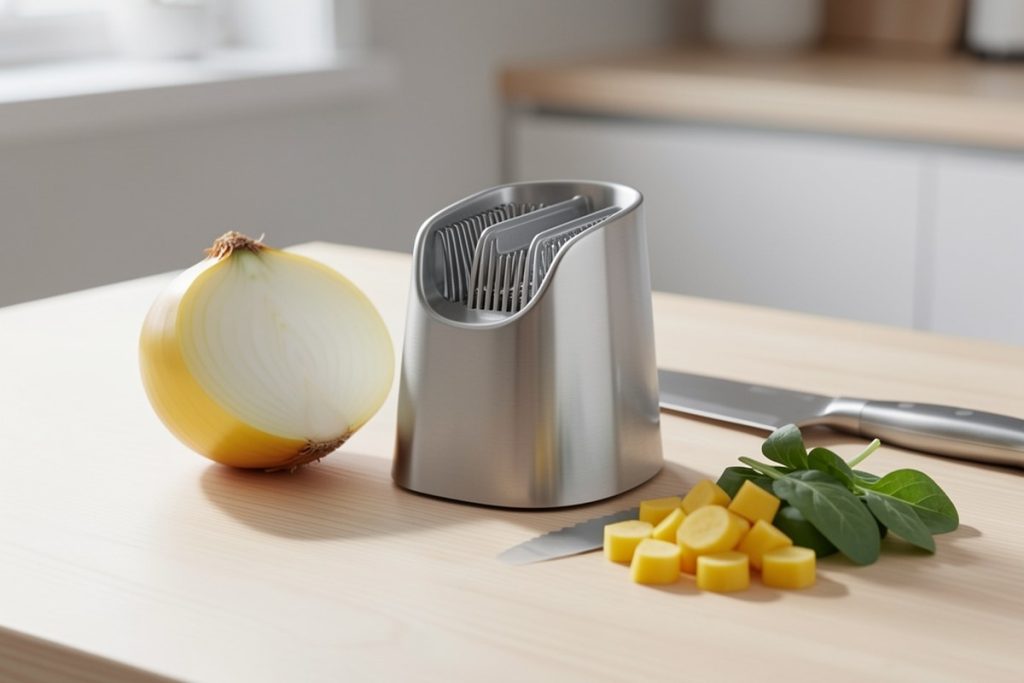
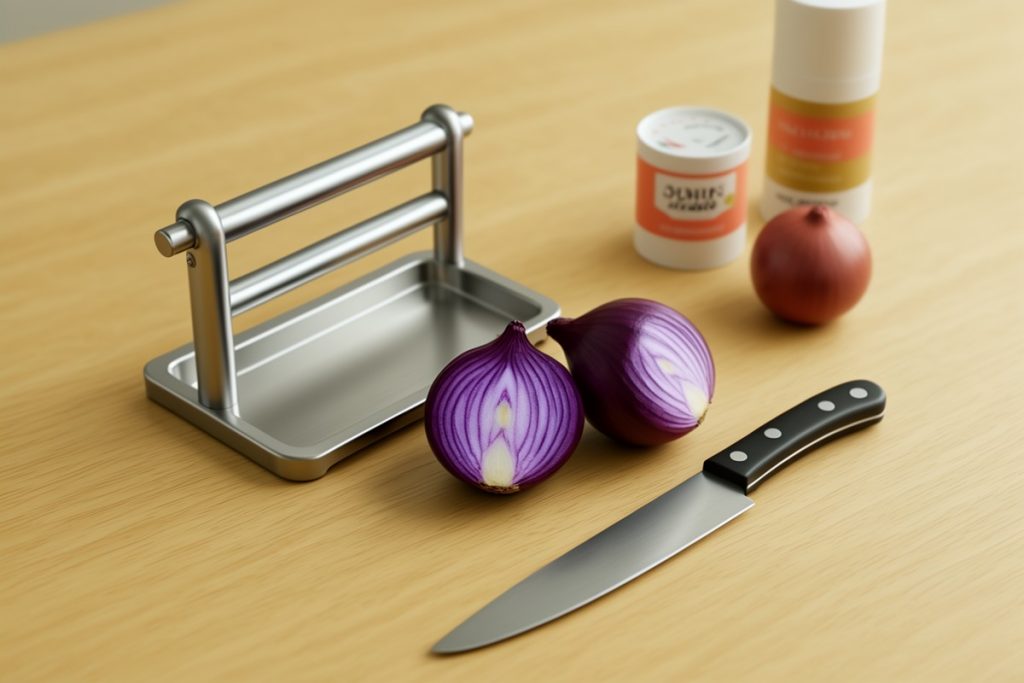
If you regularly struggle to keep an onion steady while making thin, consistent slices, an onion holder can be a useful kitchen aid. The Stainless Steel Onion Holder is worth considering because its purpose is straightforward: anchor produce while a knife passes between the holding points. It will not replace a sharp knife, a stable cutting board, or careful technique.
Key takeaways
- An onion holder is most useful for creating steadier, more uniform slices.
- It helps keep fingers farther from the blade but does not eliminate cutting risk.
- Look for secure food contact, practical tine spacing, easy cleaning, and a comfortable grip.
- Use it as a supplemental tool, not as a substitute for knife skills or a stable board.
Why an onion holder can solve a real kitchen problem
Onions are awkward to slice because their rounded shape moves as the knife applies pressure. The layers can separate, the cut surface can become slippery, and the final few slices often require your fingertips to move closer to the blade. That combination makes a simple preparation task feel less controlled than it should.
An onion holder addresses the stability problem by giving you a firm point to grip while its metal points hold the food in place. The practical benefit is not magic speed. It is a more predictable cutting path, especially when you want similarly sized slices for fajitas, burgers, sandwiches, soups, or a sheet-pan meal.
This type of gadget is most appealing to home cooks who prepare onions regularly, people who find round produce difficult to control, and anyone building confidence with a chef’s knife. It may also help when a recipe calls for thin, even slices rather than roughly chopped pieces.
What to look for in the best onion holder
A useful holder should make the cutting motion simpler without creating new problems. Consider these five details before buying or using one.
- Secure food contact: The holding points should enter the onion firmly enough to reduce sliding. If the food shifts as soon as you begin cutting, the tool provides little practical value.
- Useful spacing: Narrower spacing can help with thinner slices, while wider spacing may suit larger cuts. The right layout depends on how you normally prepare onions.
- Comfortable grip: You should be able to hold the tool without placing your fingers near the knife’s path. A grip that feels awkward can encourage rushed or uneven cuts.
- Easy-to-clean construction: Food particles can collect around the points and handle. Stainless steel is a practical material to inspect and wash, but narrow spaces still require attention.
- Enough clearance: The knife should be able to move between the holding points without striking the metal. A tool that interferes with the blade is frustrating and potentially hazardous.
Who should use one—and who may not need it
An onion holder is a reasonable purchase for someone who slices onions several times a week or dislikes the final, unstable portion of an onion. It can also be useful for cooks who want a repeatable setup while practicing controlled knife movements. The benefit is modest but concrete: better positioning and less need to steady the onion directly with your fingertips.
It is less compelling if you usually chop onions roughly, already have excellent knife control, or dislike washing small kitchen accessories. A good chef’s knife and a stable cutting board remain more versatile purchases. The holder cannot sharpen a dull blade, compensate for a rocking board, or make an unstable onion safe to cut quickly.
It is also worth being realistic about other produce. An onion holder may be marketed for items such as tomatoes, avocados, eggs, and vegetables, but different foods have different textures and shapes. Soft produce can crush, split, or slip if too much pressure is applied. Treat each use as a separate fit and control question rather than assuming one gadget works equally well for everything.
Quick comparison: holder or standard knife technique?
| Situation | Onion holder | Standard technique |
|---|---|---|
| Thin, repeated slices | May improve spacing and stability | Works well with practiced claw grip |
| Rough chopping | Usually unnecessary | Faster and more flexible |
| Small or soft produce | Check fit and pressure carefully | Requires controlled, deliberate cuts |
| Limited storage or cleaning time | Adds another utensil to maintain | Uses tools already in the kitchen |
The comparison points to the sensible buying rule: choose the holder for a specific recurring frustration, not because every kitchen task needs a specialized gadget.
How to use an onion holder more safely
Start with a clean, stable cutting board on a level work surface. Prepare the onion so it has a reasonably flat side rather than trying to hold a completely rolling piece. Place the holder securely into the food, keep your non-cutting hand behind the tool, and move the knife slowly through the open spaces. Stop before the blade contacts the metal.
Do not force the knife, saw aggressively, or continue if the onion begins to rotate. Reposition the food or holder instead. A sharp, well-maintained knife generally requires less pressure than a dull one, which makes controlled cutting easier. Keep the tool, board, and knife clean between foods, particularly when moving from raw ingredients to ready-to-eat items.
The FDA recommends washing produce under running water before cutting or eating it, even when the outer skin will be removed. After preparation, follow sensible refrigeration and storage practices for cut produce. The USDA’s FoodKeeper resource can help with storage guidance for specific foods and preparation situations.
A practical buying and use checklist
- Does the holder solve a problem you encounter often?
- Can you grip it securely without putting fingers in the knife’s path?
- Will your usual onion sizes fit between the holding points?
- Can you clearly wash around the points and handle?
- Is there enough room for your knife to pass without hitting metal?
- Are you prepared to cut slowly rather than treating the tool as automatic protection?
If the answer is yes to most of these questions, an onion holder is a sensible small upgrade. If not, investing in a stable board, knife sharpening, or basic cutting practice may provide more value.
Last reviewed: 2026-09-25
Sources
- Selecting and Serving Produce Safely — U.S. Food and Drug Administration
- FoodKeeper App — U.S. Department of Agriculture, Food Safety and Inspection Service