
Quick answer
The best dorm-room or first-apartment tool kit covers everyday jobs without taking over your closet. Prioritize screwdrivers, pliers, a tape measure, hex keys, a utility knife, and a compact organizer. A powered screwdriver can save effort, but it should have adjustable control. Choose a kit that matches your likely repairs, then add specialized tools only when a real project requires them.
Key takeaways
- Start with tools for furniture assembly, loose hardware, hanging items, and basic measuring.
- A compact organizer is more useful than a large kit filled with tools you cannot identify or store.
- Adjustable torque and a manual screwdriver help reduce stripped screws and damaged surfaces.
- Turn off power before working near electrical components, and avoid repairs that require specialized training.
By Tommy Ruiz, Everyday Problem Solver
Start with the repairs you are most likely to face
A starter tool kit should solve common problems, not imitate a contractor’s toolbox. In a dorm room or first apartment, the most likely jobs are tightening a loose chair, assembling flat-pack furniture, adjusting cabinet hardware, hanging approved items, measuring a space, or replacing a simple screw.
That makes versatility more important than quantity. A compact kit with useful basics can handle more real situations than a bulky set containing obscure sockets or specialty bits. Before buying, think through the space you live in. A renter may need tools for furniture and household adjustments but may not be allowed to drill into walls. A dorm resident may have even stricter rules and less storage.
Also consider the fasteners already around you. Phillips screws are common in household furniture, while flat-head screws, hex bolts, and smaller precision screws may appear in appliances or electronics. The right bit assortment matters only if it matches those fasteners.
The essential tool categories for a small home
| Tool category | Useful for | What to look for |
|---|---|---|
| Screwdrivers and bits | Furniture, hinges, handles, and brackets | Common Phillips and flat-head sizes plus hex bits |
| Pliers | Holding, turning, and gripping small parts | Comfortable handles and secure jaws |
| Tape measure | Checking furniture fit and hanging locations | Clear markings, locking blade, and manageable length |
| Hex keys | Flat-pack furniture and bicycle adjustments | Several common metric sizes |
| Utility and finishing tools | Opening packages, trimming material, and small adjustments | Controlled cutting, storage, and safe handling |
These categories cover the core of a practical kit. A small adjustable wrench can be useful for nuts, but it should not be used as a substitute for the correct size wrench when a job requires a precise fit. Likewise, a hammer is helpful for some household tasks, but it may not be necessary if your immediate needs are mostly assembly and adjustment.
How to compare manual and powered screwdrivers
A manual screwdriver gives you direct feedback. You can feel when a screw is misaligned or when the material is beginning to resist. That makes it a dependable choice for delicate hardware, soft wood, plastic, and final tightening.
A powered screwdriver can make repetitive assembly faster and easier, especially when several screws are involved. The important feature is control, not simply speed. Adjustable torque settings help you use less force on delicate materials and more force when appropriate. An integrated light can also improve visibility in a cabinet or narrow corner, but it does not replace careful alignment.
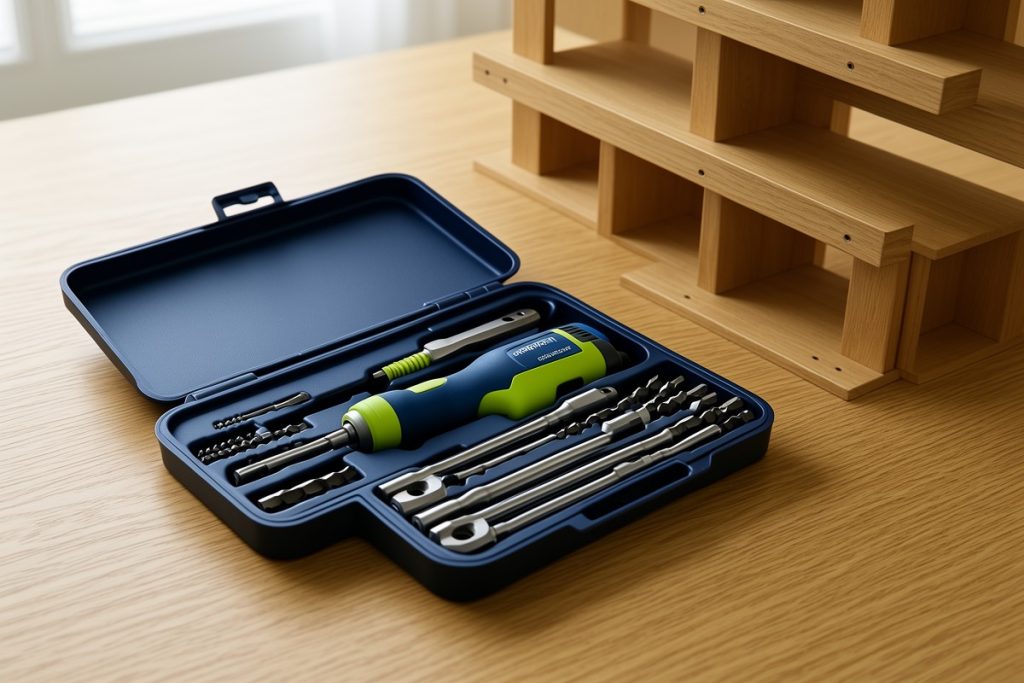
For a compact option, the HOTO 40-Piece Tool Kit listing combines 14 tools with 26 accessories, including a smart electric screwdriver with LED lighting and three torque settings. Those features make it relevant for routine apartment assembly and adjustments. It is still a starter kit, not a complete solution for plumbing, electrical, masonry, automotive, or heavy construction work. Check the included pieces against your actual needs before choosing it.
Judge the kit by storage, control, and fit
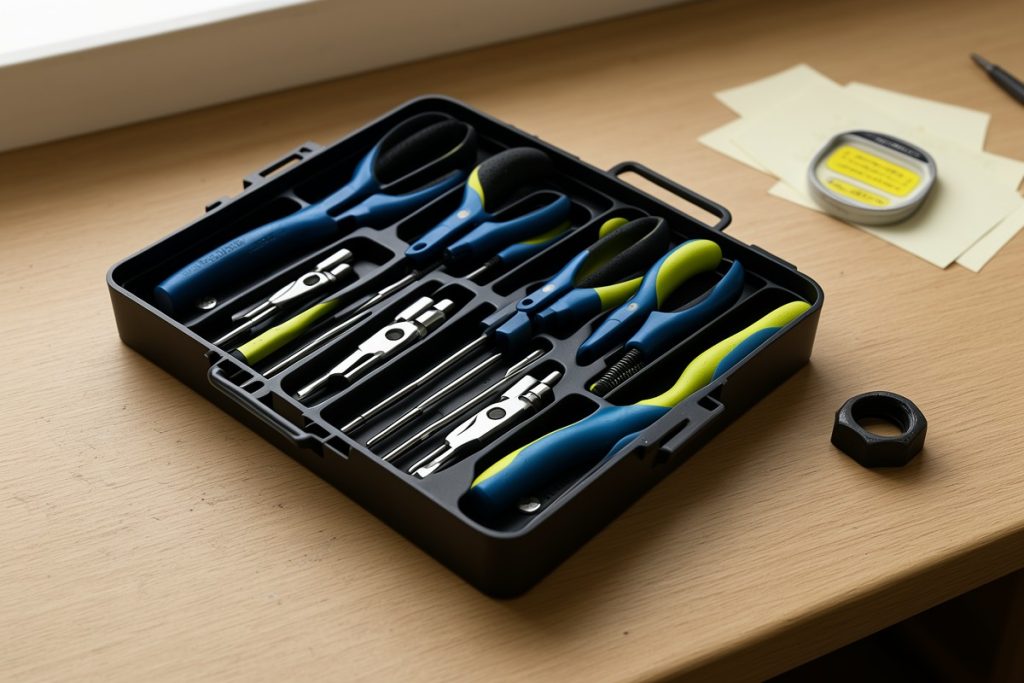
Tool quality is only part of the decision. In a small living space, the organizer affects whether you will use the tools or leave them scattered in a drawer. Look for a case that keeps pieces visible and prevents small bits from disappearing. A compact layout is helpful, but only if each item can be removed without emptying the entire case.
Handles should feel secure rather than slippery, and metal parts should sit firmly in their holders. For a powered screwdriver, confirm that the controls are easy to understand and that the bit connection feels stable. If the product listing does not explain a specification you care about, treat that as an unanswered question rather than assuming the feature is included.
Do not choose based on the piece count alone. “More accessories” may mean more duplicates or specialized parts you will rarely use. A smaller set with clearly useful tools can be the better first purchase, especially when your storage is limited.
Use a simple, safe workflow for everyday repairs
Before starting, identify the fastener and choose the closest-fitting bit. Push the tool straight into the screw instead of holding it at an angle. Apply steady pressure and stop if the bit slips repeatedly. Repeated slipping can damage the screw head or the surface around it.
For furniture, support the piece so it does not shift while you tighten it. Tighten gradually and stop when the joint is secure; excessive force can strip threads, crack particleboard, or damage plastic. If a screw spins without tightening, the hole or insert may be damaged and needs a different solution.
Take extra care around electricity. Do not open outlets, switches, appliances, or wiring unless you understand the hazard and have confirmed the correct procedure. OSHA’s hand and power tool guidance emphasizes using tools properly, inspecting them before use, and removing damaged tools from service. When the job involves exposed wiring or uncertainty, contact a qualified professional instead of experimenting.
First-apartment tool kit checklist
- Identify the three repairs or assembly tasks you expect to handle.
- Confirm the kit includes matching screwdriver bits and common hex sizes.
- Check that pliers, measuring tools, and small accessories have secure storage.
- Choose manual control or adjustable powered control for delicate materials.
- Read your lease, dorm rules, or housing policy before drilling or mounting anything.
- Keep safety glasses available for cutting, drilling, or work that may create debris.
- Store the kit where it is dry, accessible, and out of reach of children.
Know when a starter kit is not enough
A basic kit is appropriate for light household maintenance, but it has clear limits. Do not use it as a reason to tackle gas lines, structural repairs, live electrical work, major plumbing, or anything involving a safety-critical appliance. Specialized jobs may require proper isolation procedures, calibrated tools, permits, or professional expertise.
For furniture that could tip, secure it according to the manufacturer’s instructions and use appropriate anchoring hardware. The U.S. Consumer Product Safety Commission’s Anchor It campaign explains why unstable furniture can create serious risks, particularly for children. A small tool kit helps with many routine tasks, but safe judgment matters more than having every attachment.
The best first tool kit is the one you can identify, store, and use responsibly. Choose the common essentials first, match the accessories to your home, and expand gradually as genuine projects show you what is missing.
Last reviewed: 2026-10-02
Sources
- Hand and Power Tools — Occupational Safety and Health Administration