
Quick answer
Learn basic cooking skills by practicing a few repeatable techniques instead of attempting complicated recipes. Start with knife safety, pan control, seasoning, boiling, sautéing, and roasting. Cook simple meals several times, taste as you go, and use an instant-read thermometer for meat. A dependable beginner cookbook can provide structure, but progress comes from focused repetition and learning what each ingredient needs.
Key takeaways
- Master a small group of techniques before collecting dozens of recipes.
- Use medium heat, gradual seasoning, and frequent observation as default habits.
- Choose recipes with five to ten familiar ingredients and one primary cooking method.
- Use a food thermometer and follow clean, separate, cook, and chill guidance.
Last reviewed: 2026-10-02
Start with a small set of repeatable cooking skills
Beginners often try to learn cooking through recipes alone. That approach can leave you confused when a recipe uses unfamiliar language such as “sauté until softened” or “cook until reduced.” A better approach is to learn the underlying actions that appear repeatedly in everyday meals.
Focus first on five skills:
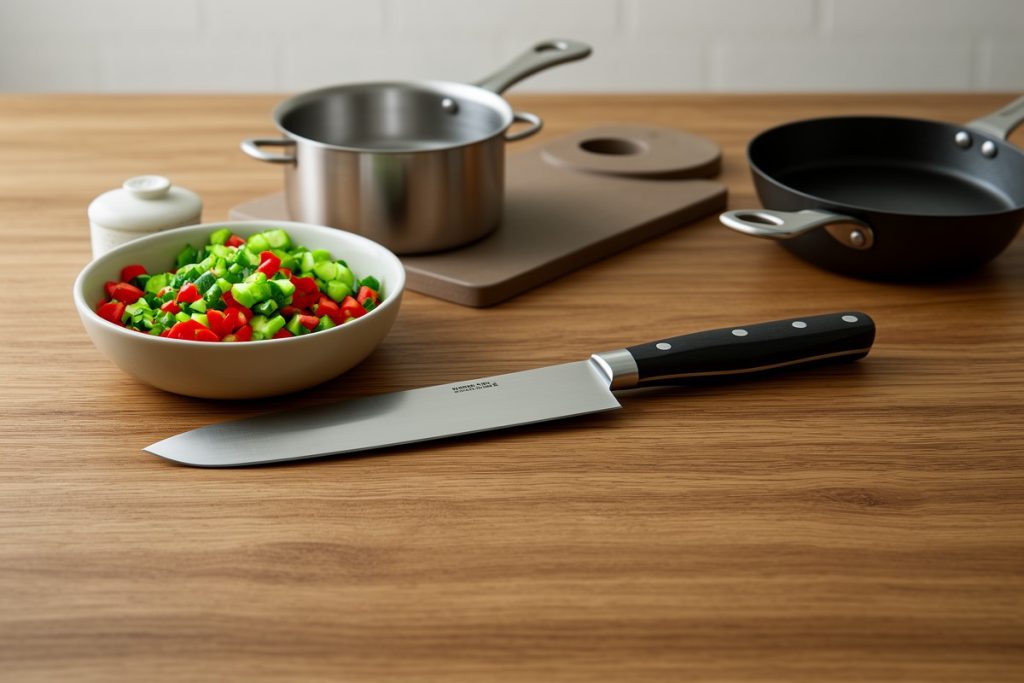
- Knife work: Learn how to hold a chef’s knife securely, keep your fingertips curled, and cut ingredients into reasonably similar pieces.
- Heat control: Practice low, medium, and high heat so you can recognize when food is gently cooking versus browning too quickly.
- Seasoning: Add salt in small amounts, taste when safe, and notice how acids such as lemon juice or vinegar change a dish.
- Basic cooking methods: Become comfortable with sautéing, simmering, roasting, steaming, and boiling.
- Timing and observation: Watch color, texture, smell, and sound instead of relying only on the clock.
Use this simple skill-building framework
Each time you cook, identify the main technique rather than treating the dish as a one-time project. For example, scrambled eggs teach heat control, roasted vegetables teach spacing and browning, and a simple soup teaches sweating aromatics, simmering, and tasting.
| Skill | Practice meal | What to observe |
|---|---|---|
| Knife control | Vegetable soup | Pieces of similar size cook more evenly. |
| Pan heat | Sautéed vegetables | Food should sizzle gently without burning. |
| Seasoning | Beans, rice, or soup | Small additions are easier to adjust than one large addition. |
| Roasting | Potatoes or vegetables | Space around ingredients helps browning. |
Build a practical first-week cooking plan
You do not need to cook something new every day. Repeating a basic meal gives you a chance to change one variable at a time and understand the result.
- Day one: prepare vegetables. Dice an onion, slice a carrot, and cut a bell pepper. Concentrate on stable cutting-board technique and consistent pieces.
- Day two: cook eggs. Use low to medium heat and remove the pan slightly before the eggs look completely finished. Residual heat will continue cooking them.
- Day three: sauté vegetables. Preheat the pan, add a small amount of cooking fat, and avoid overcrowding. Compare the texture of lightly cooked vegetables with deeply browned ones.
- Day four: cook a grain. Rice, couscous, or another simple grain teaches liquid ratios, covered cooking, and resting time.
- Day five: roast a tray of vegetables. Dry the ingredients, coat them lightly, spread them out, and turn them once if needed.
- Day six or seven: combine the skills. Make a bowl using a grain, vegetables, beans, eggs, or another protein, then adjust the seasoning before serving.
Keep brief notes after each session: what you cooked, how hot the pan felt, when browning began, and what you would change next time. This turns vague frustration into a specific adjustment.
Choose beginner recipes by complexity, not appearance
A recipe can look simple but still demand several techniques at once. Before starting, scan the ingredient list and instructions. For early practice, favor recipes with one main cooking method, ingredients you recognize, and a forgiving finish such as a soup, grain bowl, roasted vegetables, or basic pasta sauce.
Be cautious with recipes that require several pans, precise timing, delicate sauces, or many ingredients that must finish simultaneously. Those dishes may be worthwhile later, but they make it harder to identify the source of a mistake.
Read the entire recipe before turning on the stove. Set out the ingredients you need, measure anything that requires accuracy, and identify which steps can happen while another ingredient cooks. This preparation, often called mise en place, reduces rushed decisions and prevents avoidable omissions.
Make food safety part of the technique
Good cooking includes safe handling, not just attractive results. Keep raw meat, poultry, seafood, and eggs separate from ready-to-eat foods. Wash hands and clean surfaces after contact with raw ingredients. Refrigerate perishable food promptly rather than leaving it at room temperature while you finish other tasks.
Color and texture are not reliable ways to confirm that meat is safe. Use a food thermometer and check the thickest part without touching bone. The United States Department of Agriculture lists 165°F for poultry, 160°F for ground meats, and 145°F for whole cuts of beef, pork, lamb, and veal, followed by a three-minute rest for those whole cuts. Follow the official guidance for the specific food you are preparing.
When practicing, choose a thermometer that is easy to read and use it consistently. This builds a more dependable habit than cutting into food repeatedly or guessing based on appearance.
Use a cookbook as a map, not a substitute for practice
A beginner-friendly cookbook can help when you do not know what to cook next or how a technique should flow. For readers who want one structured reference, How to Cook Everything: The Basics: All You Need to Make Great Food – With 1,000 Photos is directly relevant to learning foundational cooking techniques. Its focus on basics and visual guidance makes it a reasonable option for someone building a reference shelf.
It is still a book rather than a personalized course. You will need to select recipes that match your equipment, buy the ingredients, and repeat the techniques yourself. Start by choosing one recipe that teaches a skill you want to improve, then make it again before moving to something more ambitious. That approach gives the reference material a clear purpose and keeps practice manageable.
A short checklist before you cook
- Read the complete recipe once.
- Clear and sanitize your work surface.
- Prepare your knife, cutting board, pan, and thermometer.
- Measure ingredients that must be ready together.
- Decide where raw and cooked ingredients will go.
- Set a timer for steps that are easy to forget.
- Taste and adjust when the food is safe to sample.
- Write down one change for next time.
Basic cooking becomes easier when you stop measuring progress by how impressive a meal looks. Learn one technique, repeat it in a few different meals, and make one deliberate adjustment each time. That process builds judgment—the skill that eventually lets you cook without following every instruction word for word.