
Quick answer
Choose on-ear headphones if you value a lighter fit, compact storage, and easy switching between calls and everyday listening. Choose over-ear headphones if you prioritize stronger passive isolation and a more enclosed feel for long sessions. For commuting and work calls, compare comfort, microphone behavior, battery needs, device switching, and how well each design suits your surroundings.
Key takeaways
- On-ear models are usually easier to carry, but their ear-pad pressure may bother some users over long periods.
- Over-ear models generally create a more enclosed listening environment, though they can feel warmer and bulkier.
- For calls, microphone placement and background noise matter as much as the headphone design.
- Battery life and multipoint connection are useful conveniences, not substitutes for a comfortable fit.
The choice between on-ear and over-ear headphones is less about which design is universally better and more about where you will use them. A lightweight pair may be ideal for moving between a desk, a train, and a shared workspace. A larger pair may be preferable when you want a more enclosed listening experience during a long flight or focused work session.
On-ear vs over-ear: what actually changes?
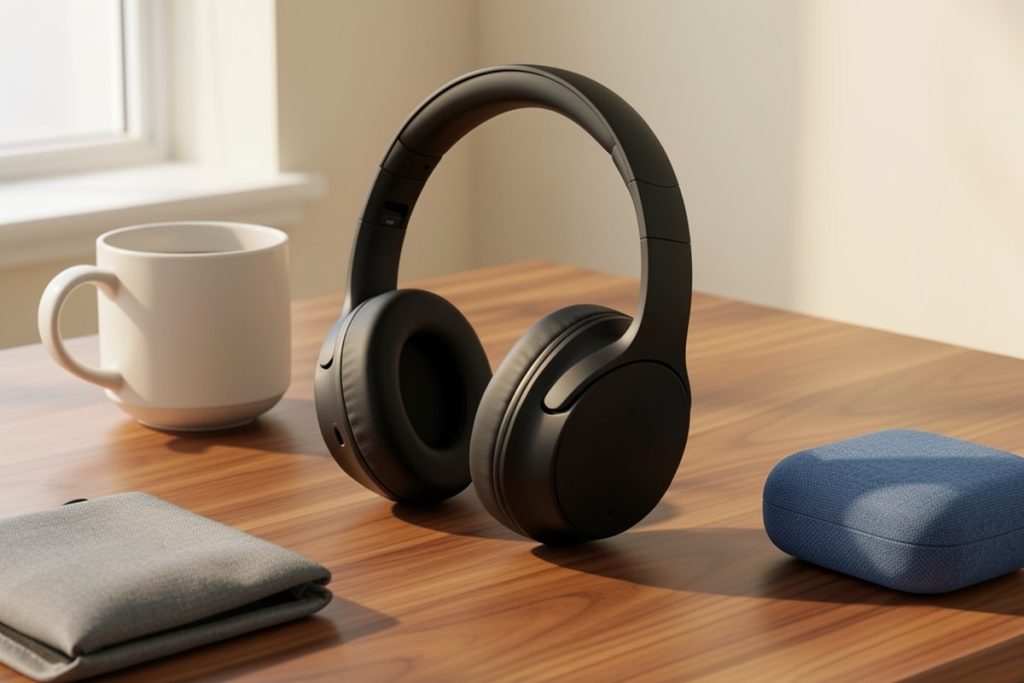
On-ear headphones rest directly on the outer ear. They are often slimmer and easier to pack, and they may feel less warm than larger headphones. That compact design can also make them a practical choice for people who dislike a bulky headband or large ear cups.
The trade-off is pressure. Because the pads sit on the ear rather than around it, comfort can depend heavily on clamp force, pad softness, ear shape, and how long you wear them. Some people prefer the lighter feel; others become aware of pressure around the ear after an extended session.
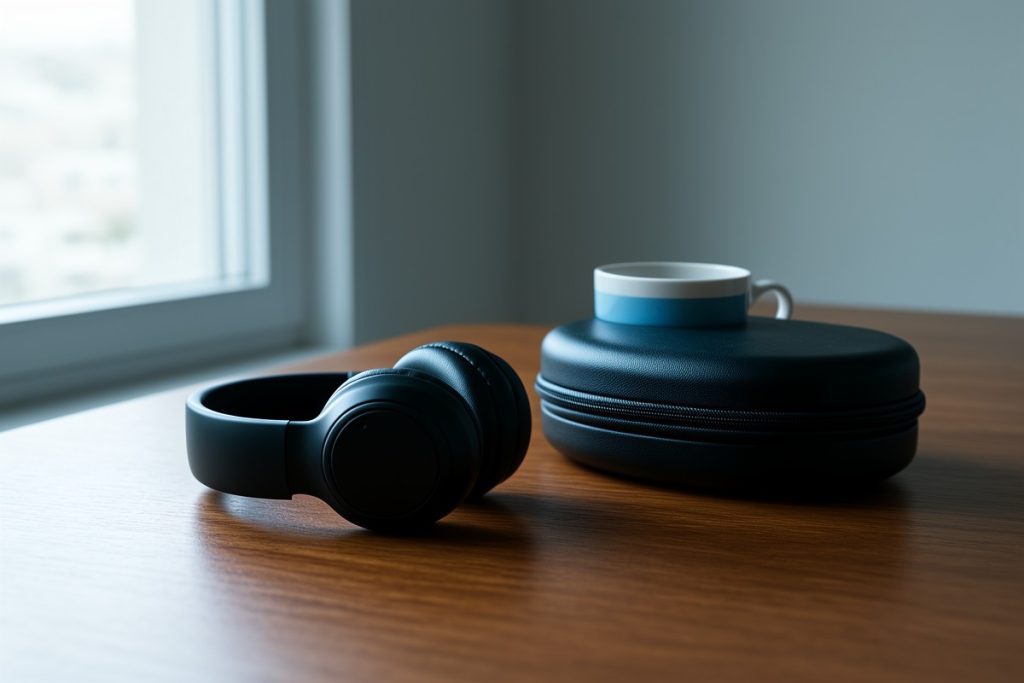
Over-ear headphones surround the ear with larger cushions. This can create a more private-feeling listening space and may reduce some outside sound without electronic noise cancellation. However, the larger cups add weight and can trap more heat. If you wear glasses, pay attention to whether the cushions press against the frames.
Which design is better for commuting?
For commuting, start with the environment rather than the product category. In a moderately noisy office, café, or train station, either design can work if the fit is secure. On-ear headphones may be more convenient when you need to hear announcements or remain aware of nearby activity. Over-ear headphones can feel more immersive, but that is not always an advantage in a busy public setting.
Neither design should be treated as a guarantee of noise reduction. A comfortable seal, appropriate volume, and sensible listening breaks matter more than simply choosing the larger style. The [World Health Organization’s safe-listening guidance](https://www.who.int/news-room/questions-and-answers/item/deafness-and-hearing-loss-safe-listening) recommends keeping personal listening at safer levels and taking breaks, especially during long sessions.
Storage also matters. If your headphones will live in a work bag, compare whether the ear cups swivel, whether the headband folds, and whether a case is included. A design that is slightly less immersive but easy to carry may get used more consistently than a larger model left at home.
Which design works better for work calls?
For calls, look beyond the label “Bluetooth.” Check whether the headphones have a built-in microphone, whether they can switch between devices, and whether the controls are easy to find without looking. A microphone can support clearer conversations, but background noise, wind, room acoustics, and microphone placement still affect how you sound.
Multipoint connection can be particularly helpful if you regularly move between a laptop and phone. It can reduce the need to disconnect and pair again, but compatibility and behavior may vary by device. Confirm that your computer and phone support the connection method you plan to use.
For a lightweight everyday option, the Sony WH-CH520 Wireless On-Ear Bluetooth Headphones with Microphone, Black lists a built-in microphone, multipoint connection, swivel design, quick charging, and up to 50 hours of battery life in its manufacturer-provided feature information. Those features make it a reasonable candidate for people who need portable listening and occasional calls. It remains an on-ear model, however, so buyers should consider whether direct ear-pad pressure suits them and whether their commute requires stronger isolation.
Comparison table: which style fits your routine?
| Priority | On-ear headphones | Over-ear headphones |
|---|---|---|
| Portability | Usually slimmer and easier to pack | Often bulkier, though some fold |
| Awareness | May let in more surrounding sound | Can feel more enclosed |
| Long-session comfort | Less heat, but more direct ear pressure | Less direct ear pressure, but more warmth and weight |
| Glasses compatibility | May avoid some frame pressure | Cushions can press against eyeglass arms |
| Calls | Can work well with a capable built-in microphone | May offer a more enclosed listening feel |
A practical buying checklist
- Measure the use case: Decide whether you will use the headphones mainly at a desk, outdoors, on public transport, or across all three.
- Check the fit: Look for adjustable headbands, comfortable pads, and a secure feel without excessive pressure.
- Check the controls: Confirm that volume, playback, calls, and voice-assistant controls are convenient for your routine.
- Check device needs: If you use both a phone and computer, verify multipoint or another easy switching feature.
- Check listening habits: Set a sensible volume and take breaks instead of relying on headphones to block every sound.
How to make the final choice
Pick on-ear headphones when portability, lighter weight, and awareness of your surroundings matter most. They are particularly sensible for mixed daily use, short work sessions, and commutes where you do not want a large case in your bag.
Pick over-ear headphones when you prefer a more enclosed fit, want to reduce some surrounding sound passively, or regularly listen for long periods in a settled location. Be prepared for extra bulk and possible heat, especially in warm rooms.
For either style, prioritize fit over an impressive specification list. Battery capacity, wireless features, and call controls are useful only if the headphones remain comfortable enough to wear. The best comparison is the one that matches your actual routine, not the model with the longest feature list.
Last reviewed: 2026-09-28