
Quick answer
Organize your garage for winter by creating three zones: daily-access gear, protected seasonal storage, and a clear maintenance area. Remove summer items, inspect anything affected by moisture or freezing temperatures, and keep snow tools, boots, lights, and vehicle supplies near the entrance. A modular cabinet system can help contain smaller equipment, but measure your space and check its specifications before buying.
Key takeaways
- Keep winter essentials visible and within easy reach before the first storm.
- Store moisture-sensitive items in sealed containers and keep hazardous products away from heat sources.
- Use vertical storage to reclaim floor space without blocking the vehicle path or garage door.
- Consider a modular cabinet and workbench system only after measuring the room and checking assembly requirements.
Why fall is the right time to reset your garage
A garage often becomes a holding area between seasons. Pool equipment, gardening tools, bicycles, sports gear, holiday decorations, and car-care supplies gradually move inward until there is barely enough room to walk around. Waiting until the first snow or hard freeze makes the job harder because the items you need most are usually buried under the items you need least.
A fall reset is not about making the garage look showroom-ready. It is about reducing friction during the colder months. You should be able to reach a shovel without moving three boxes, find a flashlight during a power outage, and bring in wet boots without creating a trail through the house.
The National Weather Service and Ready.gov both recommend preparing before winter weather arrives. Your garage organization should support that preparation by keeping important supplies accessible rather than merely stored.
Start by planning around winter access
Before sorting anything, stand in the driveway and identify the route you will use most often. This usually includes the garage door, entry door, vehicle doors, and a path to outdoor equipment. Mark those paths mentally—or with removable floor tape—and treat them as no-storage zones.
Next, divide the garage into three practical areas:
- Daily-access zone: coats, boots, ice scraper, flashlight, batteries, snow tools, and vehicle supplies.
- Protected storage zone: summer furniture, gardening supplies, decorations, and items that will not be used until spring.
- Work zone: a stable surface for inflating tires, repairing equipment, charging approved devices, or handling small maintenance tasks.
This approach is more useful than arranging items by category alone. A category-based garage may keep all tools together, but it can still place the snow shovel behind a stack of patio cushions. Organize according to how often you will need each item and how quickly you may need it.
Use a simple seasonal sorting system
Work in one section at a time rather than emptying the entire garage. Create four groups: keep accessible, store until spring, donate or sell, and dispose of safely. If you cannot decide within a few seconds, place the item in a temporary review area and continue. Decision fatigue is one of the fastest ways for an organization project to stall.
| Category | Best winter location | Useful check |
|---|---|---|
| Snow and ice gear | Near the main garage door | Confirm it is clean, intact, and easy to grab |
| Garden hoses and summer tools | Dry, higher storage | Drain water and remove soil before storing |
| Car supplies | Cabinet or shelf near the vehicle | Group fluids, cloths, scraper, and tire equipment |
| Chemicals and fuels | Separate, secure storage | Follow the product label and local disposal rules |
Do not pour unwanted chemicals, fuel, paint, or automotive fluids down a drain. The Environmental Protection Agency recommends checking local household hazardous-waste programs for proper disposal. This is a small step, but it prevents an organization project from creating a bigger safety or environmental problem.
Build a winter-ready storage layout
Place the most frequently used items between waist and shoulder height. Heavy objects should stay low, while lightweight seasonal items can go on higher shelves. Avoid stacking loose boxes so high that retrieving one creates a falling-object hazard.
Use one container for vehicle emergency supplies, another for small snow-removal accessories, and a third for outdoor lighting or batteries. Choose containers that can be identified by shape or placement without relying on tiny handwritten labels. If you use labels, make them large and durable, but do not assume a label can replace a sensible storage location.
Wet items need special attention. Let gloves, boots, hoses, and tools dry before putting them away. A shallow boot tray near the entry door can contain meltwater, while a wall-mounted hook or open rack can help wet equipment dry instead of trapping moisture inside a closed box.
When a modular cabinet system makes sense
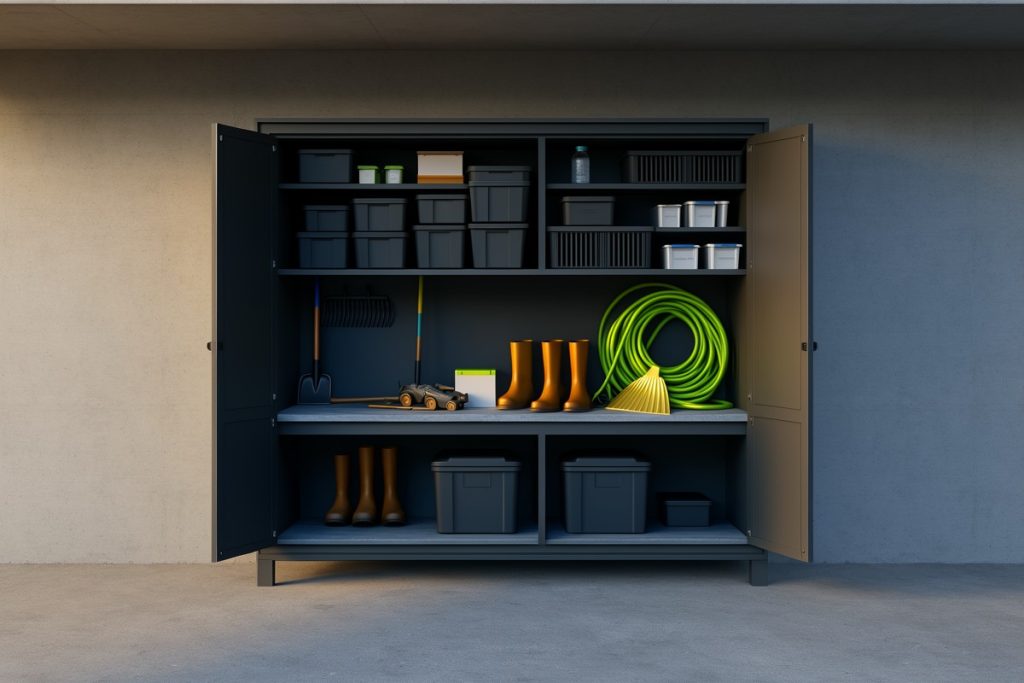
If loose bins and small shelves are taking over the garage, a cabinet-and-workbench system may solve two problems at once: it contains visual clutter and creates a dedicated surface for maintenance tasks. The Garage Cabinet System | Heavy Duty Steel All-in-One Modular Garage Cabinet Set for Ultimate Workshop Organization is listed as a steel, modular set with cabinets and a tool bench.
That does not automatically make it the right choice for every garage. Before purchasing, measure the wall, ceiling height, door swing, vehicle clearance, and the distance needed to open cabinet doors. Check the product listing and assembly instructions for dimensions, weight limits, included components, mounting guidance, and the tools required. A cabinet that fits on paper may still be inconvenient if it blocks a utility panel or leaves no room to walk beside a parked vehicle.
This type of system is most useful when you need enclosed storage for hand tools, car-care supplies, and small equipment while keeping a work surface available. It may be less suitable for renters who cannot secure large units, garages with uneven floors, or households that need open storage for oversized items. Compare the system with sturdy shelving, wall hooks, or existing cabinets before committing.
Complete this 20-minute winter-readiness checklist
- Move the shovel, ice scraper, snow brush, boots, and gloves to the access zone.
- Test flashlights and replace batteries according to the device instructions.
- Check that the garage door area and emergency release are not blocked.
- Drain and dry hoses, outdoor tools, and equipment that held water.
- Secure chemicals, fuels, and sharp tools away from children and heat sources.
- Remove empty containers and arrange safe disposal for unwanted hazardous products.
- Leave a clear route from the house door to the driveway.
Keep the system easy to maintain
A garage stays organized when returning an item takes less effort than leaving it on the floor. Give every winter essential a specific home, and avoid filling cabinets or shelves to their maximum capacity. Leaving some empty space makes it easier to put away wet-weather gear and prevents the next seasonal transition from becoming another major cleanup.
Set a short calendar reminder for early spring. At that point, inspect snow tools, move winter gear back into protected storage, and bring forward the equipment you will use next. Seasonal organization works best as a twice-yearly reset, not a one-time attempt to control every object in the garage.
Last reviewed: 2026-10-09