
Quick answer
Prepare for the first freeze by checking your local forecast, disconnecting garden hoses, protecting exposed faucets and pipes, moving vulnerable plants indoors, and servicing your heating system. Seal obvious drafts, test alarms, and gather winter essentials before temperatures drop. Start when overnight lows approach freezing rather than waiting for the first frost warning.
Key takeaways
- Disconnect hoses and protect outdoor faucets before freezing nights arrive.
- Move container plants indoors and cover or relocate sensitive landscape plants.
- Check heating equipment, filters, alarms, and emergency supplies before the first cold snap.
- Seal easy air leaks around doors, windows, pipes, and utility openings.
- Use local National Weather Service alerts to distinguish frost, freeze, and hard-freeze risks.
Last reviewed: 2026-09-21
Start with the forecast, not the calendar
The first freeze does not arrive on the same schedule every year, and a calendar date is a poor substitute for a local forecast. Check the National Weather Service forecast for your ZIP code several days ahead, then look specifically at overnight lows and any frost or freeze advisory. The National Weather Service frost and freeze guidance explains why conditions near the ground can become cold enough to damage plants even when an official air-temperature reading seems slightly higher.
Use the forecast to set priorities. A brief dip near freezing may threaten tender plants and exposed plumbing, while a longer or colder event demands more attention to heating, pets, vehicles, and anyone who may lose access to a warm room. If you rent, check whether the landlord or property manager handles exterior plumbing, heating maintenance, or winterization.
Protect outdoor faucets and water lines
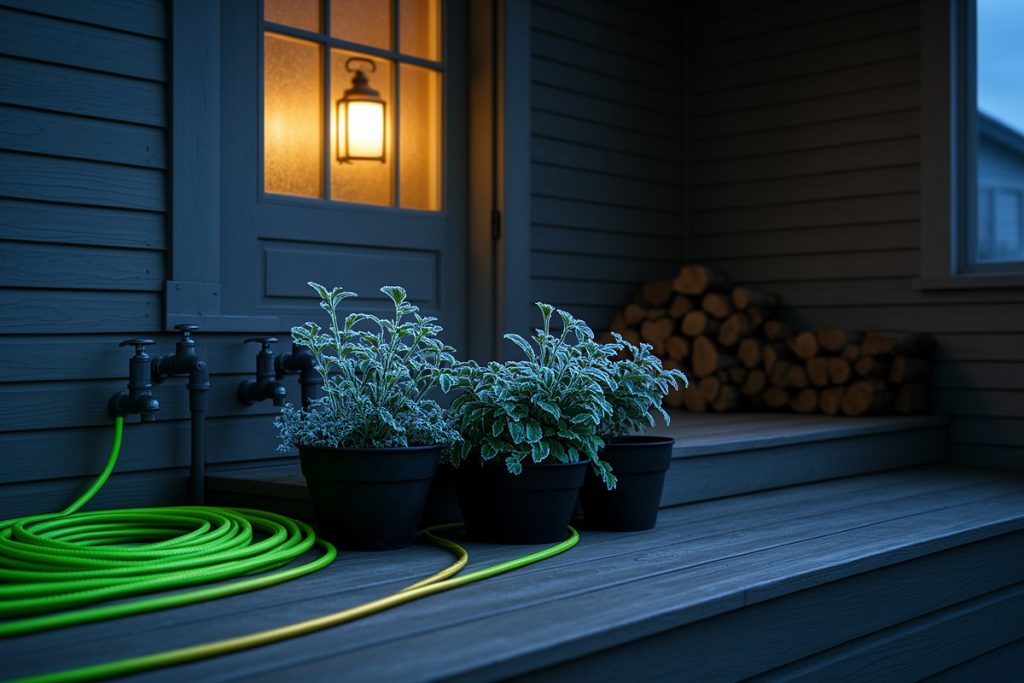
Outdoor plumbing is one of the easiest parts of a home to overlook. Before freezing weather, remove hoses from every exterior faucet, drain them, and store them where they will not crack. If a faucet has a shutoff valve inside the house, close it and open the outdoor faucet briefly so trapped water can drain.
Insulate exposed faucets with purpose-made covers or another weather-resistant solution that fits securely. Do not block a drainage path or wrap fixtures with materials that stay wet. Pay attention to pipes in unheated garages, crawl spaces, basements, and exterior walls. If you know a vulnerable pipe cannot be isolated, keep the surrounding indoor area warm and ask a qualified plumber about a permanent fix.
Never use an open flame, torch, or improvised heater to thaw frozen plumbing. If a pipe freezes, turn off the water supply if you can do so safely, then contact a professional if you see a leak, bulge, or burst section.
Bring plants through the cold snap
Container plants are especially vulnerable because their roots have less insulation than plants rooted in the ground. Move tropical plants, herbs, citrus trees, and other cold-sensitive containers into a garage, shed, porch, or indoor space that meets their light and temperature needs. Check leaves and soil for pests before bringing plants inside.
For plants that must remain outdoors, group containers against a sheltered wall and cover sensitive foliage with frost cloth. A sheet can work temporarily if it is supported above the plant, but plastic should not rest directly on leaves because it can transfer cold and trap moisture. Remove coverings after temperatures rise in the morning so plants receive light and air circulation.
Do not prune or fertilize broadly just because autumn has arrived. Different plants respond differently to cold, and heavy pruning can encourage tender new growth. Follow guidance from your local extension service for valuable or unusual plants.
Make the heating system ready
Before the first cold night, replace or clean the heating filter according to the equipment manufacturer’s instructions. Clear furniture, curtains, boxes, and other objects away from supply vents, returns, radiators, and portable heaters. Check that every room you plan to use has a working heat source.
If your furnace, boiler, heat pump, or chimney has not been inspected on its recommended schedule, arrange service before demand peaks. Watch for unusual smells, repeated shutdowns, strange noises, or uneven heating. Those are reasons to stop troubleshooting and call a qualified technician.
Test carbon monoxide alarms and smoke alarms, and replace batteries when needed. The U.S. government’s winter weather guidance also recommends preparing for outages and avoiding unsafe indoor heating methods. Never use a gas range, charcoal grill, generator, or outdoor-rated heater inside a home, garage, or enclosed porch.
Find and seal the easiest drafts
You do not need to weatherize the entire house in one weekend. Start with obvious leaks: the gap beneath an exterior door, loose window trim, an unsealed opening around a pipe, or a damaged threshold. Weatherstripping and caulk can address small gaps, while larger or damp areas deserve a closer inspection before sealing.
Check attic access panels, basement windows, and garage-to-house doors. Keep required ventilation openings clear, and do not seal over combustion-air supplies or vents. For a broader plan, the Department of Energy’s weatherization guidance covers insulation, air sealing, and ways to improve home comfort without treating every draft as a DIY project.
Use this first-freeze checklist
| Area | Before freezing weather |
|---|---|
| Outdoor plumbing | Disconnect hoses, drain lines, close interior shutoffs, and cover faucets. |
| Plants | Move containers indoors and cover sensitive outdoor plants with breathable material. |
| Heating | Check filters, clear vents, test alarms, and schedule overdue maintenance. |
| Doors and windows | Repair obvious gaps without blocking ventilation or emergency exits. |
| Outage supplies | Gather flashlights, batteries, warm layers, medications, food, and charged power banks. |
Prepare for a cold-weather interruption
A freeze can arrive with wind, ice, or a power outage, so keep a small winter kit where you can reach it without searching in the dark. Include flashlights, spare batteries, warm clothing, blankets, drinking water, shelf-stable food, essential medications, and a way to charge a phone. If you rely on electrically powered medical equipment, contact your provider before severe weather and make a backup plan.
Know where the main water shutoff is located and make sure everyone in the household can reach it. Photographing the valve and labeling it for your own reference can save time during a leak, but do not rely on memory alone. If you have pets, bring outdoor animals into a protected space and keep extra food or medication available.
What to check after the freeze
When temperatures rise, inspect outdoor faucets, exposed pipes, irrigation equipment, and ceilings or walls near plumbing. Turn water back on slowly if you shut off an interior valve, and listen for hissing or watch for damp spots. A leak may not appear until pressure returns.
Look over plants before removing every protective covering. Some damage becomes visible gradually, and cutting away affected growth immediately may remove tissue that can still recover. Once the risk has passed, clean and dry covers, return hoses to storage, and note which areas need a more permanent repair before next winter.
Preparing for the first freeze is less about buying specialized equipment than completing a short sequence at the right time: read the local forecast, protect water, shelter plants, verify heat and alarms, and plan for an outage. A one-hour check before the cold arrives can prevent a much longer and more expensive emergency.
Sources
- Winter Ready — Ready.gov