Quick answer
The best workout earbuds for running should match your activity, fit securely, handle sweat appropriately, offer simple controls, and let you stay aware of your surroundings. Compare water-resistance ratings, realistic battery details, return terms, and comfort—not just headline playtime. A model with impressive specifications is still a poor choice if it slips, irritates your ears, or leaves important claims unclear.
Key takeaways
- Prioritize secure fit and returnability before chasing maximum battery life.
- IPX7 describes water protection under specified test conditions; it does not guarantee workout durability or protect the charging case.
- “Noise canceling” can describe different technologies, so confirm what the product actually provides.
- Outdoor runners should consider awareness, one-ear use, and easy controls as part of safety and convenience.
- Compare each earbud against your own routine instead of choosing the longest feature list.
Start with the workout problem you need to solve
There is no universally best pair of workout earbuds. The right choice depends on what usually goes wrong for you. If earbuds fall out during a run, fit matters more than an impressive battery claim. If you exercise outdoors, awareness and straightforward controls may matter more than deep noise isolation. If you train in a hot gym, sweat resistance and easy cleaning deserve closer attention.
Before comparing models, answer five practical questions:
- Will you run, lift weights, cycle, walk, or combine several activities?
- Do you need to hear traffic, other people, or instructions while listening?
- Will the earbuds face sweat and rain, or mostly stay indoors?
- Do you need one earbud to work independently?
- Can you return the product if the tips do not fit comfortably?
These questions narrow the comparison more effectively than a generic “best earbuds” list. A runner who needs stability has different priorities from someone who wants occasional background audio during stretching.
Compare fit before battery life
Comfort is easy to overlook because it is difficult to judge from a product page. Yet an uncomfortable earbud can become unusable after 20 minutes, regardless of how many hours the charging case promises. Look for multiple ear-tip sizes and a shape designed to sit securely without creating pressure. If the listing does not clearly describe the included fit options, treat that as an unanswered question.
Fit also affects controls. A loose earbud may require repeated adjustments, while touch controls can register accidental taps when you push an earbud back into place. Check whether you can pause audio, change volume, answer a call, or skip a track without reaching for your phone. For running, simple controls are usually more valuable than a long list of advanced features.
A generous return window is especially useful when buying earbuds online. Check whether the seller explains the return period, hygiene restrictions, warranty coverage, and process for replacing a faulty earbud or charging case. Those details can matter more than a small difference in advertised specifications.
Understand what IPX7 water resistance means
Water-resistance language deserves careful reading. The International Electrotechnical Commission’s IP code describes how well an enclosure protects against solids and water. In an IPX7 rating, the “X” means no solid-particle protection rating is provided, while the “7” refers to temporary immersion under specified laboratory conditions. It is more precise than casually calling a product waterproof.
For workouts, IPX7 may provide useful reassurance against sweat and brief exposure to water. It does not prove that an earbud will remain durable after months of repeated sweat exposure. It also does not automatically mean that the charging case has the same rating. Check whether the case is separately protected, and never place wet earbuds into the case until they have been dried according to the care instructions.
Do not assume that an IP rating covers every environment. Saltwater, pool chemicals, soap, and cleaning products can create different risks from fresh water. The safest comparison is the one that matches the manufacturer’s stated use conditions with your actual routine.
Separate claimed battery life from daily convenience
“Up to” battery figures are useful for comparing capacity, but they are not guarantees of everyday listening time. Runtime can vary with volume, calls, connection behavior, and other functions. A product claiming many hours of total playtime may be counting repeated recharges from the case rather than the earbuds’ runtime on one charge.
Compare four separate details:
| Feature | What to check | Why it matters |
|---|---|---|
| Earbud runtime | Claimed hours per charge | Shows how long you can listen before using the case |
| Total runtime | Whether the figure includes case recharges | Prevents misleading comparisons |
| Charging method | Cable type, charging time, and included accessories | Determines how easy it is to keep the set ready |
| Battery indicator | How the case communicates remaining power | Reduces surprises before a workout |
A visible power indicator can be convenient, but it does not replace checking actual runtime. If you often forget to charge devices, a quick-to-read indicator and a case that fits easily in your gym bag may be more valuable than an unusually high maximum figure.
Be precise about noise canceling and outdoor awareness
“Noise canceling” is not a complete description of performance. A listing may use the phrase for active noise cancellation, call-noise reduction, passive isolation from the ear tips, or a combination. Unless the technology is clearly explained, do not assume it will remove the sounds you find most distracting.
For indoor workouts, reduced background noise may help you hear music or spoken audio at a lower setting. For outdoor exercise, however, complete isolation may make it harder to notice nearby traffic, cyclists, or other people. Consider using one earbud, lowering the volume, or selecting an awareness mode when available. The National Institute on Deafness and Other Communication Disorders provides general guidance on reducing harmful noise exposure, so listening habits should be part of the comparison too.
Where the HAOYUYAN earbuds fit into the comparison
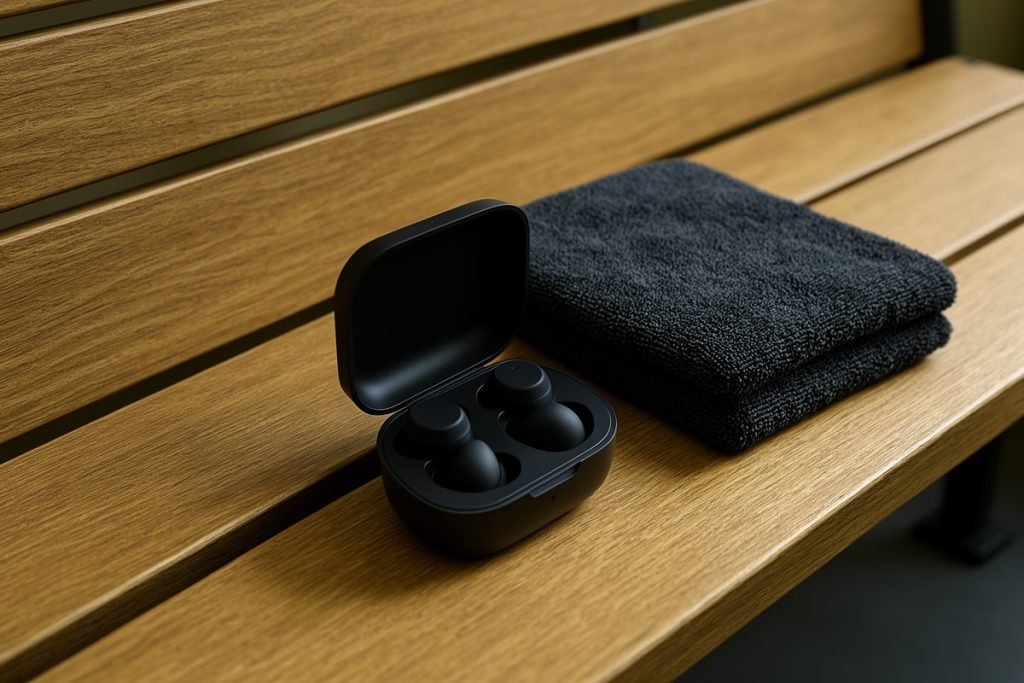
The HAOYUYAN Wireless Earbuds, Sports Bluetooth Headphones, 80Hrs Playtime Ear Buds with LED Power Display, Noise Canceling Headset, IPX7 Waterproof Earphones for Workout/Running (Black) is a natural candidate for readers comparing budget-oriented workout earbuds. The supplied catalog information lists up to 80 hours of playtime, an LED power display, noise canceling, and IPX7 water resistance.
Those features make it worth evaluating, not an automatic winner. Treat 80 hours as a stated maximum, and confirm how the figure is calculated. The phrase “noise canceling” also needs clarification before you rely on it for music, calls, or outdoor use. Before purchasing, check the included ear-tip sizes, charging details, warranty, return conditions, and whether the case has its own water-resistance rating. No independent hands-on testing evidence was provided here, so audio quality, microphone performance, fit, and long-term durability should remain open questions.
A practical pre-purchase checklist
- Choose the fit system most likely to stay secure during your main activity.
- Confirm exactly what the IP rating applies to and how the earbuds should be dried and cleaned.
- Separate single-charge runtime from total runtime with case recharges.
- Check whether controls support playback, calls, and volume without frequent phone use.
- Decide how you will remain aware of your surroundings during outdoor exercise.
- Read the return and warranty terms before wearing the earbuds.
How to make the final choice
Give the greatest weight to the feature that solves your biggest annoyance. If earbuds keep falling out, prioritize fit and returnability. If charging is your main frustration, compare charging habits and case convenience rather than total playtime alone. If you run beside roads, prioritize awareness and easy controls. If sweat is the concern, verify the water-resistance rating and care instructions.
The most honest apples-to-apples comparison may favor a less flashy model. Extra features are useful only when they solve a real problem without adding discomfort or confusion. Compare what is clearly documented, identify what remains unverified, and choose the earbuds that fit your routine—not the product with the most dramatic specification list.
Last reviewed: 2026-11-06