Quick answer
If you work remotely from cold destinations, choose trousers based on wind, moisture, walking, and indoor comfort—not just the lowest temperature. Start with a breathable base layer, add insulation only when needed, and use a wind-blocking outer layer for exposed commutes. Pack one versatile pair for ordinary city days and reserve heavily insulated pants for long outdoor stretches, cabins, or winter travel days.
Key takeaways
- Plan clothing around your real mix of outdoor travel, indoor work, and laundry access.
- Use layers so one pair of pants does not have to handle every temperature.
- Prioritize wind protection and mobility when walking between accommodation and coworking spaces.
- Insulated pants can be useful for cold outdoor days but may be excessive indoors or in mild climates.
By Casey Blake, Realistic Remote Work Advisor
Last reviewed: 2026-11-23
Start with the conditions, not the destination name
“Cold weather” means different things to a digital nomad in Copenhagen, a mountain town, or a windy coastal city. A forecast of 40°F may feel manageable during a sunny walk but uncomfortable after an hour beside an exposed train platform. Meanwhile, a colder inland morning may feel easier if the air is dry and the wind is calm.
Before packing, look at four factors: the usual daytime temperature, wind exposure, precipitation, and how much time you will spend outside. Then consider your routine. Walking to a café, carrying luggage between buses, and sitting on an outdoor terrace require more protection than stepping from a hotel into a heated car.
Your accommodation matters too. A small apartment with strong heating may make bulky insulated trousers inconvenient. A cabin, camper van, or older rental with uneven heating creates a stronger case for warmer clothing that can be worn indoors without relying entirely on the thermostat.
Build a flexible lower-body layering system
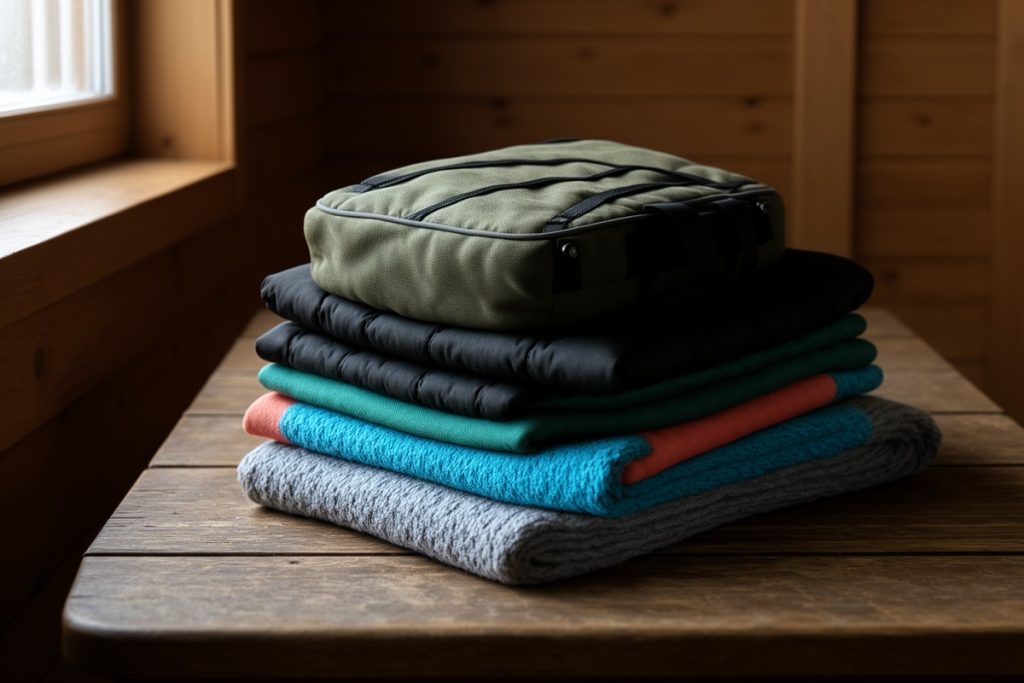
The most useful cold-weather wardrobe is adjustable. Instead of searching for one magical pair of pants that works everywhere, combine layers that cover different conditions.
- Base layer: A close-fitting, breathable layer can add warmth beneath ordinary trousers. It should allow comfortable movement and avoid bunching while sitting.
- Everyday outer trousers: Choose a pair that works for errands, coworking spaces, and travel days. A comfortable waistband, useful pockets, and easy care may matter more than extreme insulation.
- Insulated or wind-resistant layer: Add this when you expect prolonged exposure, strong wind, or very cold conditions. It may be worn over a thin base layer or used instead of a separate midlayer.
This approach helps solve a common nomad problem: the weather changes, but your luggage cannot. Layers also reduce the risk of being overheated once you arrive at a café, library, or shared office.
What to look for in pants for cold-weather remote work
Wind protection is valuable for people who walk or cycle between work locations. Wind can make a moderate temperature feel substantially harsher, especially when you are standing still while waiting for transport.
Mobility is equally important. Try to prioritize a comfortable seated position, enough room for a base layer, and fabric that does not restrict your stride. Digital nomads often spend hours sitting, so a pair designed only for brief outdoor use may become uncomfortable during a full travel day.
Pocket design can reduce the need for a second bag during short walks. Look for secure storage for keys, a transit card, or small essentials, but avoid assuming that more pockets automatically make pants better. Excess bulk can be annoying when seated or packing light.
Noise and appearance also affect where you can wear them. Quiet fabric is helpful in shared spaces, while a simple, non-technical appearance makes trousers easier to use in cafés, casual meetings, and restaurants. If the pants look highly specialized, they may spend most of the trip in your bag.
Care requirements deserve attention before departure. Check the washing instructions, drying time, and whether the material can be cleaned in a basic laundromat. A garment that needs special care may be less practical for a traveler moving every few days.
Where insulated hunting pants can fit a nomad wardrobe
Some digital nomads spend meaningful time outdoors rather than simply commuting between heated buildings. They may work from rural rentals, travel through winter landscapes, photograph nature, or combine remote work with long walks and outdoor activities. In that context, insulated, wind-resistant trousers can fill a useful role that ordinary travel pants cannot.
The Nomad Men’s Nomad Harvester Vx3 Pant, Insulated, Wind-Resistant, and Quiet Hunting Pants is one option to consider for those specific conditions. Its listed features make it more relevant to cold outdoor use than to a typical warm coworking day. The “quiet” design may also appeal to travelers who want less fabric noise during outdoor movement, though a product listing alone cannot establish how it will feel for every wearer.
There are clear limits. Heavily insulated pants may be too warm on public transport, uncomfortable in heated offices, or unnecessarily bulky for a one-bag setup. They may also look more outdoors-oriented than many people want for urban travel. Consider them a specialist layer, not a universal replacement for everyday trousers. Check the sizing, care instructions, and return terms before ordering, since fit and packing volume are personal concerns.
Use this packing checklist before a cold-weather trip
- Check the forecast for wind and precipitation, not temperature alone.
- Plan one comfortable base layer that can be washed and dried reliably.
- Choose everyday trousers for indoor work and city use.
- Add insulated pants only if your itinerary includes extended outdoor exposure.
- Test the full combination while sitting, walking, climbing stairs, and carrying a bag.
- Confirm that the clothing fits in your luggage without forcing out essential work equipment.
Stay warm without ignoring cold-weather risk
Clothing is only one part of working safely in the cold. The National Institute for Occupational Safety and Health identifies cold stress as a risk that can include conditions such as hypothermia and frostbite. Exposure becomes more concerning when wind, wet clothing, fatigue, or long periods outdoors are involved.
Pay attention to persistent shivering, numbness, confusion, unusual tiredness, or loss of coordination. These are not signs to push through because a work call is scheduled. Move to a warm, dry location, change wet clothing when possible, and seek appropriate medical help if symptoms are severe or do not improve.
The National Weather Service’s wind-chill guidance is useful when planning outdoor travel because it shows how wind changes the body’s heat-loss risk. You do not need to obsess over a single number, but you should treat a windy forecast as a reason to shorten exposed walks, add a protective layer, or revise your route.
Choose the smallest system that covers your routine
The best cold-weather digital nomad wardrobe is not necessarily the warmest one. It is the system that keeps you comfortable during the parts of the day you actually spend outside while remaining practical in heated rooms, luggage, and laundry facilities.
For mild city travel, everyday trousers plus a lightweight base layer may be enough. For colder destinations with frequent walking, add wind protection. For rural stays, winter transit, or long outdoor periods, insulated pants can be justified. Making that distinction before you pack prevents two common mistakes: arriving underprepared or carrying specialized gear that never leaves your suitcase.