
Quick answer
For homes with both hard floors and rugs, a 2-in-1 robot vacuum and mop can be more versatile than a vacuum-only model, but only if its floor-sensing, rug-handling, navigation, and maintenance features match your layout. Choose vacuum-only for simpler upkeep and heavier carpet use; choose 2-in-1 when routine dust, crumbs, and light hard-floor mopping are the bigger problem.
Key takeaways
- Vacuum-only robots are usually the simpler choice for homes dominated by carpet or rugs.
- A 2-in-1 model makes more sense when hard floors need frequent dust removal and light mopping.
- Navigation, rug behavior, dock maintenance, and replacement-part costs matter as much as suction claims.
- The Shark Matrix Plus AV2613WA has a feature-rich design, but its fit depends on your flooring, thresholds, and willingness to maintain the mop system.
The real difference between a robot vacuum and a 2-in-1
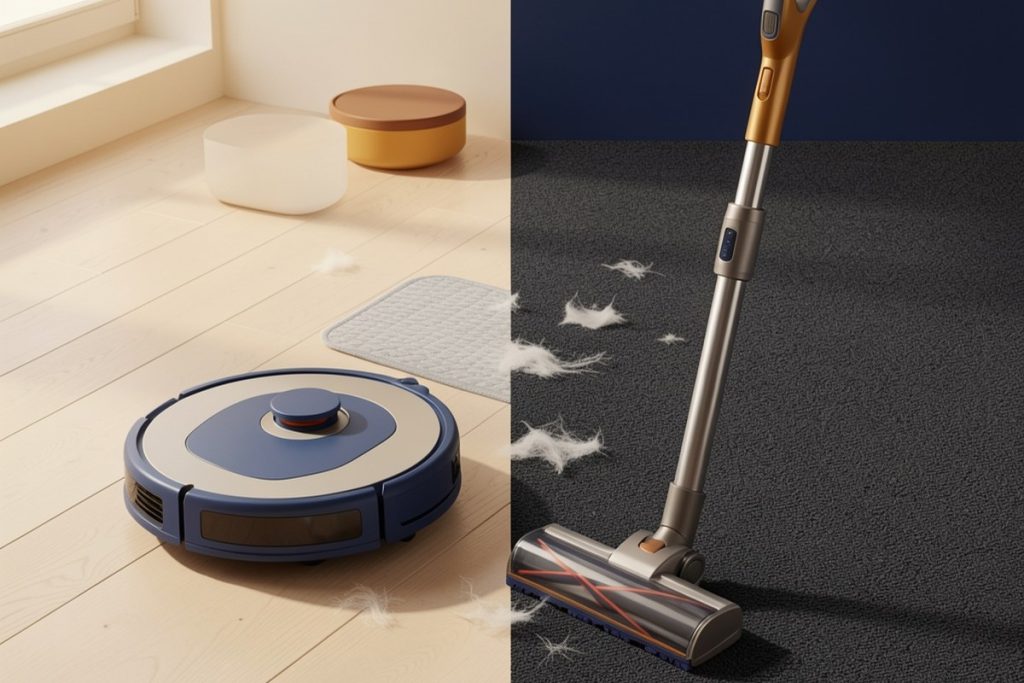
The basic distinction is straightforward: a vacuum-only robot collects dry debris, while a 2-in-1 model adds a water-based mopping function. That extra function sounds automatically better, but it also introduces another tank, pad, cleaning routine, and set of floor-safety questions.
Vacuum-only robots are easier to evaluate. You mainly need to consider how well the robot navigates, reaches edges, handles hair, returns to its dock, and cleans the surfaces in your home. A 2-in-1 model still needs to do those things, while also applying moisture appropriately and avoiding surfaces that should stay dry.
Neither type replaces every cleaning task. A robot is designed for routine maintenance between deeper cleanings. Stairs, upholstery, corners blocked by furniture, sticky spills, and heavily soiled areas may still require a conventional vacuum, mop, or cloth.
Which option fits your floors?
Your flooring should decide the category before individual features do. If most rooms have hardwood, tile, vinyl, or sealed stone, mopping may provide useful convenience. If your home is mostly medium- or high-pile carpet, the vacuuming system deserves priority and the mop function may add little value.
| Home situation | Better starting point | Why |
|---|---|---|
| Mostly carpet with a few hard-floor areas | Vacuum-only robot | Less maintenance and no need to manage water or damp pads. |
| Mostly sealed hard floors | 2-in-1 robot | Combines dry-debris pickup with routine light mopping. |
| Mixed floors and several rugs | 2-in-1, if rug handling is clear | Versatility helps, but the robot must manage transitions safely. |
| Pets, long hair, or frequent shedding | Either category | Prioritize brushroll design, bin capacity, maintenance, and access to replacement parts. |
Mixed flooring is where the comparison becomes more important. Before buying, confirm whether the robot can identify rugs, lift or avoid a damp mop attachment, create no-go zones, and cross the thresholds between rooms. Do not assume that every robot with a mop function handles rugs in the same way.
Features that matter more than marketing language
Navigation is one of the most practical differences between a frustrating robot and a useful one. A robot that maps its surroundings can be easier to schedule and direct than one that moves randomly. LiDAR-based navigation is one approach, but the important question is what control the finished map gives you: room selection, restricted areas, repeatable routes, or all of the above.
Edge cleaning also deserves attention. Dust collects where the floor meets baseboards and furniture. An edge-focused design may help the robot work closer to those areas, but the shape of your rooms, furniture clearance, and the robot’s actual path still affect results.
Brushroll design matters in homes with hair. Look for clear instructions about removing wrapped hair, cleaning the brushroll, and replacing worn parts. A self-cleaning brushroll can reduce one maintenance chore, but it does not mean the entire vacuum is maintenance-free.
For the dock, separate the convenience of automatic emptying from the reality of ongoing care. A larger dust container can reduce how often you intervene. A 60-day capacity statement is not a guarantee that every household will go that long; dust volume, pet hair, home size, and cleaning frequency all change the interval. Water tanks and mop pads also need attention, and damp components should be handled according to the manufacturer’s instructions.
Where the Shark Matrix Plus fits
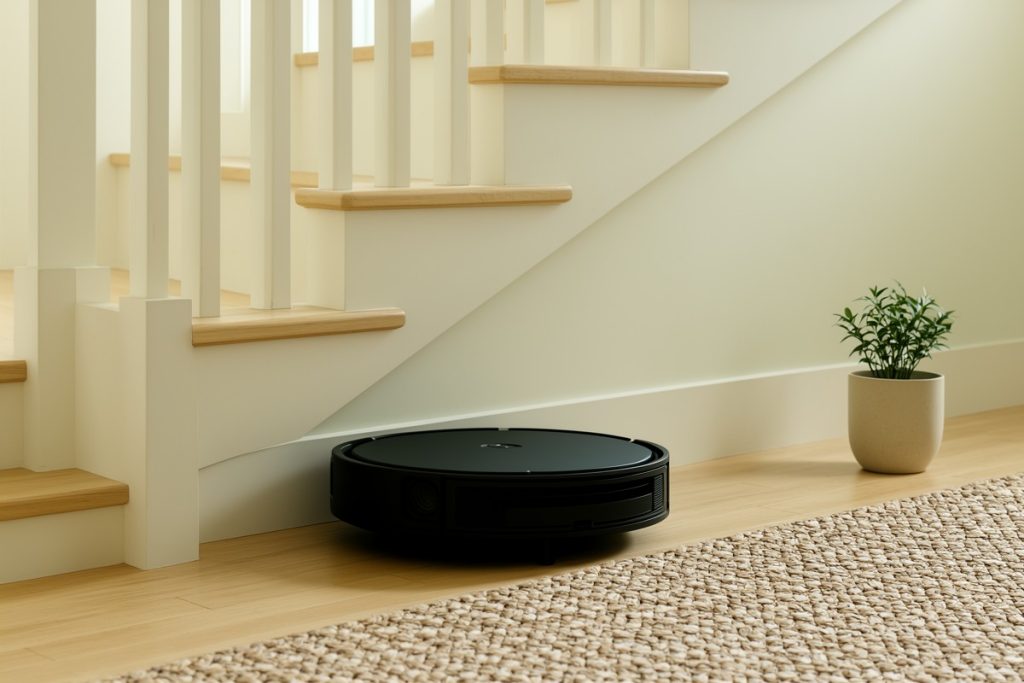
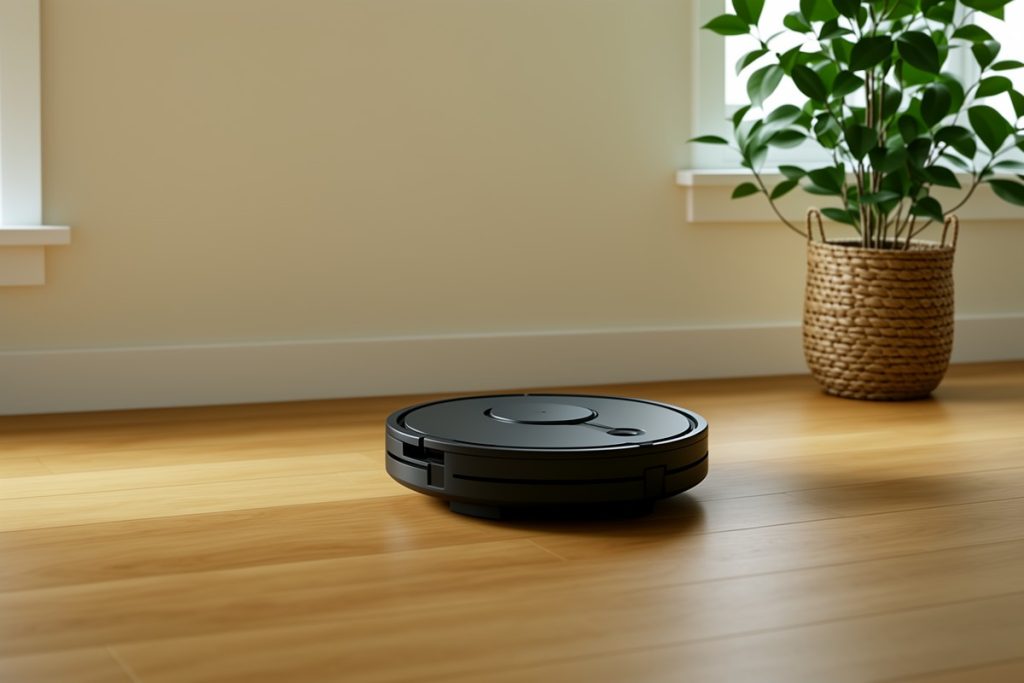
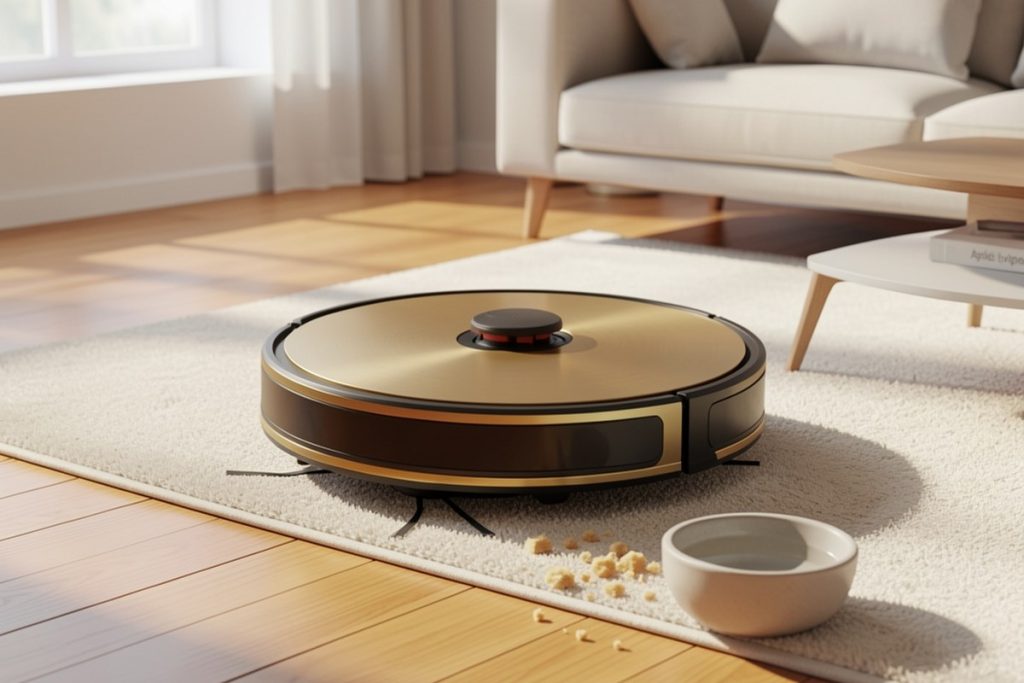
If you want to compare a feature-rich 2-in-1 option with vacuum-only robots, the Shark Matrix Plus 2-in-1 Robot Vacuum & Mop, Black/Brass, AV2613WA is a model to place on your shortlist. Its listed feature set includes sonic mopping, Matrix Clean, CleanEdge, a HEPA 60-day self-empty base, 360° LiDAR mapping, a self-cleaning brushroll, and Wi-Fi connectivity.
Those features point to a product aimed at people who want more than basic automated vacuuming. LiDAR mapping may appeal to households that want structured room cleaning, while the self-empty base targets people who prefer less frequent dust-bin emptying. The mop function is most relevant to homes with substantial sealed hard flooring.
The tradeoff is complexity. You will need to understand the app, map the home, maintain the brushroll, empty or refill the relevant reservoirs, and keep mop components clean. Before purchasing, check the manufacturer’s instructions for supported floor types, cleaning solutions, pad care, threshold limits, and what happens when the robot encounters rugs. Features listed on a product page do not by themselves prove that the robot will suit a particular layout.
A practical checklist before you choose
Use this short checklist while comparing models. It is more useful than comparing one headline specification in isolation.
- Floor mix: Write down the percentage of carpet, rugs, and hard flooring.
- Rug protection: Confirm how the model detects, avoids, or crosses rugs during mopping.
- Obstacles: Measure low furniture, door thresholds, cords, and clutter-prone areas.
- Hair and debris: Check brushroll cleaning steps and replacement-part availability.
- Dock location: Allow enough open space for the robot to leave, return, and be serviced.
- Maintenance tolerance: Decide whether you are willing to wash pads, manage water, and clean sensors regularly.
- Privacy and connectivity: Review app permissions and whether Wi-Fi features are required for the controls you want.
When a vacuum-only robot is the smarter buy
A vacuum-only robot can be the better value even when a 2-in-1 model offers more functions. It is a sensible choice if your home has extensive carpet, if you already own a dependable mop, or if you want the fewest consumables and maintenance steps. It may also suit people who prefer to decide manually when and how floors get wet.
Choose this category when simplicity is a priority. A robot that you actually schedule and maintain is more useful than a more elaborate model that stays docked because its water tank, pads, or settings feel inconvenient.
When a 2-in-1 robot earns its place
A 2-in-1 robot is easier to justify when hard floors dominate your daily routine and dry debris is not the only annoyance. Crumbs near the kitchen, dust in entryways, and regular surface upkeep are the kinds of repetitive jobs this category is intended to address.
Still, treat the mop as a convenience feature rather than a replacement for deep cleaning. The best match is a home where floors are generally maintained, furniture allows reasonable robot access, and the owner is comfortable following the care instructions.
Bottom line
For mixed floors, the choice is not simply “more features versus fewer.” It is a question of whether the additional mopping capability solves a recurring problem without creating more work than it saves. Compare rug behavior, navigation, brushroll care, dock design, app requirements, and replacement supplies. The Shark Matrix Plus AV2613WA is worth considering for shoppers who want mapping, automated emptying, and routine mopping in one system, but vacuum-only remains the cleaner choice for carpet-heavy or simplicity-first homes.
Last reviewed: 2026-08-14