
Quick answer
Store seasonal decorations by use, size, and fragility rather than by the room where you found them. Keep frequently used items accessible, place small loose pieces in see-through pouches, and reserve rigid bins for breakables or bulky decorations. A simple inventory and consistent storage zones will make decorating faster while keeping a small home from becoming an overfilled closet.
Key takeaways
- Create separate storage zones for “first out,” room-specific decorations, fragile items, and rarely used pieces.
- Use clear pouches for small ornaments, hooks, ribbon, cords, and craft supplies that otherwise disappear in large bins.
- Choose rigid, padded containers for glass, ceramic, heirlooms, and anything that can be crushed.
- Keep decorations away from damp areas, direct heat, and overloaded shelves.
- Do a 10-minute inventory before putting everything away so missing or damaged items do not surprise you next season.
Start with a seasonal inventory
Small homes rarely have enough storage space for every decoration to remain visible and instantly accessible. The solution is not automatically buying more containers. First, find out what you actually own and how often you use it.
Lay everything out in one area and group similar pieces together. Separate holiday decorations from spring or summer items, then divide each season into practical categories: entryway, living room, dining table, outdoor use, lighting, wrapping supplies, and small accessories. This gives each category a destination before you begin packing.
As you sort, remove anything broken, duplicated, uncomfortable to use, or consistently left in the box. If a decoration has sentimental value but no practical place in your home, keep it in a clearly defined keepsake group rather than letting it spread across several containers.
Take a quick photo of each finished group before storing it. The photo does not need to be elaborate; it simply gives you a visual reminder of what belongs in each container. For especially full collections, a basic note on your phone can record the number of boxes and where they are stored.
Organize by the moment you will need each item
Many storage systems fail because they are arranged by container size instead of by real-life use. When the season arrives, you then have to open every box to find one strand of lights or a handful of table decorations.
Pack a “first out” container with the items that begin your decorating routine. This might include a wreath, a small centerpiece, hooks, extension cords, and a few versatile decorations. Put this container at the front of the closet or on the easiest shelf to reach.
Next, create room-based groups. A living-room group might contain mantel decorations and pillow covers, while a dining group could hold table linens, candle holders, and serving accents. Room-based storage reduces decision-making and makes it easier to stop decorating when the available space is already full.
Keep replacement supplies together but separate from display pieces. Spare bulbs, batteries, adhesive hooks, floral wire, and ribbon are useful, but they should not be mixed into a box of fragile ornaments. A small supply pouch prevents a minor repair from turning into a search through the entire collection.
Match each decoration to the right container
Use the simplest container that protects the item and lets you find it later. Large bins are helpful for bulky, durable decorations, but they are inefficient for tiny pieces. The table below provides a practical starting point.
| Decoration type | Useful container | Storage tip |
|---|---|---|
| Glass or ceramic ornaments | Rigid box with padding | Wrap each piece and avoid empty space that allows movement. |
| Ribbon, hooks, cords, and small accessories | Clear zippered pouch | Group by function so setup supplies stay together. |
| Wreaths and garlands | Wide lidded bin or protective garment bag | Do not compress wired or shaped pieces. |
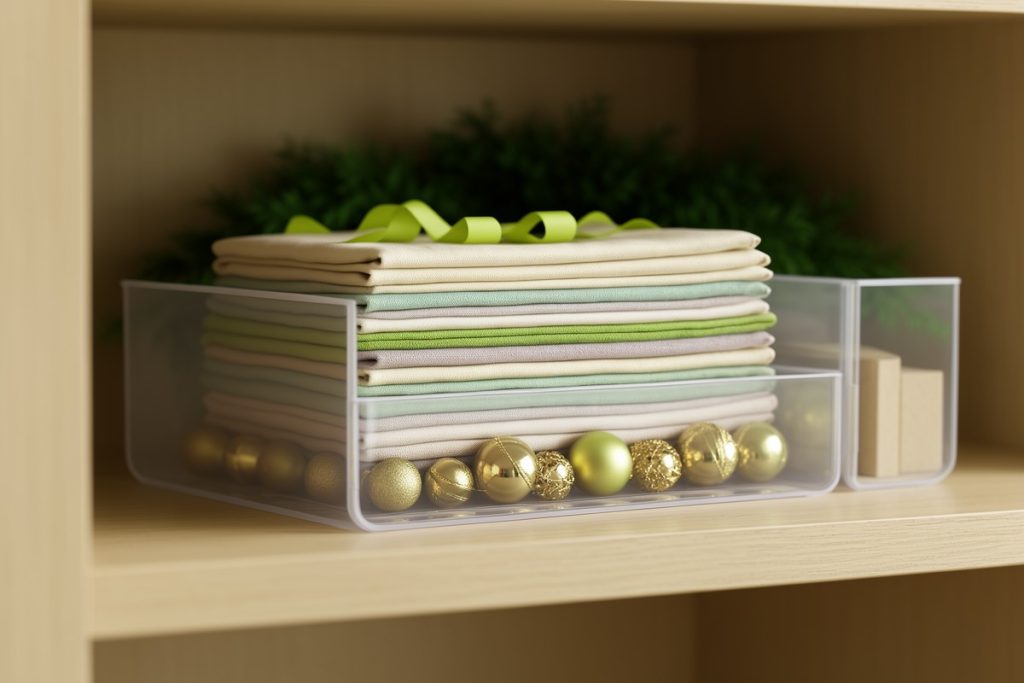
| Fabric items and seasonal linens | Breathable container or clean drawer | Store only when fully dry and folded loosely. |
| Outdoor or bulky decorations | Sturdy lidded storage bin | Keep heavy pieces low and protect them from moisture. |
Do not force every category into one container style. A clear pouch may be excellent for small flexible pieces but unsuitable for a heavy decoration, sharp hardware, or anything that needs crush protection. Storage works best when the container reflects the material of the item.
Where clear pouches can solve a small-space problem
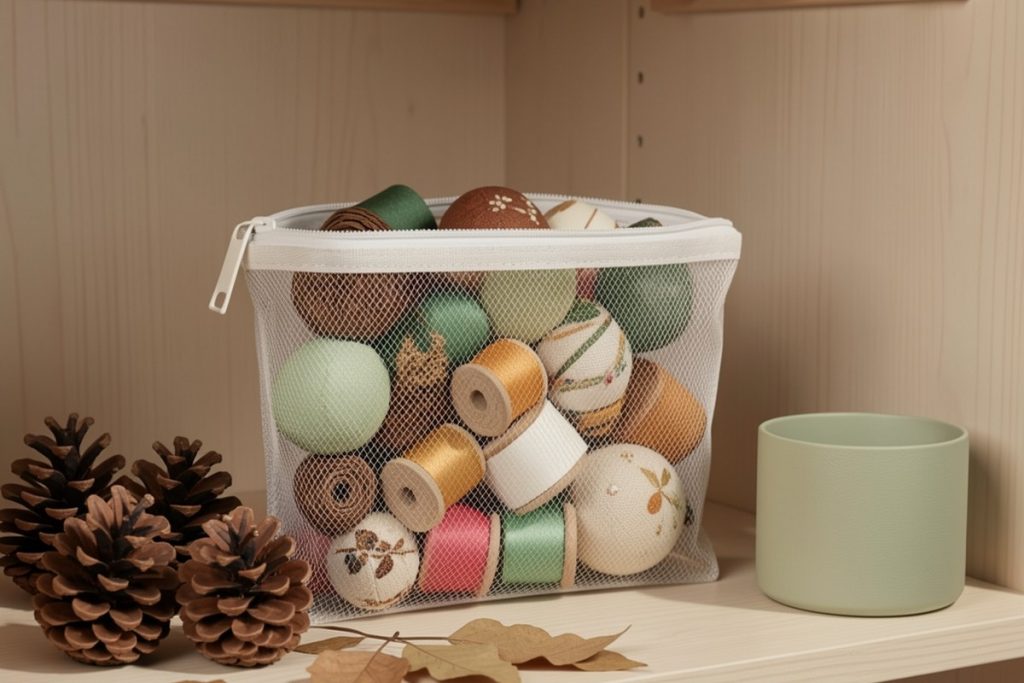
Loose accessories are often the hardest part of seasonal storage. They are too small for a large bin, easy to overlook, and likely to become tangled with unrelated items. A see-through, zippered pouch can keep ornament hooks, ribbon spools, small craft pieces, replacement parts, and cords visible without requiring another rigid box.
For that specific problem, the 24pcs Mesh Zipper Pouch Bags 8 Sizes Plastic Clear Pouches for Organization may be worth considering. The listing describes multiple pouch sizes and a reusable clear mesh format, which could make it easier to match a pouch to different small seasonal categories. Its value is mainly organizational: you can see the contents and keep small groups separate.
It is not a replacement for padded storage, a sturdy bin, or a dedicated solution for delicate heirlooms. Before buying, check the listed dimensions against your accessories, avoid overfilling the zippers, and keep fragile items in containers designed to cushion them. If you have only a few small accessories, repurposing containers you already own may be more economical.
Protect decorations during the off-season
Storage location matters as much as storage container. Place decorations in a cool, dry area away from direct sunlight and sources of heat. Attics, garages, and basements can experience larger temperature or moisture changes than the main living area, so inspect those spaces before storing materials that can warp, fade, corrode, or develop odors.
Keep boxes off the floor when possible, particularly in a basement or garage. A sturdy shelf, raised platform, or lidded cabinet provides a basic barrier against minor water exposure and makes cleaning easier. Store heavier containers on lower shelves so they are less likely to fall and easier to lift safely.
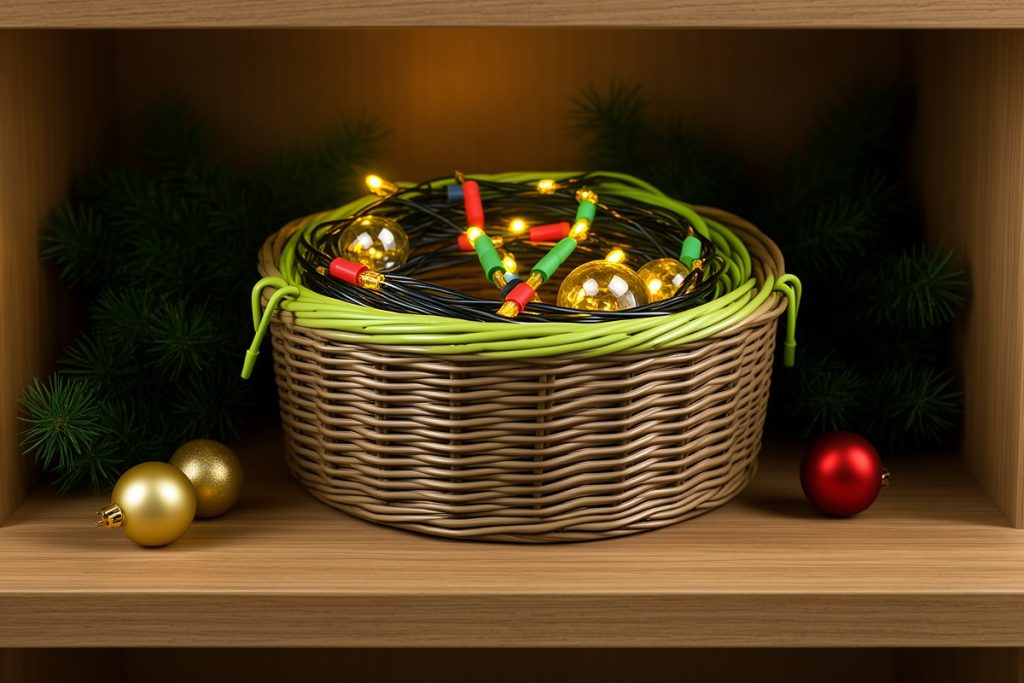
Lights deserve their own check before they go into storage. Replace damaged sets rather than saving them for later, and coil cords loosely to reduce tangling and stress. The U.S. Consumer Product Safety Commission and the U.S. Fire Administration both provide seasonal decoration safety guidance, including reminders to inspect decorations and use them appropriately.
For fabric decorations, make sure everything is clean and completely dry before packing. A small amount of trapped moisture can create an unpleasant surprise months later. Avoid sealing damp linens, greenery, or recently washed covers in airtight storage.
Use a repeatable packing routine
A consistent routine is more useful than a perfect organizing project. Pack decorations in the same order each year so the system becomes easier to maintain.
- Inspect: Check for broken pieces, damaged cords, missing fasteners, stains, and moisture.
- Group: Return each item to its season and room-based category.
- Protect: Add padding to fragile pieces and keep flexible items from being crushed.
- Prioritize: Put first-out items near the front and rarely used pieces farther back.
- Record: Take a quick inventory photo or note any replacement needed before the next season.
Do not pack a container so tightly that removing one item requires unpacking everything. Leave a little working space, especially in pouches holding ribbon, cords, or irregularly shaped accessories. The few inches of spare capacity can save time and prevent damaged zippers or crushed decorations.
A 10-minute end-of-season checklist
- Remove batteries from decorations that will sit unused for months.
- Check light strands, plugs, hooks, and fasteners before storing them.
- Wash or brush fabric items according to their care instructions, then dry them fully.
- Put fragile pieces in padded rigid containers rather than flexible pouches.
- Separate first-out supplies from the main seasonal collection.
- Keep heavy bins low, stable, and away from damp floors.
- Record one or two items to repair, replace, donate, or discard before next season.
The goal is not to make your storage room look like a showroom. It is to create a system that answers three questions quickly: what do I have, where is it, and can I use it safely? In a small home, that clarity is more valuable than perfectly matching containers.
Last reviewed: 2026-08-14
Sources
- Holiday Fire Safety — U.S. Fire Administration.