
Quick answer
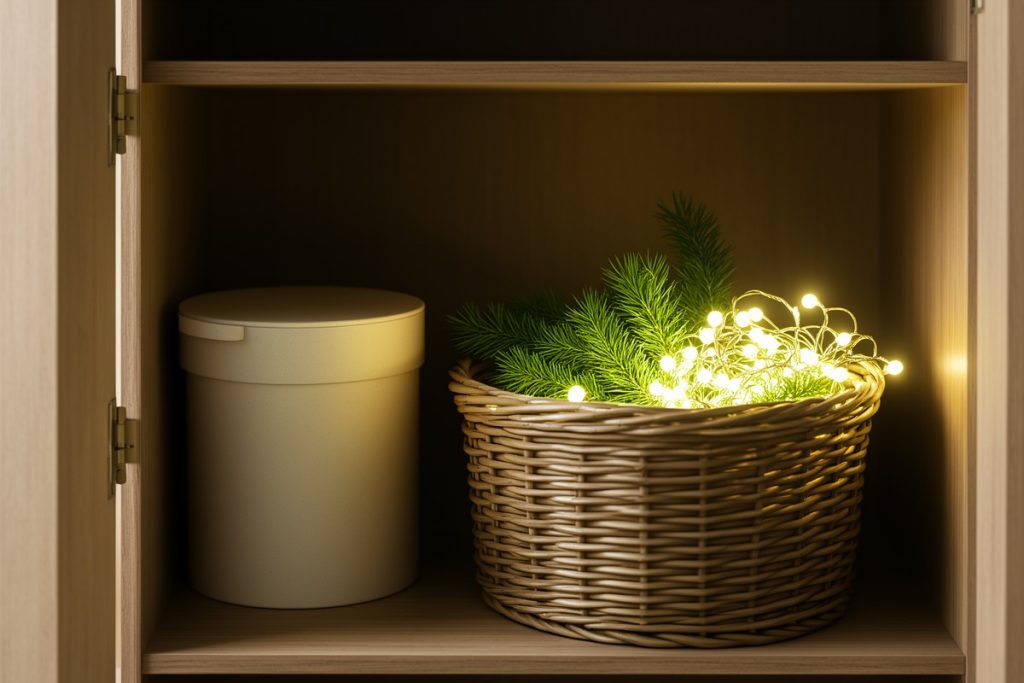
Store holiday lights by checking each strand, labeling its purpose with a visual system, coiling it loosely around a flat support, and securing it without pinching the wire. Keep indoor and outdoor strands separate in a cool, dry closet bin. A simple color-coded tie system makes next season’s setup faster while reducing knots, broken bulbs, and last-minute frustration.
Key takeaways
- Test and inspect every strand before putting it away.
- Coil lights in large, even loops instead of tight knots.
- Separate indoor, outdoor, roofline, tree, and backup strands.
- Use reusable ties or dividers to keep each bundle contained.
- Store lights in a cool, dry place that is easy to reach.
Why holiday lights become tangled so easily
Holiday lights are awkward to store because the cord is long, flexible, and usually handled when you are tired of decorating. Several strands may look similar, so they get tossed into the same box. Bulbs can catch on one another, plugs become buried, and a neat coil quickly turns into a knot.
The solution is not a bigger container by itself. It is a repeatable system that gives every strand a defined shape and a clear home. Before storing anything, decide how you will group the lights next year. For example, keep tree lights together, outdoor lights together, and short accent strands in their own bundle. Sorting first prevents you from having to untangle the entire collection to find one specific length.
Inspect the lights before you coil them
Do not automatically store every strand for another season. Plug in each set briefly and look for dark sections, flickering bulbs, damaged sockets, exposed wire, cracked insulation, or a loose plug. Unplug the strand before handling it, and set aside anything that appears damaged rather than hoping it will work next year.
Check the cord near the plug and where it enters the first light. Those areas often receive the most bending and pulling. If a strand has been used outdoors, make sure it is clean and completely dry before storage. Dirt and moisture trapped in a bundle can make the next setup unpleasant and may contribute to deterioration over time.
For replacement lights, follow the safety information supplied with the product and look for equipment evaluated by a recognized testing laboratory. The U.S. Consumer Product Safety Commission also recommends inspecting seasonal light strings and removing damaged ones from use. A storage routine is useful only when the items being stored are safe to use.
Choose a coil that protects the cord
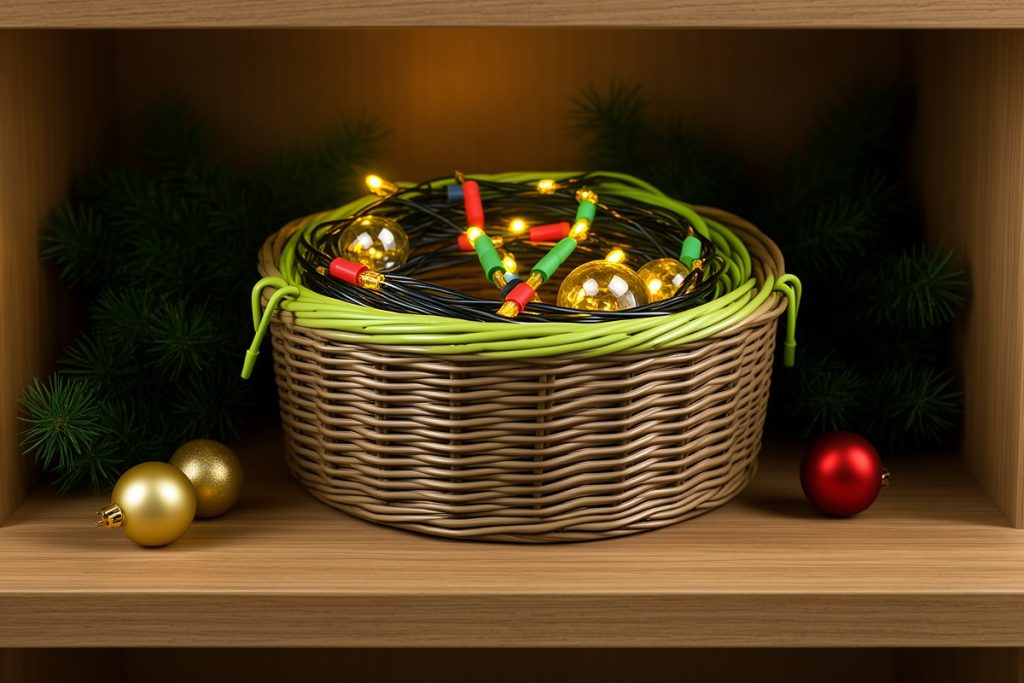
A loose, consistent coil is easier to store than a random bundle. Start at the end opposite the plug and make loops about the width of your hand or a little larger. Keep the loops even, but do not pull the wire tight. When you reach the plug, secure the bundle in two or three places.
A flat piece of sturdy cardboard can work as a simple support for longer strands. Cut shallow notches along two edges, wrap the lights around the board, and tuck the plug into one notch. This keeps the coil flat and makes the length easier to identify. Avoid sharp bends, tight wrapping around a very narrow object, staples, and anything that could pierce or compress the insulation.
| Storage method | Best for | Main tradeoff |
|---|---|---|
| Large loose coil | Short strands and small collections | Can loosen if not secured |
| Flat cardboard support | Long strands and narrow closets | Needs a little preparation |
| Separate fabric or plastic dividers | Several similar strands | Uses more container space |
| Small reusable cable ties | Keeping finished coils closed | Must be fastened loosely |
Use a simple color system for faster setup
When every strand looks alike, color coding can save more time than a complicated inventory. Assign one color to each use: one for the tree, another for outdoor railings, another for the mantel, and a fourth for spare or specialty lights. The color should identify the group at a glance, not replace a careful inspection.
Reusable silicone ties can be a practical option for keeping coils together. For example, these reusable cable ties are listed as a 24-piece set in four colors with a 4.2-inch size, which may suit smaller bundles and a simple color system. They are not a substitute for proper coiling: fasten them gently, leave the wire relaxed, and choose a larger support or different method for bulky outdoor strands.
If you prefer not to buy an organizer, use a different visual cue. Store tree lights in one plain bin, outdoor lights in another, and place shorter strands in a shallow container at the top. The best method is the one you will repeat consistently and understand months later.
Pack the closet by frequency and fragility
Place the lights you use first where they are easiest to reach. If the tree goes up before the outdoor decorations, keep the tree-light bundle near the front of the closet. Put backup strands and rarely used specialty lights farther back. This small change prevents you from pulling out every container during the first decorating session.
Use a rigid bin when the closet is busy or likely to be bumped. A fabric container can work in a clean, dry space, but avoid stuffing it so tightly that coils are crushed. Keep lights away from damp floors, leaking pipes, sharp tools, and areas exposed to extreme heat. Do not place heavy seasonal decorations on top of delicate bulbs or tightly packed cords.
Keep accessories with the lights, but not tangled around them. Extension cords, outdoor clips, replacement bulbs, timers, and hooks can go in a small compartment or pouch inside the same bin. Separate accessories from the light coils so you can remove one item without disturbing the rest.
A five-minute holiday light storage checklist
- Unplug the strand and let it cool before handling it.
- Test it and inspect the cord, plug, sockets, and bulbs.
- Remove damaged strands from your usable collection.
- Sort the remaining lights by location and length.
- Coil each strand loosely around a flat support or in even loops.
- Secure the coil in two or three places without squeezing the wire.
- Place it in a dry bin with related accessories.
Make next season easier with a one-minute inventory
You do not need a detailed spreadsheet. Before closing the bin, take a quick photo of the organized contents for your own reference or keep a short note on the outside of the container using your preferred labeling method. Record only useful details: “tree, warm white, long,” “porch, outdoor-rated,” or “spares.” That small inventory prevents unnecessary unpacking.
It is also worth deciding whether a strand earned its storage space. If lights repeatedly fail, no longer fit your decorating plan, or require more repair than they are worth, remove them from the active collection according to local disposal guidance. Keeping fewer, clearly sorted strands makes the remaining lights easier to protect.
Finally, revisit the system after the first decorating session. If one bundle was difficult to identify or a tie loosened, change that part next year. Good seasonal organization is not about creating a perfect storage room. It is about making the next task calmer, safer, and quicker than the last one.
Last reviewed: 2026-08-21
Sources
- Christmas Tree Safety Tips — U.S. Consumer Product Safety Commission