
Quick answer
Store summer clothes for winter only after they are clean and completely dry. Sort out damaged or unworn pieces, fold items loosely, and use breathable protection for delicate fabrics. Keep containers in a cool, dry, dark area, leave room for airflow, and label each category clearly so next summer’s closet reset takes minutes instead of becoming another seasonal chore.
Key takeaways
- Wash and dry every garment before storing it, but avoid packing anything that still feels damp.
- Use breathable garment protection for delicate or natural fabrics, and avoid compressing items that need to hold their shape.
- Choose containers based on access, moisture risk, available space, and whether you expect to move them.
- Keep stored clothing away from direct sunlight, leaks, and high-humidity areas.
Begin with a practical fall clothing sort
The best winter storage system starts before you buy a container. Empty one drawer, shelf, or closet section at a time and divide summer clothing into four groups: keep for next year, donate, repair, and recycle or discard. This prevents you from spending storage space on clothes you no longer wear.
Use a simple test for uncertain items: would you choose this piece again next summer if it were clean and ready to wear? If the answer is no, set it aside. For children’s clothing, add a separate “check next spring” group because growth can make otherwise usable items a poor fit.
Repair loose buttons, broken zippers, and small tears before storage. A minor problem is easier to fix now than after several months in a packed container. Shoes should be separated from clothing, cleaned, and fully aired out before they go into their own storage area.
Clean and dry clothes before packing
Body oils, food residue, and perspiration can attract pests or leave stains that become harder to remove over time. Follow each garment’s care instructions, then allow it to dry completely. Do not pack clothes directly from the dryer if they feel warm and slightly humid; let them cool and air out first.
Moisture is the storage problem worth taking most seriously. The U.S. Environmental Protection Agency explains that mold can grow on organic materials when moisture and oxygen are present, and recommends keeping indoor relative humidity below 60%, ideally between 30% and 50% when possible. That makes a damp basement, poorly ventilated attic, or spot beside a leaking exterior wall a poor choice for seasonal clothing.
If a garment already smells musty, do not seal it with the rest of your wardrobe. Find and correct the moisture source, clean the item appropriately, and make sure it is fully dry before deciding whether it is suitable for storage.
Match the container to the clothing
There is no single best container for every fabric. The right choice depends on how often you need access, how much protection the storage area provides, and whether the clothing will stay at home or travel with you.
| Storage choice | Works well for | Watch out for |
|---|---|---|
| Breathable fabric garment bag | Coats, suits, dresses, and delicate pieces that need hanging space | Dusty or damp storage areas; avoid overcrowding |
| Clear lidded bin | Folded T-shirts, swimwear, shorts, linens, and everyday seasonal clothing | Heat, direct light, excess weight, and tightly compressed fabrics |
| Soft zippered storage bag | Bulky folded clothes, bedding, dorm moves, and temporary storage | Overfilling, sharp objects, and storage on wet floors |
| Drawer or shelf organizer | Small accessories and items used frequently | Limited capacity and little protection from household moisture |
For heirlooms, vintage garments, wedding clothing, or anything with sentimental value, use more specialized preservation guidance rather than treating the item like ordinary seasonal wear. The National Park Service’s museum resources are a useful starting point for understanding when ordinary household storage is not enough.
Make the container easy to use next season
Pack by purpose, not just by garment type. A container for “beachwear and pool items” is more useful than one containing a random mix of tank tops, towels, and sandals. Other helpful groupings include casual summer clothes, travel pieces, workout clothing, and warm-weather accessories.
Fold heavier items at the bottom and lighter items on top. Avoid forcing the lid closed or packing so tightly that fabric stays sharply compressed. Leave a small amount of space so you can remove one category without emptying the entire container.
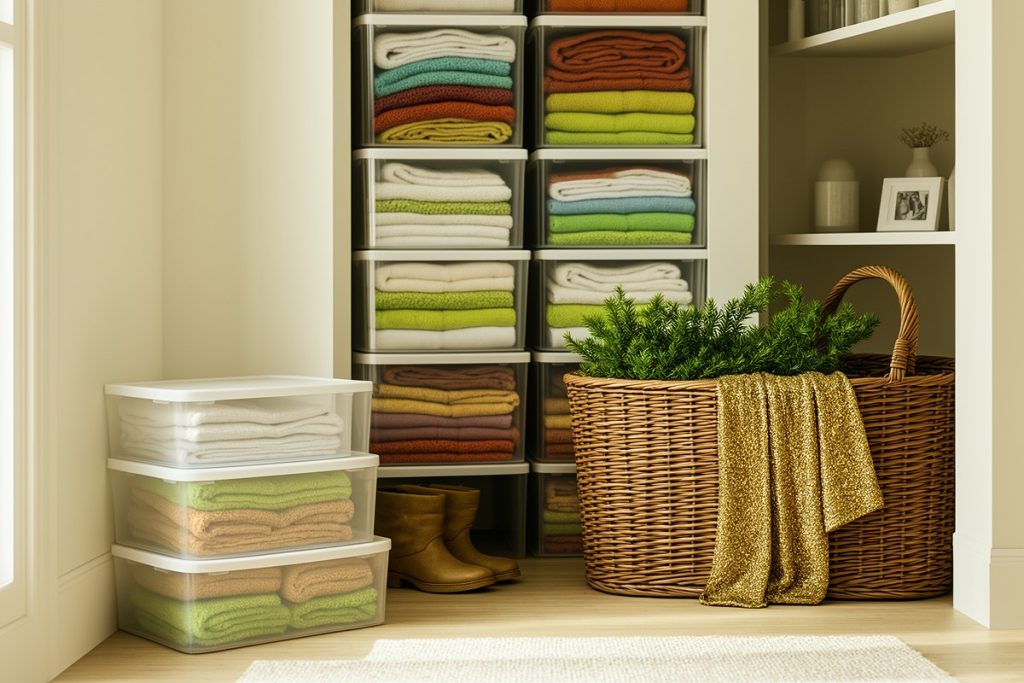
If you choose a clear, lidded option, it can make the next seasonal rotation quicker because you can identify contents before opening it. The 8 Pack Extra Large Clothes Storage Bins with Lids is designed around folded clothing storage and moving, with clear panels, reinforced handles, and heavy-duty zippers listed among its features. It may suit a household that needs several portable containers, but it is still important to check the dimensions against your closet and avoid assuming that a zippered storage bag is waterproof or a substitute for moisture control.
Choose a safe place for seasonal storage
A cool, dry interior closet is usually easier to manage than an attic, garage, or basement. If those areas are your only options, keep containers elevated from the floor and away from exterior walls, plumbing, windows, and locations where condensation is common. Check the area after heavy rain or a major temperature change before committing your full wardrobe.
Direct sun can fade fabrics, while extreme heat can make some materials brittle or distort their shape. A dark shelf or covered closet is preferable to an exposed corner near a skylight. Avoid placing heavy bins where retrieving them requires unsafe lifting or climbing.
Do not add strongly scented products directly against clothing. Fragrance can transfer to fabric, and scent does not solve a moisture or pest problem. A cleaner system is to keep clothes clean, containers dry, and the surrounding space easy to inspect.
A 10-minute seasonal storage checklist
- Remove clothes that no longer fit, suit your lifestyle, or need repair.
- Wash or clean the pieces you are keeping according to their care instructions.
- Dry and air everything fully before folding.
- Separate delicate, hanging, bulky, and everyday folded items.
- Inspect each container for dust, moisture, broken closures, or sharp edges.
- Pack by category without overfilling or crushing the contents.
- Place containers in a cool, dry, shaded location, preferably off the floor.
- Record the category and storage location in a simple household note.
That last step matters more than it seems. A basic inventory keeps you from buying duplicates and makes it easier to retrieve one item without disturbing everything else.
When to review stored clothes
Check seasonal storage once during the off-season, especially if the containers are kept in a garage, attic, or basement. Look for dampness, unusual odors, pests, crushed fabrics, or damaged closures. Early inspection gives you a chance to move the clothing before a small environmental problem becomes a wardrobe-wide cleanup.
When spring arrives, unpack in batches rather than dumping every container onto the bed. Air out stored garments, inspect them in good light, and wash only what needs refreshing. Then use the same sort-and-repair process before packing the next group of seasonal items.
A successful fall closet reset is not about buying the most storage. It is about reducing decisions, protecting clean clothing from avoidable moisture, and creating a system that is easy to reverse six months later.
Last reviewed: 2026-09-07