
Quick answer
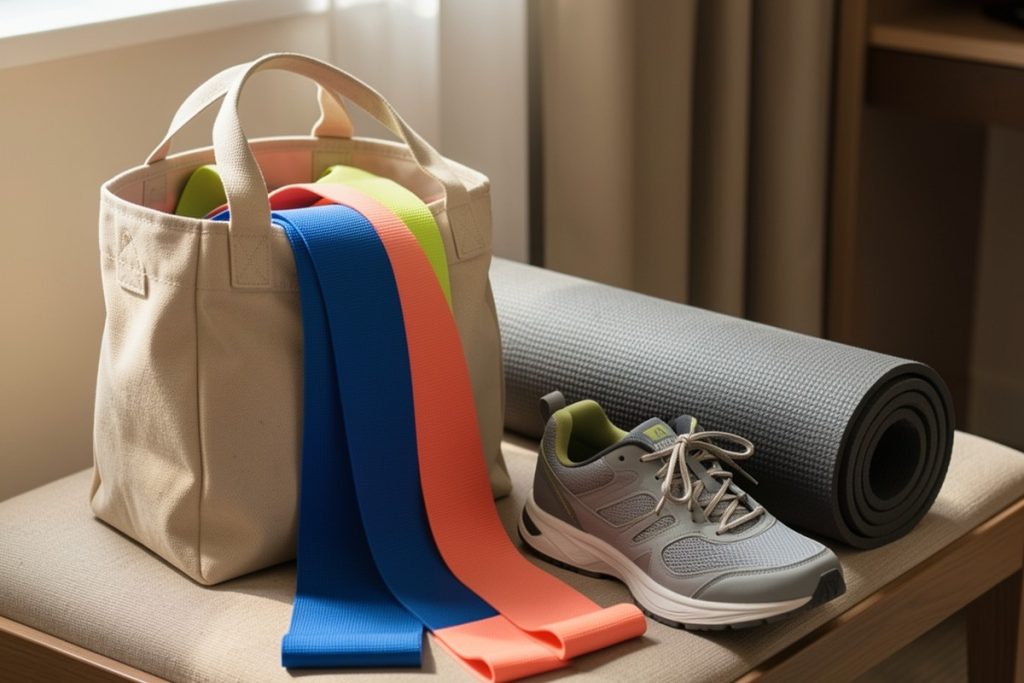
For travel, choose resistance bands that are compact, offer more than one tension level, and match the movements you realistically plan to do. Loop bands are especially useful for lower-body training and warm-ups, but they are not a complete gym replacement. Prioritize durable material, a storage bag, clear instructions, and a setup that does not require unsafe door anchors.
Key takeaways
- Choose a band kit based on your travel routine, not the number of bands in the package.
- Multiple tension levels make it easier to adjust resistance as your strength and exercises change.
- Mini loop bands are compact and useful for lower-body work, but less versatile than long bands with handles.
- Inspect bands before use, keep them away from sharp edges and heat, and never rely on an unstable anchor.
By Jax Morrison, High-Energy Motivator
Last reviewed: 2026-10-23
Start with the travel problem you want to solve
The best resistance band for travel is not automatically the thickest, strongest, or largest set. It is the one you will actually pack and use when your schedule, room, and energy are limited.
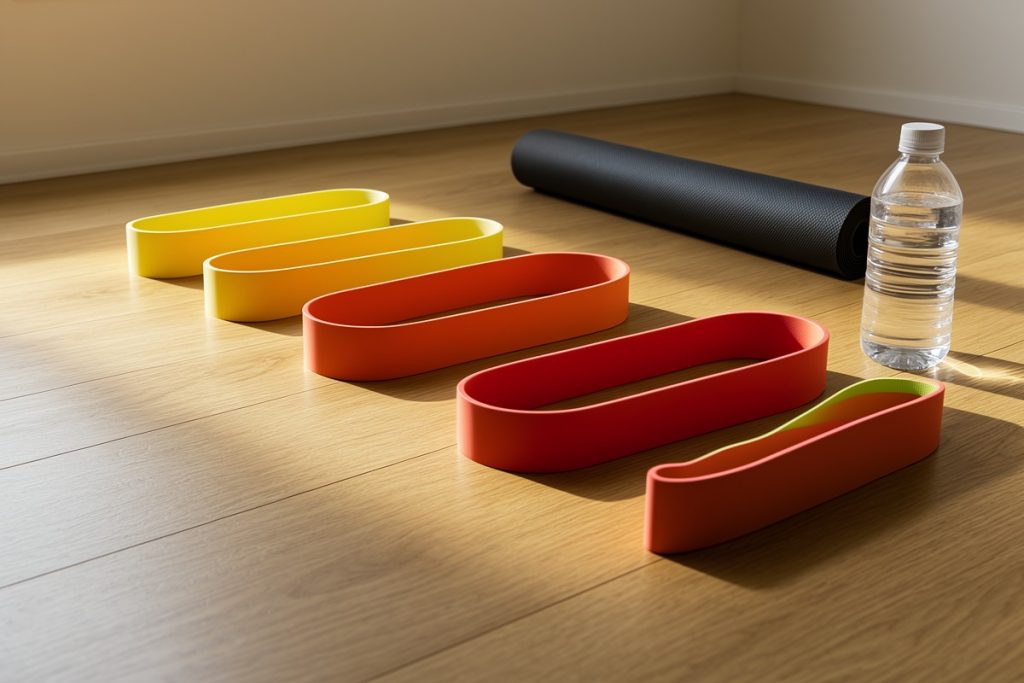
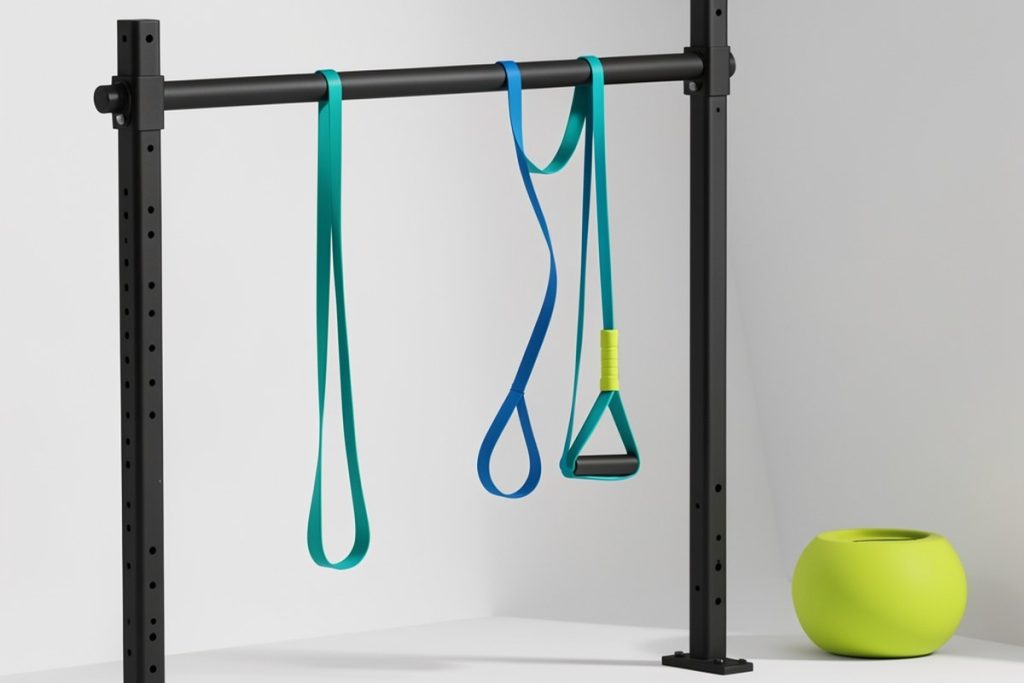
Start by identifying your main goal. If you want a quick lower-body session in a hotel room, short loop bands can be a practical choice. They take little space and work well for movements such as lateral steps, squats with controlled knee alignment, glute bridges, and hip-abduction exercises. If you want pulling exercises for your back, a long resistance band may be more useful, especially when it has handles or a secure attachment system.
For general fitness, bands are best viewed as one tool in a broader activity plan. Public-health guidelines still emphasize regular aerobic activity and muscle-strengthening work across the week. A travel band can help you avoid doing nothing on a busy day, but it does not need to replace walking, running, bodyweight exercise, or a properly equipped gym.
What to look for in a travel resistance band kit
1. Several resistance levels
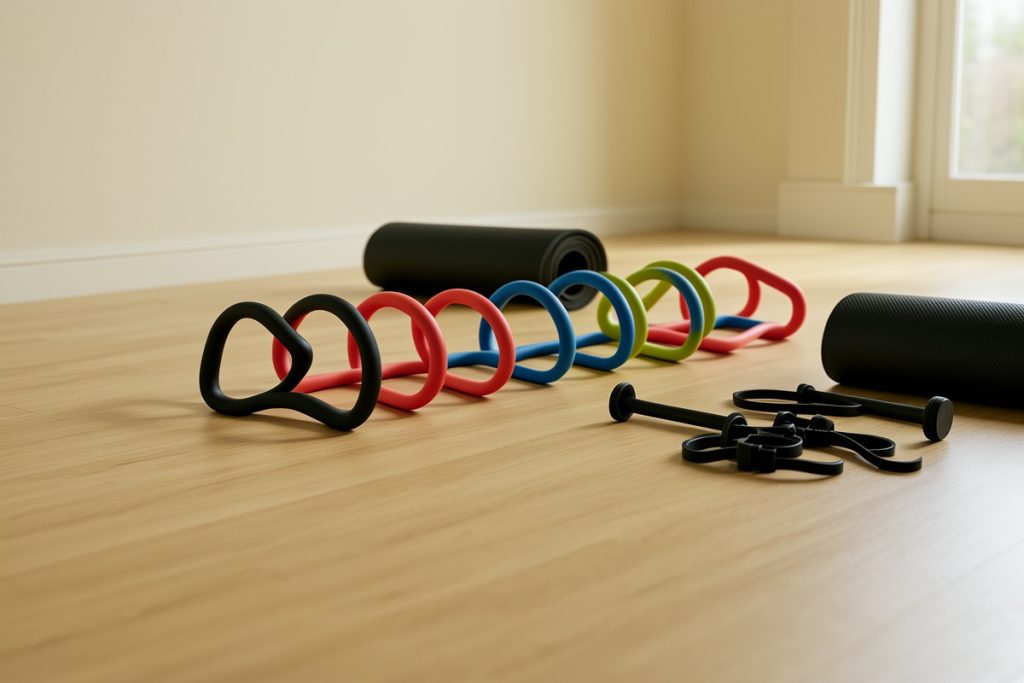
A single band may feel convenient, but it can quickly become too easy for one movement and too difficult for another. A set with multiple tension levels gives you room to adjust. You can use lighter resistance for warm-ups, smaller muscle groups, or longer sets, then choose more resistance when an exercise feels controlled and stable.
Do not assume a color means the same resistance across every brand. Read the manufacturer’s guide, then judge the band by how the movement feels. You should be able to maintain smooth control without snapping back, twisting your knees, or changing your posture to finish a repetition.
2. A compact design
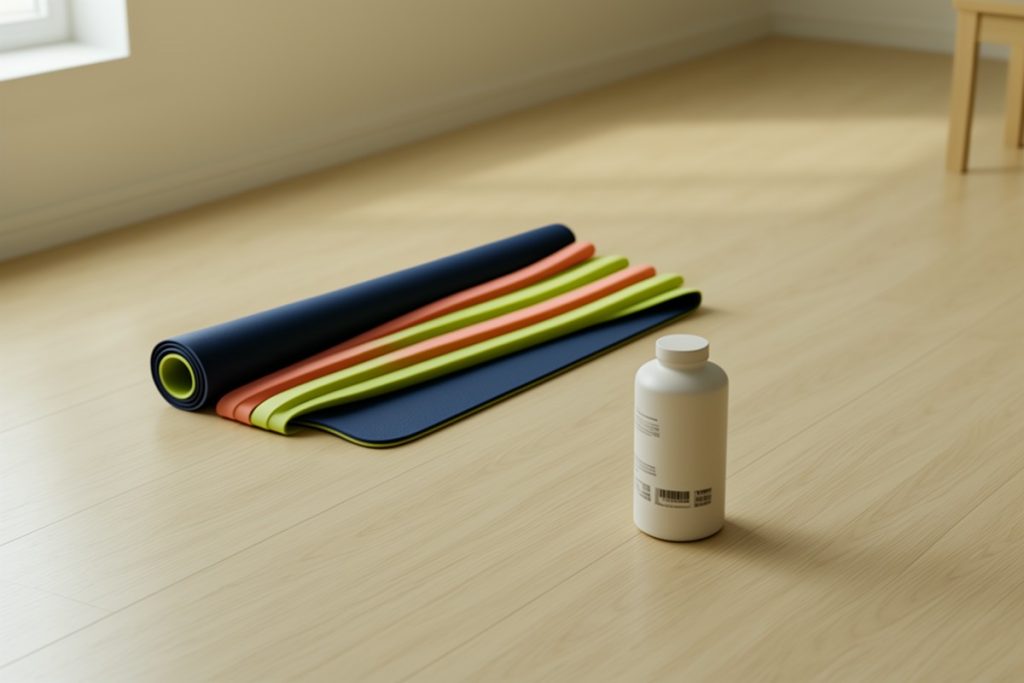
Travel equipment should earn its place in your luggage. Short loop bands are usually easier to pack than a barbell, dumbbells, or a full cable system. A small carry bag also prevents the bands from disappearing between shoes and toiletries.
Look for a kit that can fit into a side pocket or small compartment without adding meaningful bulk. A set that stays at home because it is awkward to pack is not a useful travel set, regardless of its specifications.
3. Material you can inspect
Elastic bands are exposed to repeated stretching, friction, sweat, and temperature changes. Before each use, check for cuts, splits, thinning sections, or sticky areas. Do not use a band that looks damaged. Wipe it clean according to the manufacturer’s care instructions, and let it dry before storing it.
Fabric-covered bands can feel comfortable against the skin, while bare latex or rubber bands may be easier to clean and stretch. Neither option is automatically right for everyone. If you have a known latex allergy, check the product materials before buying.
Mini loops versus long bands: which fits your trip?
| Travel need | More suitable option | Why | Limitation |
|---|---|---|---|
| Smallest possible kit | Mini loop bands | Lightweight and easy to store | Less useful for certain upper-body pulling movements |
| Lower-body training | Mini loop bands | Convenient for controlled leg and hip exercises | Resistance may feel limited for stronger users |
| More exercise variety | Long band with handles | Supports more pulling and pressing patterns | Usually takes more space and may need an anchor |
| Quick hotel-room sessions | Multiple loop tensions | Easy to change resistance without extra equipment | Still requires a clear, stable floor area |
This comparison is why there is no universal “best” travel band. A minimalist traveler may prefer one or two loops. Someone planning a more complete strength session may need longer bands and a reliable anchor point. Choose for the exercises you will perform, not for an impressive-looking accessory list.
How to match resistance without guessing
Begin with the lightest band that allows you to learn the movement. Perform a few slow repetitions and pay attention to your alignment. The band should create a challenge without forcing your knees inward, shoulders upward, or lower back into an uncomfortable position.
Move up in resistance only when you can control the full range of motion and keep the same technique from beginning to end. If the band makes you rush, hold your breath, or compensate with another body part, it is probably too strong for that exercise.
Also consider the exercise position. A band may feel manageable around the thighs during a squat but much more demanding during lateral steps. Resistance is not just a number printed on a package; it changes with the movement, stretch length, body position, and your own control.
One compact option for a travel kit
The Fit Simplify Resistance Loop Exercise Bands with Instruction Guide and Carry Bag, Set of 5 is relevant for travelers who want several loop options in one small kit. Its included guide can be useful if you want exercise ideas without carrying a separate book, while the bag addresses basic storage.
Keep the recommendation in perspective: a loop-band set is most naturally suited to compact lower-body work, warm-ups, and adding resistance to selected bodyweight movements. It is not the same as a complete strength system, and the product’s included accessories do not remove the need to inspect the bands or choose a safe setup.
Pack and use your bands safely
A hotel room is not automatically a safe training space. Move chairs, luggage, and loose rugs out of your path. Use the floor only when it is dry and stable. Avoid stretching a band against door hinges, sharp furniture corners, bed frames that can move, or anything that has not been designed as an anchor.
Keep the band away from direct heat and prolonged sunlight in a parked car. Do not leave it stretched under tension in your luggage. If the band slips, pinches, or causes sharp pain, stop and reassess the setup. People managing an injury, significant joint pain, or a medical condition should ask a qualified clinician how to exercise safely.
Travel packing checklist
- Choose one or more tension levels that match your planned movements.
- Inspect the bands for tears, thinning, or damaged seams.
- Pack the bands in their bag instead of loose beside sharp items.
- Bring comfortable footwear if you plan to combine band work with walking.
- Identify a clear floor area before starting, not after the first movement.
The bottom line
For most travelers, the right resistance band is compact, adjustable, durable, and simple enough to use without complicated equipment. Mini loop bands are a sensible choice when your priority is lower-body training and minimal luggage. Long bands offer more variety but demand more space and greater attention to anchoring.
Choose the smallest kit that supports your actual plan. Then use it consistently alongside walking, bodyweight movements, and the rest of your weekly activity. The smartest travel setup is not the one with the most features; it is the one that removes enough friction for you to keep moving.