Quick answer
For a one-month digital nomad stay, pack for a week of clothing, reliable work essentials, destination-specific health needs, and a backup plan for documents and connectivity. Prioritize items that are expensive or difficult to replace, confirm climate and outlet requirements before departure, and leave space for laundry, local purchases, and changing plans.
Key takeaways
- Build a seven-to-ten-day clothing system rather than packing for 30 days.
- Separate work-critical gear from convenient extras and protect the essentials in your personal item.
- Check visa, health, weather, outlet, and baggage rules before finalizing your bag.
- Carry offline copies of key documents and a practical backup for internet access.
By River Nakamura, Global Nomad Storyteller
Last reviewed: 2026-11-02
Start with the trip, not the suitcase
A useful digital nomad packing list begins with the destination and your actual routine. A month in a furnished apartment near a coworking space requires a different bag from four weeks split between guesthouses, trains, and cafés.
Before packing, answer five questions:
- What will the weather be like during the entire stay?
- Will you have regular access to laundry?
- What kind of work must you do, and what equipment is essential?
- Will you need formal clothing, hiking gear, or modest attire?
- What are the entry, health, electrical, and baggage requirements?
Also check your work schedule against local time. Time-zone rules and seasonal clock changes can affect recurring meetings, so verify the destination in the IANA Time Zone Database rather than relying on memory.
Use the seven-day clothing system
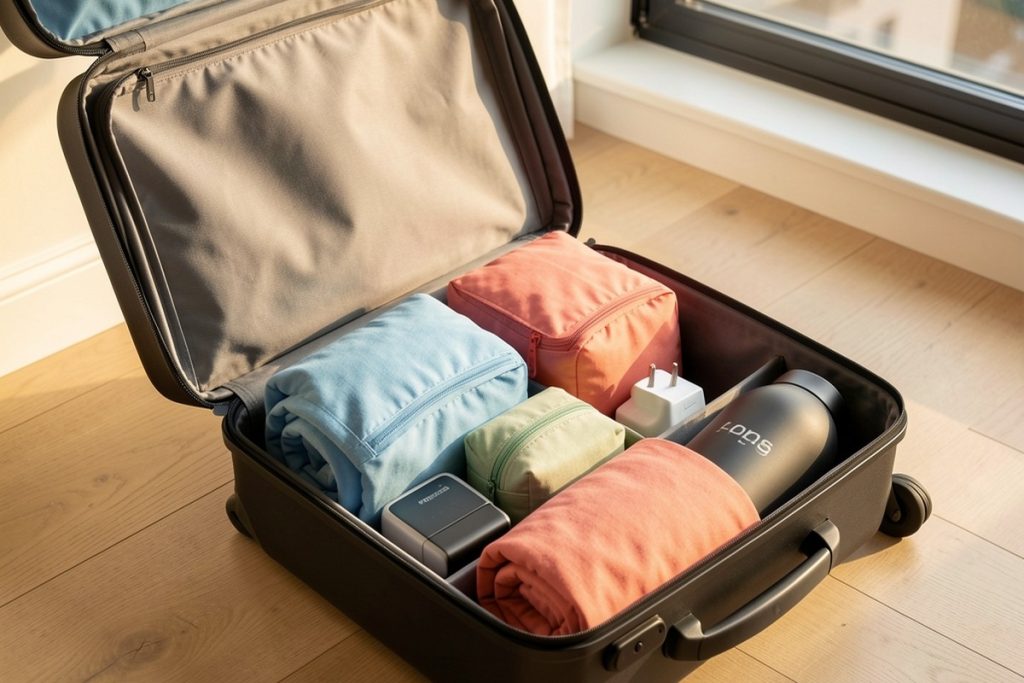
Unless you are traveling somewhere without laundry access, you do not need 30 days of clothes. A flexible starting point is five or six tops, two or three bottoms, seven sets of underwear, several pairs of socks, one warm layer, sleepwear, swimwear if relevant, and no more than two pairs of shoes.
Choose pieces that work together and dry reasonably quickly. One lightweight overshirt can cover a casual dinner, a cool train, and a coworking space with aggressive air conditioning. Neutral colors make it easier to create several outfits without bringing more clothing.
Adjust the list for the destination rather than following it mechanically. A humid city may call for breathable fabrics and sandals; a cool location may require a better insulating layer. If you expect formal meetings, replace one casual item with a polished outfit instead of adding an entirely separate wardrobe.
Pack work essentials in order of replacement difficulty
Think in three tiers. Tier one includes items that could stop you from working: your laptop, its charger, phone, essential cables, authentication device, and any specialized equipment. Tier two includes items that improve comfort, such as a mouse, keyboard, stand, or headphones. Tier three includes nice-to-have accessories that can usually be purchased locally.
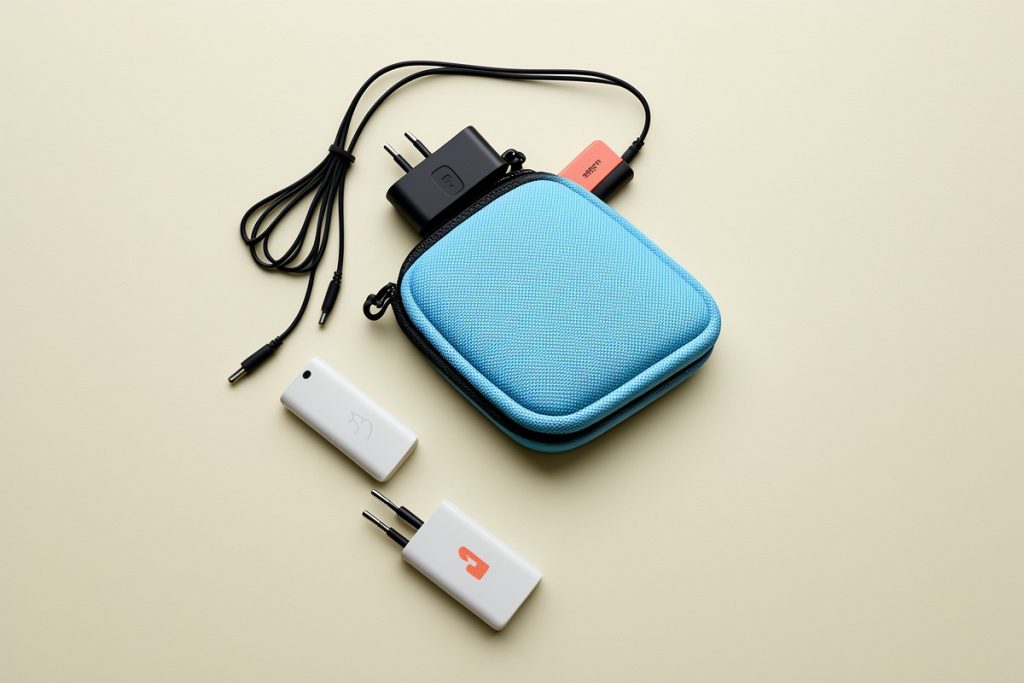
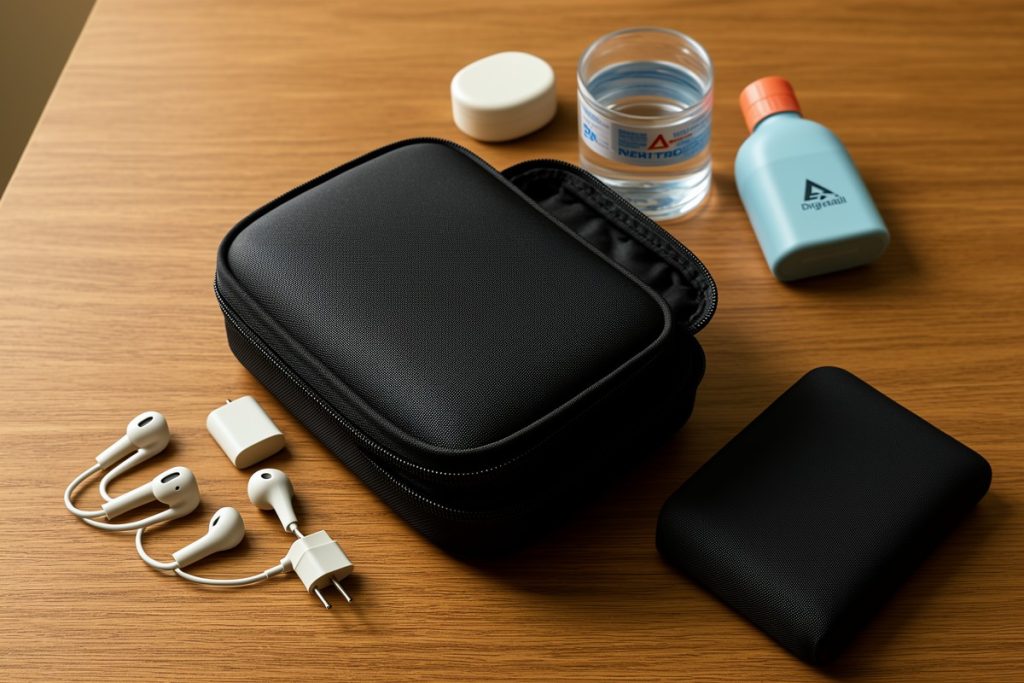
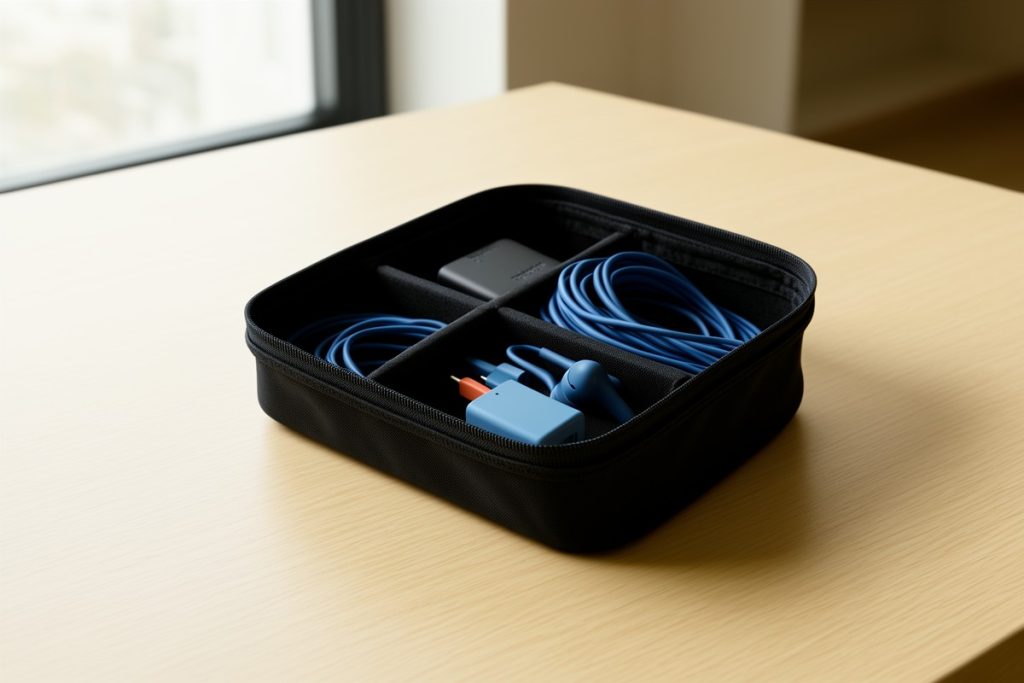
Keep tier-one equipment in your personal item, not checked luggage. Store cables together, label them by function if that helps, and test every charger before leaving. A small backup drive or encrypted cloud backup can protect important work if a device is lost or damaged.
For a hotel or apartment desk, a compact charging station can reduce cable clutter. The ORICO 65W GaN Travel Power Strip, 7 in 1 Charging Station lists three AC outlets, four USB ports, a flat plug, and a four-foot extension cord, so it may suit travelers charging several devices from one outlet. It is not a universal travel adapter, however; confirm destination compatibility and your devices’ charging requirements before relying on it.
| Category | Pack first | Check before departure |
|---|---|---|
| Work | Laptop, charger, phone, authentication method | Backups, battery health, required software |
| Connectivity | SIM or eSIM plan, adapter, backup access plan | Coverage, activation rules, hotspot limits |
| Clothing | One-week capsule wardrobe, versatile layer | Forecast, laundry access, dress expectations |
| Health | Prescriptions, basic first-aid items, glasses | Destination requirements and refill options |
Protect your health and important documents
Pack prescriptions and essential health items before optional comforts. Keep medicines in their original packaging where possible, and check destination rules before traveling with controlled or restricted medication. The CDC Travelers’ Health destination pages provide country-specific information on vaccines, health notices, and other preparation concerns.
Bring a small personal health kit suited to your trip: prescribed medication, pain relief you already use safely, blister care, basic wound supplies, and any necessary vision or hearing accessories. Do not assume a familiar brand or formulation will be available abroad.
For documents, carry your passport, relevant visa or entry records, insurance details, accommodation information, emergency contacts, and copies of prescriptions. Keep secure offline copies on your phone and another protected location. Do not store every important document only in a single email account that could become inaccessible.
Entry requirements change by nationality and destination. Review current government guidance and travel advisories before booking and again shortly before departure. The U.S. Department of State travel advisories are useful for U.S. travelers, but other nationalities should also consult their own government and the destination’s official immigration authority.
Leave room for the realities of nomad life
The best packing list includes empty space. You may buy a jacket after an unexpected weather change, collect groceries for an apartment, or need room for a local SIM and small work supplies. An overfilled bag also makes moving between accommodations more tiring.
Before closing the suitcase, remove duplicates and ask whether each item is essential, replaceable, or merely comforting. Keep one change of clothes, medication, valuables, and basic work equipment accessible during transit. Put liquids where they can be removed easily for screening and check current airport rules through the TSA What Can I Bring database if departing from the United States.
A 20-minute arrival checklist
- Confirm the room has a workable desk, safe charging location, and adequate lighting.
- Test Wi-Fi from the place where you will actually work.
- Locate the nearest pharmacy, grocery store, laundromat, and emergency facility.
- Save the address of your accommodation offline.
- Tell your key work contact how to reach you if your primary connection fails.
This final check turns a packed bag into a usable base. The goal is not to carry every possible solution; it is to arrive with the essentials protected, the first workday covered, and enough flexibility to adapt once you understand the place.