Quick answer
To organize holiday gift-wrapping supplies in a small space, separate tools from paper, store ribbons and small pieces vertically, and keep the most-used items within easy reach. Use one container for active supplies and a backup zone for extras. Before buying organizers, measure the shelf or cabinet and group supplies by the way you actually wrap gifts.
Key takeaways
- Measure your storage space before choosing bins, drawers, or shelves.
- Store flat materials vertically when possible to prevent bent paper and wasted space.
- Keep scissors, tape, ribbon, and gift tags together as an “active wrapping kit.”
- Use clear storage for small supplies you need to identify quickly.
- Review the collection before the season so damaged or duplicate supplies do not take up prime space.
By Autumn Cole, Seasonal Lifestyle Curator
Start with a wrapping-supply inventory
Holiday wrapping becomes harder when every gift requires a search through several closets, drawers, and shopping bags. Begin by gathering your supplies in one place. Include wrapping paper, gift bags, tissue paper, boxes, ribbon, bows, tape, scissors, tags, markers, stickers, and mailing materials.
Do not organize everything immediately. First, make three piles: use this season, store for later, and let go. The “use this season” pile should include supplies that match the gifts you expect to wrap. The second pile can hold specialty paper, extra boxes, or decorations worth keeping. Recycle or discard items that are torn, crushed, dried out, or too small to use comfortably.
This inventory also reveals what your household actually needs. If you have plenty of paper but no tape, the solution is not another storage bin. If ribbon is scattered throughout the house, the priority is access rather than more supplies.
Choose storage based on the shape of each item
Wrapping supplies are awkward because they come in several shapes. Flat paper needs protection from creases, while ribbon, tape, and tags are small enough to disappear in a deep box. Match the container to the object instead of forcing everything into one large tote.
| Supply | Best storage approach | Reason |
|---|---|---|
| Wrapping paper | Long vertical bin, basket, or under-bed container | Keeps rolls together and reduces crushing |
| Ribbon and bows | Shallow drawer or divided container | Prevents tangles and makes colors visible |
| Tape and scissors | Small open tray or front section of a drawer | Keeps essential tools ready to grab |
| Gift tags and small embellishments | Clear lidded box or compact drawer | Stops tiny pieces from spreading into larger bins |
| Gift bags and tissue paper | Wide vertical file or shelf section | Allows quick sorting without a deep pile |
Avoid storing paper under heavy decorations or seasonal clothing. Even when the container is tidy, pressure and moisture can leave paper wrinkled or unusable.
Create an active wrapping kit
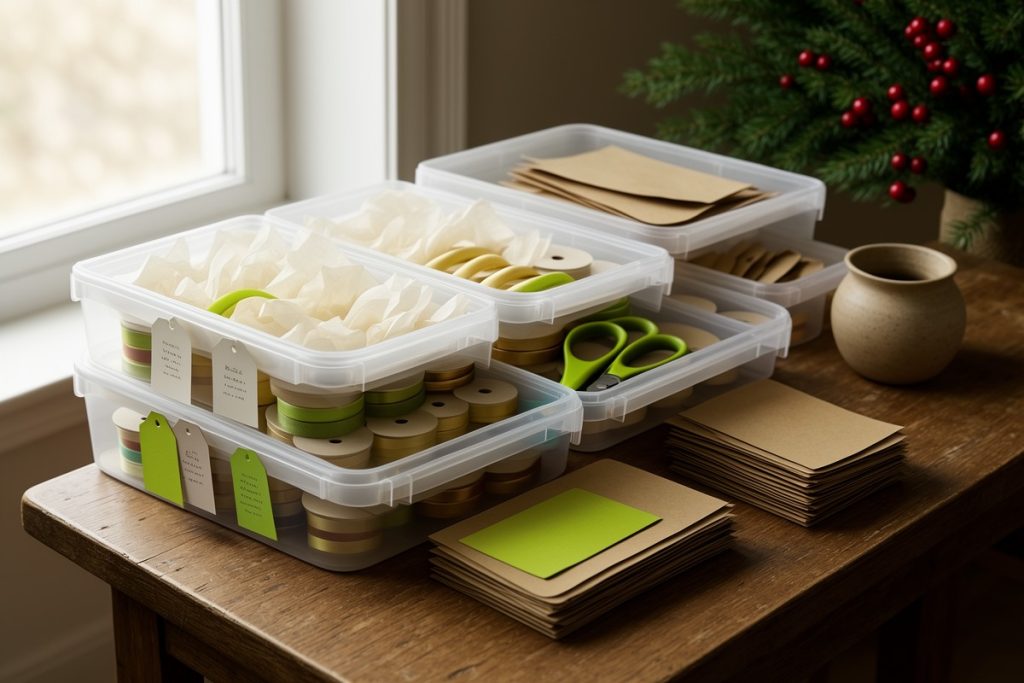
Most wrapping sessions use the same small group of items: tape, scissors, a pen or marker, gift tags, and a few lengths of ribbon. Keep these together in a shallow tray or small container rather than making yourself open the entire holiday-storage system for one gift.
The active kit should be portable. You might wrap gifts at the dining table one evening and at a desk the next. A container that can move easily helps you return supplies to one place when you finish. It also makes cleanup less frustrating because the kit has a clear home.
Keep backup supplies separate. Extra tape, unopened tags, and reserve ribbon can live in a secondary storage area. Mixing reserve stock with everyday tools makes the active kit larger and harder to use.
Use clear drawers for small seasonal supplies
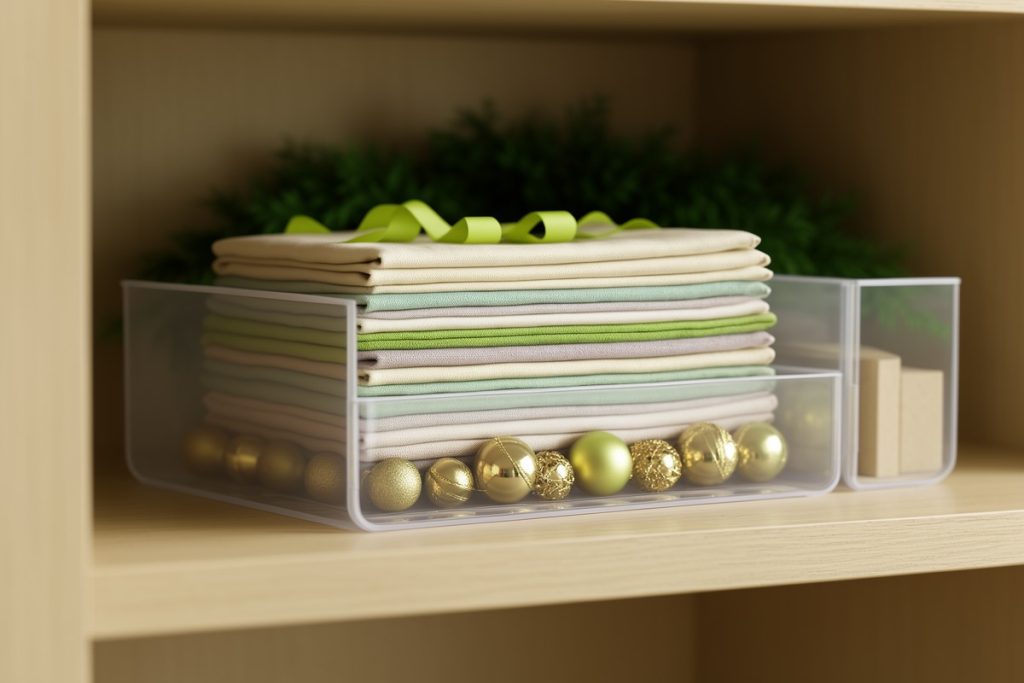
Small supplies are easiest to lose when they are stored in opaque containers. Clear, stackable drawers can be useful for ribbon, bows, tags, tape refills, and other compact items because you can see the general contents before opening anything.
The Vtopmart Clear Stackable Storage Drawers Set of 4 may suit a shelf, vanity-style cabinet, craft area, or pantry zone where small seasonal supplies need to stay visible. Its clear stackable drawer format is more appropriate for compact accessories than long wrapping-paper rolls. Measure the available space first, and confirm that the drawer arrangement works with the height and depth of your shelf.
Keep expectations realistic. A small drawer organizer will not replace a paper-storage solution, and clear plastic can still look cluttered if every category is mixed together. Use one drawer for ribbon, one for tags and small decorations, one for tape and tools, and one for overflow or seasonal extras. If your supplies do not fit comfortably, reduce the collection rather than overfilling the drawers.
Make small storage easy to maintain
Organization should reduce decisions during the busiest part of the season. Give every category a simple home and use the same rule each time you put something away. For example, all loose ribbon returns to one drawer, while spare gift bags stand together on one shelf.
Try to leave a little breathing room in each container. Overfilled drawers make it difficult to see what you own, and tightly packed paper is more likely to bend. A partly empty container is often more useful than a larger container filled beyond its practical capacity.
Place the active kit near the surface where you usually wrap gifts. Store backup paper and rarely used decorations farther away. This “daily access versus seasonal reserve” split keeps the working area convenient without requiring your whole collection to be on display.
Pack gifts safely before mailing them
If wrapped gifts are going through the mail, the decorative layer should not be the package’s only protection. Place the gift inside packaging that is strong enough for handling, leave room for cushioning around fragile contents, and prevent the item from shifting. The United States Postal Service also recommends measuring and weighing packages accurately to help avoid unexpected postage issues.
Use sturdy tape across the seams of the outer package, not string or decorative cord. Check the carrier’s current rules before mailing anything restricted, fragile, perishable, or containing batteries. A beautifully wrapped gift that arrives damaged is not a successful storage or wrapping system.
A five-minute holiday wrapping reset
- Return scissors, tape, tags, and ribbon to the active kit.
- Flatten reusable paper and place it with the correct paper type.
- Remove empty tape rolls, crushed boxes, and unusable scraps.
- Move unopened backups to the reserve area.
- Leave the next wrapping surface clear and ready.
Repeat this reset after each major wrapping session instead of waiting until the end of the season. Five minutes of maintenance can prevent the familiar pileup of loose ribbon, missing tape, and half-used gift bags.
Plan for next season without overbuying
When the holidays are over, note what ran out and what went untouched. You may discover that you need more medium gift boxes but fewer large bags, or that neutral ribbon worked with more gifts than highly specific patterns. Keep a short supply note with your reserve items, but do not buy replacements until you have checked what remains.
Store paper and fabric-based materials in a dry indoor location away from leaks, damp floors, and extreme temperature changes. Before putting everything away, remove food residue and dust from storage containers. A clean, limited collection is easier to use next year than a large assortment that has accumulated without a plan.
The goal is not a picture-perfect wrapping station. It is a system that lets you find the right paper, grab the essential tools, and finish a gift without unpacking half the house.
Last reviewed: 2026-11-20