Quick answer
For watching television without raising the room’s volume, RF headphones are often the more straightforward choice because they use a dedicated transmitter and do not depend on Bluetooth pairing. Bluetooth is more flexible for compatible devices, while wired headphones are simplest but less convenient. The Sennheiser RS 195 is worth considering for dialogue-focused TV listening, provided your television has a compatible audio output and you verify its current availability.
Key takeaways
- Choose RF when you want a dedicated TV connection with minimal pairing hassle.
- Choose Bluetooth when your television already supports Bluetooth audio and you also want to use the headphones with other devices.
- Choose wired headphones when low complexity matters more than freedom of movement.
- The Sennheiser RS 195 adds selectable hearing-boost settings and a dialogue-oriented noise-suppression mode, but it is not a hearing aid.
- Check your TV’s optical or analog outputs before buying, and confirm the seller’s return and support policies.
The real problem is usually dialogue, not volume
Many TV headphone purchases begin with a familiar household disagreement: one person wants clearer speech, while everyone else wants the room to stay quiet. The right comparison is therefore not simply “Which headphones sound best?” It is “Which connection and sound controls solve the listening problem with the fewest compromises?”
That distinction matters because a pair designed for music, commuting, or gaming may not be the best fit for television. TV listening often involves sitting in one room, using a fixed audio source, and trying to make voices easier to follow. A dedicated TV system can be more useful than a general-purpose wireless headset if it avoids unnecessary setup and places speech controls within easy reach.
RF, Bluetooth, and wired headphones compared
Radio-frequency, or RF, TV headphones use a transmitter connected to the television. The headphones communicate with that transmitter rather than pairing directly with the TV. Bluetooth headphones connect wirelessly to a Bluetooth-enabled television or an external Bluetooth adapter. Wired headphones connect through a physical headphone jack or another compatible audio output.
| Option | Best for | Main advantage | Important trade-off |
|---|---|---|---|
| RF | Dedicated TV listening | Simple room-to-headphone connection with a dedicated transmitter | Usually less useful for phones and portable devices |
| Bluetooth | People using several compatible devices | Broad device flexibility and no dedicated headphone transmitter | Pairing, compatibility, and audio-delay behavior can vary |
| Wired | Low-cost, low-complexity setups | No battery pairing or wireless connection to configure | The cable limits movement and may require an adapter |
Bluetooth is not automatically better simply because it is common. The television must support the appropriate audio connection, and the experience can depend on how the TV handles Bluetooth output. The Bluetooth Special Interest Group describes Bluetooth as a short-range wireless technology with multiple profiles and use cases, so compatibility is not identical across every device.
RF has a narrower purpose, but that can be an advantage. A transmitter remains connected to the TV, and the listener uses the headphones within the system’s intended range. Wired headphones remain the most predictable option when the seating position is close enough and the cable is not a nuisance.
Where the Sennheiser RS 195 fits
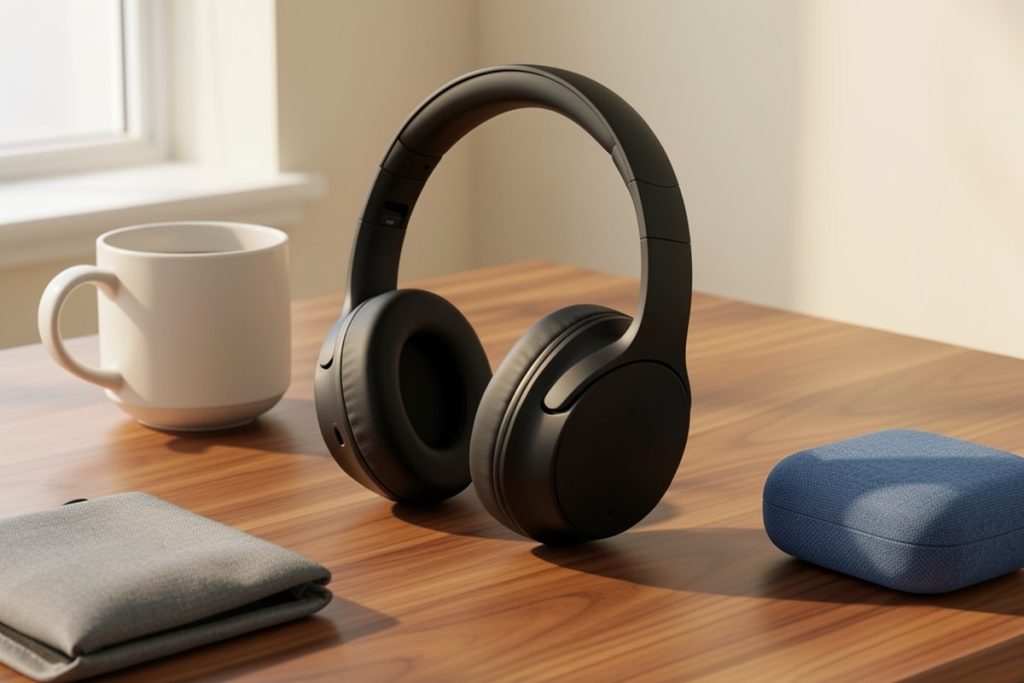
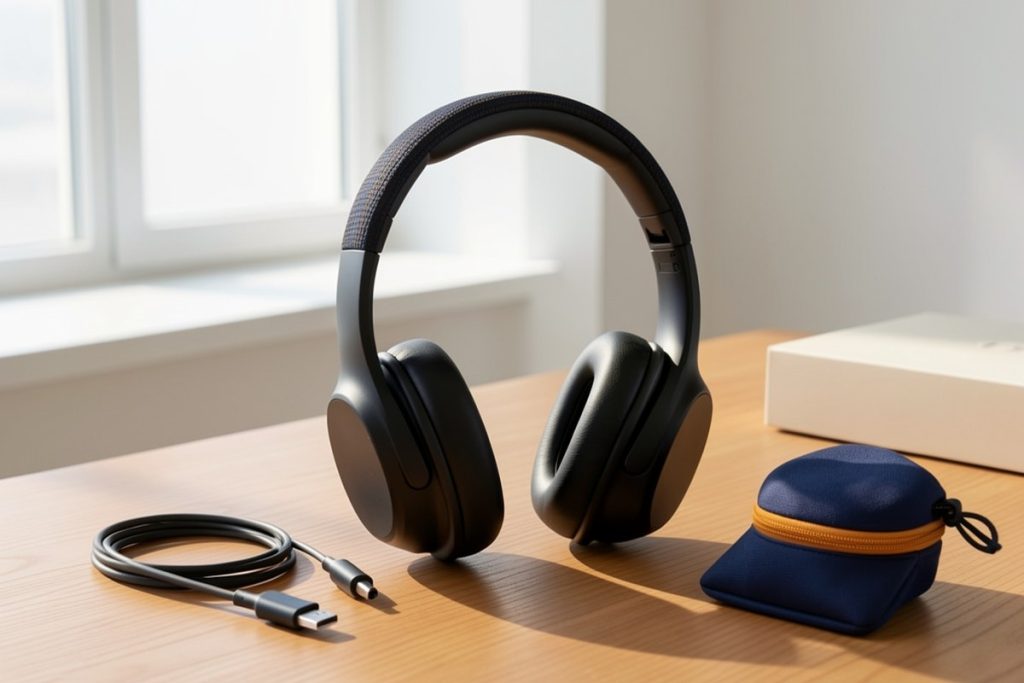
The Sennheiser RS 195 RF Wireless Headphone System is designed around the dedicated-TV-use case rather than general Bluetooth listening. Sennheiser’s product information describes it as a closed-back, over-ear system with a transmitter that accepts digital and analog inputs. It also includes selectable hearing-boost presets, a noise-suppression mode intended to improve dialogue intelligibility, and a music-listening mode.
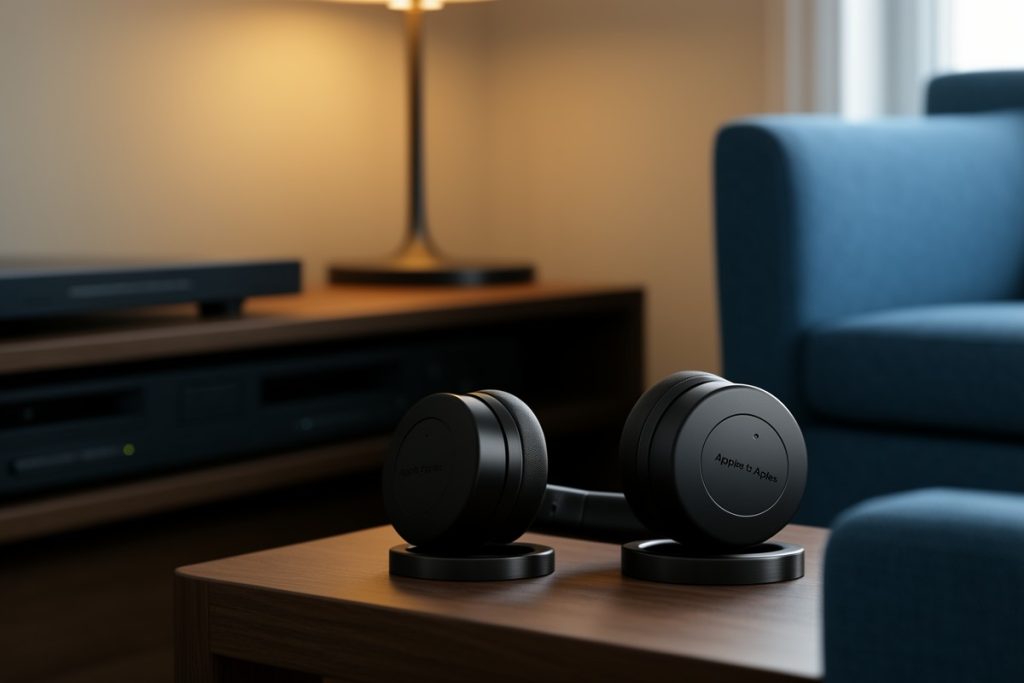
Those features make it a natural candidate for someone who can hear the program but struggles to follow speech, especially when background sound competes with dialogue. The separate transmitter also doubles as a charging cradle, which can reduce the number of loose accessories around the seating area. Sennheiser lists a range of up to 100 meters or 328 feet in line-of-sight conditions; walls, furniture, and the layout of a home can affect practical performance.
There are two important limitations. First, the RS 195 is not compatible with Bluetooth, so it is not the best choice if one headset must switch regularly between a TV, phone, tablet, and laptop. Second, Sennheiser’s product page identifies the model as end of life and no longer available directly through its website. If you find it through another seller, check whether the unit is new, refurbished, or used, and confirm what accessories and return protection are included.
Compatibility checks before you compare prices
Connection type should come after checking the television. Look for an optical digital audio output, a 3.5-millimeter headphone output, or red-and-white analog audio outputs. Some televisions disable their built-in speakers when headphones are connected; others offer a menu setting that controls whether both outputs operate at once. That detail matters if two people need to listen at different volumes.
Also check whether the TV’s audio output is variable or fixed. A fixed output may require volume adjustment on the headphones. A TV with only HDMI audio output may need a separate converter or extractor, adding cost and another potential failure point. If the TV routes all sound through a soundbar or receiver, confirm that the headphone transmitter can be connected without disrupting the existing setup.
For the RS 195 specifically, confirm whether your television provides a compatible digital or analog output and whether the required cable is included. Do not assume that an optical port automatically means every setting will work; the TV may need its digital audio format set to a compatible mode.
A practical decision checklist
- Need TV only? Favor RF if you want a permanent, dedicated connection.
- Need TV plus phone or laptop? Favor Bluetooth, provided every device supports the connection you need.
- Want the fewest technical variables? Consider wired headphones if the cable length and output are suitable.
- Struggle mainly with dialogue? Look for speech or hearing-boost controls, not just louder maximum volume.
- Share the room? Confirm whether the TV can keep its speakers on while sending audio to headphones.
- Buying an older model? Verify condition, included cables, battery health, replacement parts, warranty coverage, and returns.
Headphones are not a substitute for hearing care
Dialogue-enhancement headphones can make television easier to follow, but they do not diagnose or treat hearing loss. The National Institute on Deafness and Other Communication Disorders explains that hearing aids are devices programmed or selected to address a person’s hearing needs, and that the appropriate option depends on the type and severity of hearing loss.
If conversations are also difficult in quiet rooms, if one ear seems noticeably different from the other, or if sound must be made uncomfortably loud, a hearing evaluation is more useful than simply buying a stronger pair of headphones. A TV headset can address a specific listening situation; it cannot tell you why speech is difficult to understand.
Bottom line
For a fixed television setup where clearer speech and independent volume control are the priority, RF headphones are the most focused solution. Bluetooth wins when device flexibility matters, and wired headphones win when simplicity and predictable connectivity matter most. The Sennheiser RS 195 is a reasonable match for dialogue-focused TV listening because of its dedicated transmitter and selectable speech-oriented settings, but its lack of Bluetooth and end-of-life status make compatibility and seller verification essential.
Compare the connection, audio outputs, speech controls, charging method, and return policy in that order. Those factors will tell you more about whether a TV headphone system fits your home than a generic sound-quality label.
Last reviewed: 2026-11-23