
Quick answer
The best manual vegetable chopper for a small kitchen is compact, easy to clean, comfortable to operate, and suited to the amount of food you usually prepare. Look for a sturdy cutting mechanism, a stable base or bowl, simple disassembly, and enough capacity for one meal without taking over a drawer. Manual models are especially useful for small batches of onions, vegetables, fruit, and garnishes.
Key takeaways
- Choose a chopper for your typical batch size, not its maximum advertised capacity.
- Prioritize easy cleaning and simple parts over a long list of supposed uses.
- Manual cutters are useful for quick, small-batch prep but do not replace a chef’s knife for every task.
- Check handle comfort, cutting access, storage dimensions, and care instructions before buying.
Why a manual chopper makes sense in a small kitchen
Small kitchens create a particular cooking problem: even a simple meal can require a cutting board, knife, bowl, food processor, and several minutes of cleanup. A manual chopper can reduce that setup when the job involves a modest quantity of ingredients.
Unlike an electric food processor, a manual model does not need an outlet or a dedicated countertop space. That makes it convenient for a quick salsa, omelet filling, salad topping, sandwich ingredients, or a small amount of onion for dinner. It can also be easier to reach for than a larger appliance that needs to be assembled and stored.
The tradeoff is control and capacity. A compact hand-operated tool is designed for short jobs, not processing a week’s worth of vegetables. It may also produce chopped pieces rather than uniform slices or precise knife cuts. The right choice depends less on having the most functions and more on whether the tool matches the meals you actually make.
What to look for before buying
Start with the cutting mechanism. A product may be marketed for many foods, but the useful question is whether its cutting area and operation suit your regular ingredients. Onion, tomato, avocado, boiled egg, lemon, and soft vegetables can require different amounts of pressure and produce different textures. A tool that handles small, soft ingredients well may not be the right choice for dense vegetables or large quantities.
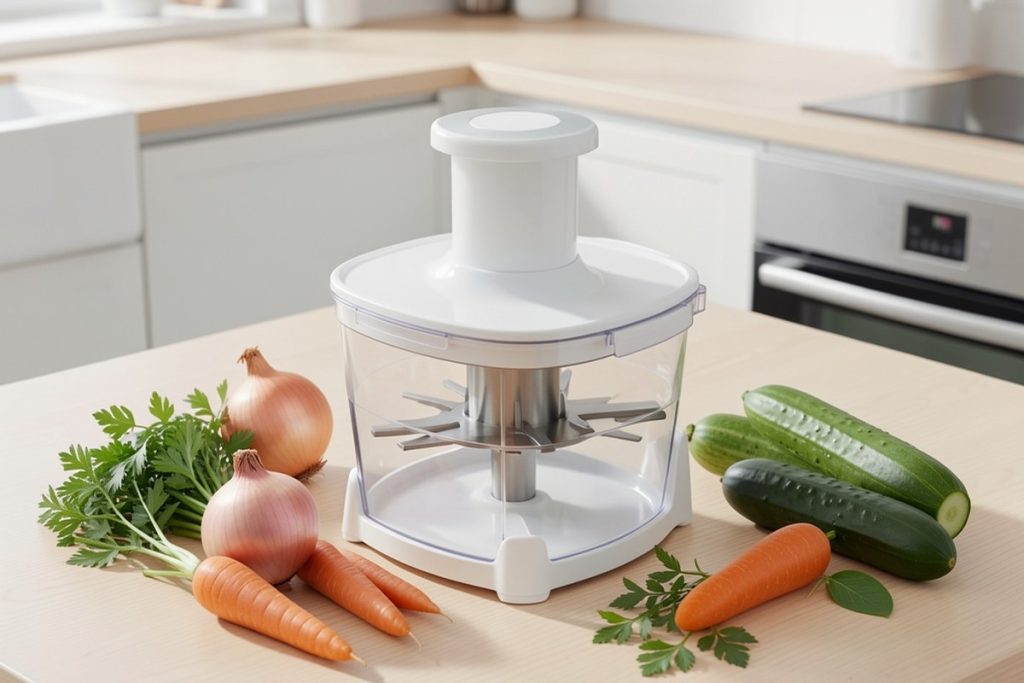
Next, examine how the food is contained. A bowl or enclosed chamber helps keep pieces together and can reduce splatter. A transparent container can make it easier to judge progress, although clarity is less important than a secure fit and easy access for emptying. If the cutter has a handle, it should be large enough to grip without forcing your wrist into an awkward position.
Material matters, but it should not be considered in isolation. Stainless steel can be appealing for parts exposed to food because it is commonly used in kitchen equipment and does not absorb odors like some porous materials. Still, the overall construction matters just as much: look for firm joins, a lid that sits securely, and components that do not flex excessively during use.
| Feature | What to check | Why it matters |
|---|---|---|
| Capacity | Enough room for one normal prep task | Prevents overfilling and repeated batches |
| Cleaning | Parts separate without complicated tools | Reduces the chance of leaving food residue behind |
| Operation | Handle or mechanism moves smoothly | Makes short prep jobs less tiring |
| Stability | Base or container stays steady on the counter | Improves control while cutting |
| Storage | Shape fits your drawer or cabinet | Keeps a small kitchen from accumulating bulky gadgets |
When a multi-purpose cutter is worth considering
A multi-purpose manual cutter can be a sensible purchase when you prepare several small ingredients throughout the week. One compact tool may cover tasks such as chopping onion for a sauce, cutting tomato for a topping, preparing avocado for toast, or portioning lemon and other soft ingredients. The value comes from replacing repeated setup, not from owning a gadget with the longest possible list of uses.
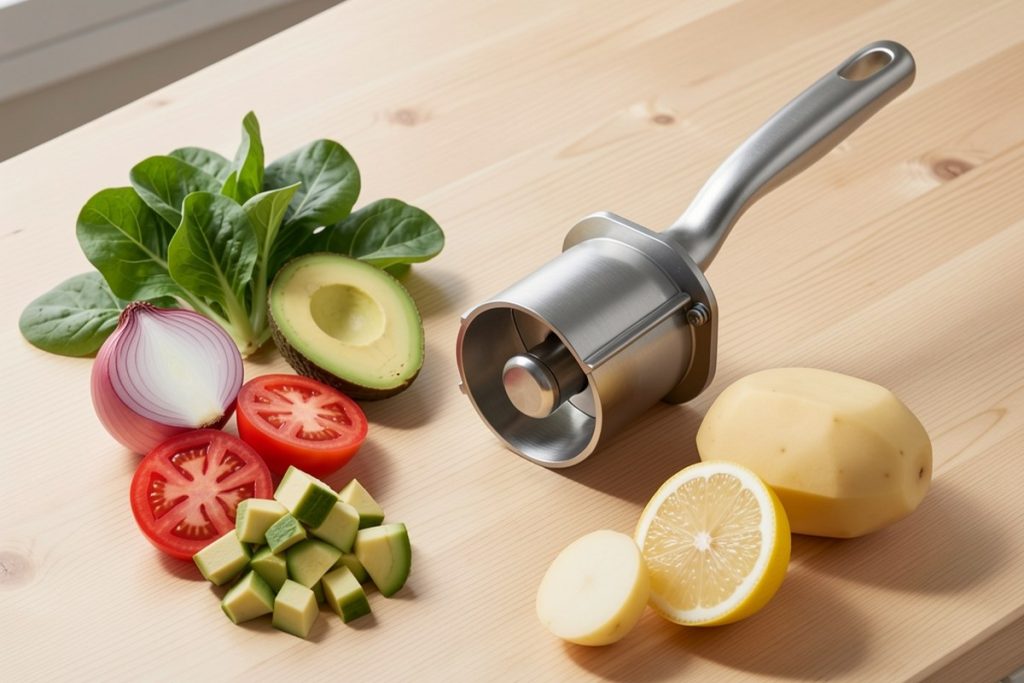
One available example is the 304 stainless steel manual fruit and onion cutter. Its listed design centers on a handle-operated format and describes use with several fruits, vegetables, eggs, lemon, and meat. That makes it worth considering for cooks who want a compact, manually operated prep tool. However, the listing alone does not establish how well it performs for every ingredient, how evenly it cuts, or how long it will last. Treat those as questions to verify from the product instructions and your own needs rather than guaranteed results.
It is also important to distinguish “multi-purpose” from “universal.” A small cutter is unlikely to replace a knife for large squash, leafy herbs that need slicing, bread, or ingredients requiring exact thickness. If you often cook large meals, batch-prep vegetables, or want restaurant-style consistency, a chef’s knife or larger food processor may be a better primary tool.
Cleaning and food-safety considerations
Food residue can collect around blades, hinges, handles, and the underside of a lid. Before buying, check whether those areas are accessible without forcing parts apart. A tool that is quick to use but frustrating to clean may spend more time in a cabinet than on the counter.
Wash components according to the product’s care instructions, and do not assume that every part is dishwasher-safe. If the instructions are unclear, hand-washing removable food-contact parts is the safer assumption. Dry everything fully before storage, particularly around seams and moving components.
Produce should be handled cleanly before it reaches the cutter. The FDA’s produce-safety guidance recommends washing produce under running water and keeping cut produce refrigerated. For tools used with raw meat, follow the manufacturer’s instructions and keep preparation surfaces and utensils separate from ready-to-eat foods. The USDA’s cleaning and sanitizing guidance is a useful reference for those practices.
A practical buying checklist
- Measure the drawer, cabinet, or shelf where the tool will live.
- Identify the three ingredients you would use it for most often.
- Confirm whether the cutting parts are removable and how they should be washed.
- Look for a stable container, secure lid, and handle that appears comfortable to operate.
- Decide whether chopped texture is acceptable for your recipes.
- Skip models that promise every possible function without explaining capacity or care.
How to get better results from a manual chopper
Cut larger ingredients into manageable pieces before loading the container. This reduces strain on the mechanism and helps avoid a mixture of crushed and untouched pieces. Work in small batches rather than packing the chamber tightly. Stop periodically to check the texture, especially when preparing soft ingredients that can quickly turn watery or mushy.
For onions and similar ingredients, a short series of controlled operations may produce a better texture than one long, forceful effort. For tomatoes or avocado, use firm but ripe produce and empty the container promptly. A manual cutter is most helpful when it saves time while leaving you enough control to stop before the food becomes overprocessed.
Bottom line
A manual vegetable chopper can earn its place in a small kitchen when it handles frequent small-batch tasks, stores easily, and cleans without fuss. Focus on capacity, stability, comfortable operation, and accessible parts before chasing extra functions. A stainless-steel, handle-operated model may suit cooks who want one compact tool for several soft ingredients, but it should be viewed as a prep companion rather than a replacement for every knife or appliance.
Last reviewed: 2026-08-21