
By Autumn Cole, Seasonal Lifestyle Curator
Last reviewed: 2026-08-24
Quick answer
Organize a small dorm room by creating four zones: sleep, study, storage, and charging. Keep everyday items within reach, move infrequently used belongings upward or underneath furniture, and reserve one clear surface for nighttime essentials. A shelf-style outlet extender can reduce bedside clutter, but check residence-hall rules and electrical limits before using one.
Key takeaways
- Plan zones before unpacking so every item has a practical home.
- Use vertical and under-bed storage for seasonal or occasional belongings.
- Create one charging station instead of scattering cables across the room.
- Keep power devices ventilated, dry, accessible, and within campus rules.
Start with four dorm-room zones
A small room becomes difficult to manage when one surface has to do everything. The desk turns into a snack table, the bed becomes a wardrobe, and the nearest outlet becomes a pile of chargers. Zoning solves that problem by giving each part of the room a specific job.
You do not need a large room to create separation. Use the bed for sleep, the desk for focused work, one storage area for clothing and supplies, and a designated charging point for electronics. The goal is not to make the room look empty. It is to make the next action obvious: sleep, study, put something away, or charge a device.
| Zone | Keep nearby | Organization move |
|---|---|---|
| Sleep | Water, glasses, medication, reading light | Use one tray or shallow shelf so small items do not spread across the bed. |
| Study | Laptop, stationery, course supplies | Leave the main work surface open and store backups in a drawer or bin. |
| Storage | Clothing, toiletries, laundry supplies | Use under-bed containers and the backs of doors before adding floor furniture. |
| Charging | Phone, earbuds, tablet, small devices | Choose one accessible outlet area and contain cables with simple clips or ties. |
Unpack in the order you will use things
Back-to-school packing often fails because everything is unpacked at once. Instead, set up the room in three passes. First, place daily essentials: bedding, a few outfits, toiletries, and the items needed for the first week of classes. Second, arrange study supplies and charging equipment. Third, decide whether occasional items deserve room at all.
Keep a small “later” bag while unpacking. Put duplicate toiletries, special-event clothing, extra decorations, and off-season items inside it. After the first week, you will know what you actually need close by. Anything untouched can move to under-bed storage, a high shelf, or back home.
This approach also protects your limited floor space. Dorm rooms tend to feel crowded not because every item is large, but because too many items are stored at eye level or left in walking paths. Reserve the easiest-to-reach locations for things used daily.
Build a charging station that earns its space
A charging station is useful when it gathers devices without becoming another messy pile. Choose a location near the bed or desk, depending on where you use electronics most. Keep the station visible enough to spot a damaged cord, but contained enough that cables cannot fall behind furniture.
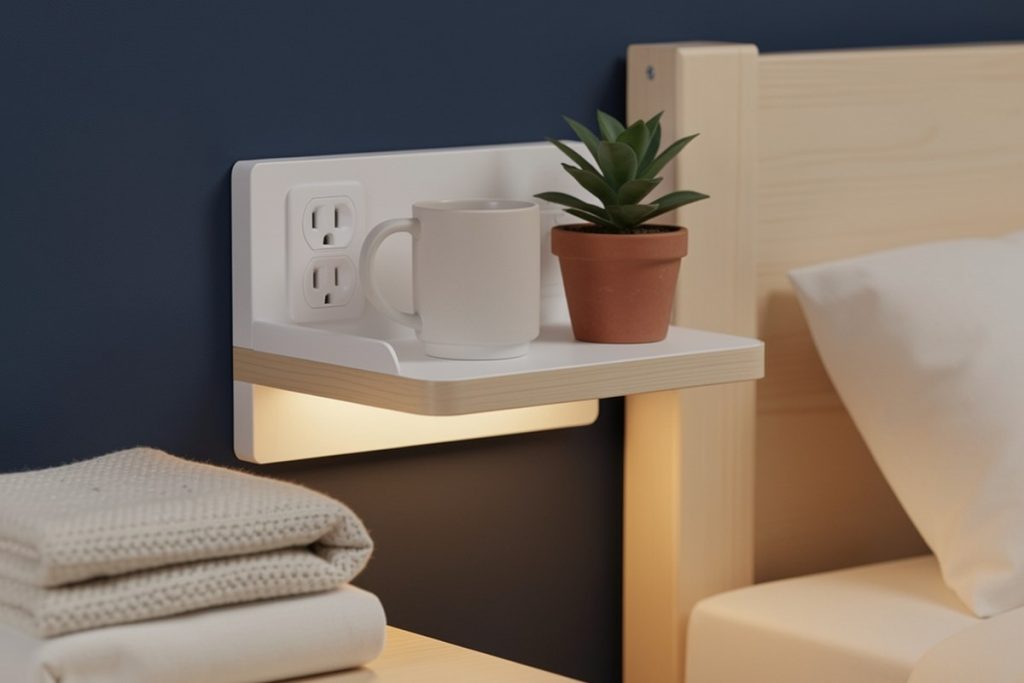
One option to consider is the Mifaso Outlet Extender with Shelf and Night Light. The listed design combines a shallow shelf, five wide outlets, four USB ports, a night light, and an 1800J surge-protection rating. That combination may suit a dorm bedside area where a few small devices and nighttime items compete for limited space.
It is not automatically the right choice for every room. Confirm that the wall outlet is positioned appropriately, that the device is permitted by your residence hall, and that your electronics fit the available outlets and ports. The shelf adds organization, not extra electrical capacity. Do not use the stated surge-protection rating as a reason to connect more equipment than the outlet, circuit, or manufacturer instructions allow.
Use vertical storage before buying more furniture
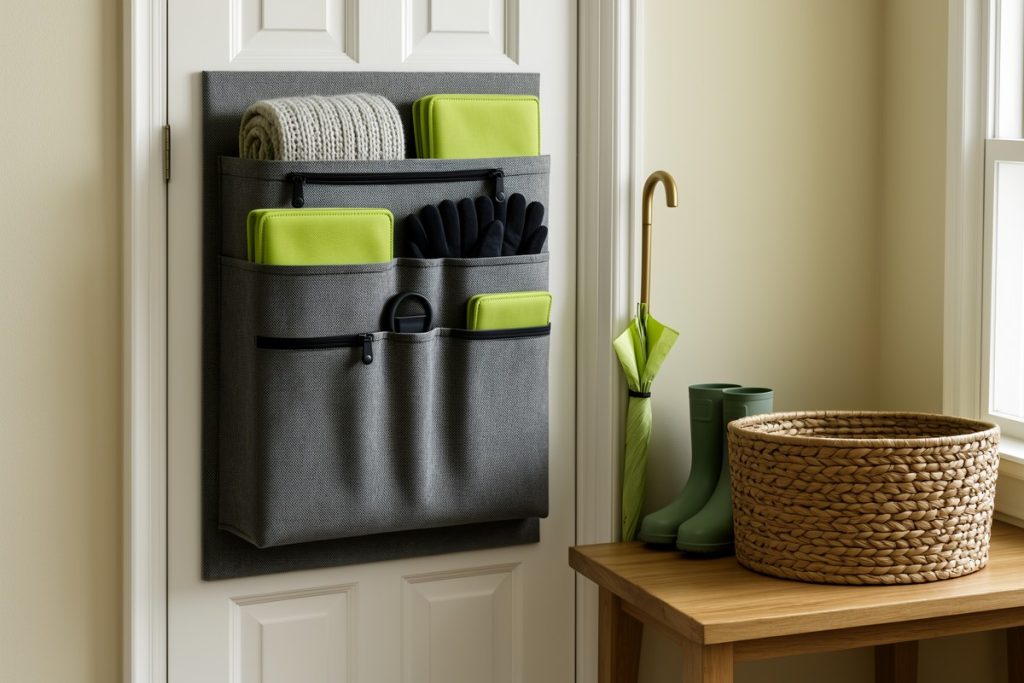
When floor space is scarce, look upward. A hanging organizer can hold shoes, toiletries, or cleaning supplies without taking up a drawer. Hooks can keep a jacket or bag off the chair. A slim over-door solution may create valuable storage, provided the residence hall allows it and the door still closes safely.
For under-bed storage, group belongings by when you need them rather than by random category. Keep extra bedding together, cold-weather clothing together, and rarely used school or hobby supplies together. Choose containers that can be pulled out without moving half the room. If you cannot reach an item easily, you are more likely to leave it on the floor.
Use a simple limit for visible surfaces: one active project on the desk, one tray beside the bed, and no loose bags in the walkway. This is more realistic than trying to maintain a perfectly styled room every day.
Follow a practical electrical-safety reset
Electrical organization is part of room organization. Keep plugs and cords away from water, heat sources, and areas where they can be pinched by furniture. Use equipment as directed, avoid daisy-chaining power strips or adapters, and do not cover a power device with bedding, clothing, or other materials that could trap heat.
Before settling in, inspect cords for cuts, crushed sections, loose plugs, or signs of overheating. A loose, warm, discolored, buzzing, or sparking wall outlet should not be treated as a storage inconvenience. Stop using it and report it to housing staff or a qualified electrician. OSHA identifies improper use of extension and flexible cords, missing ground-fault protection, and equipment used outside its prescribed manner among common electrical hazards.
Heating appliances and other high-draw devices deserve extra caution. Follow residence-hall rules and the appliance instructions rather than assuming that an adapter with several openings can safely handle every device. Keep the charging station for ordinary electronics unless the manufacturer and housing guidance clearly say otherwise.
A five-minute weekly dorm reset
A small room stays organized when the reset is short enough to repeat. Once a week, return loose items to their zones, clear the desk, pull clothing out of the walkway, and gather every charging cable into its assigned area. Empty the “later” bag when it fills instead of allowing it to become permanent storage.
At the end of each month, ask three questions: What have I not used? What keeps landing on the floor? Which item do I search for most often? Move the first item farther away, solve the second with a hook or bin, and place the third where you naturally reach for it.
- Before move-in: Check room dimensions, outlet locations, and housing restrictions.
- During setup: Establish sleep, study, storage, and charging zones.
- After the first week: Relocate unused items and simplify crowded surfaces.
- Before leaving for a break: Remove trash, secure belongings, and unplug nonessential devices when appropriate.
Sources
- Electrical Safety: Overview — Occupational Safety and Health Administration
- 29 CFR 1910.303: General Requirements for Electrical Installations — Occupational Safety and Health Administration