
Quick answer
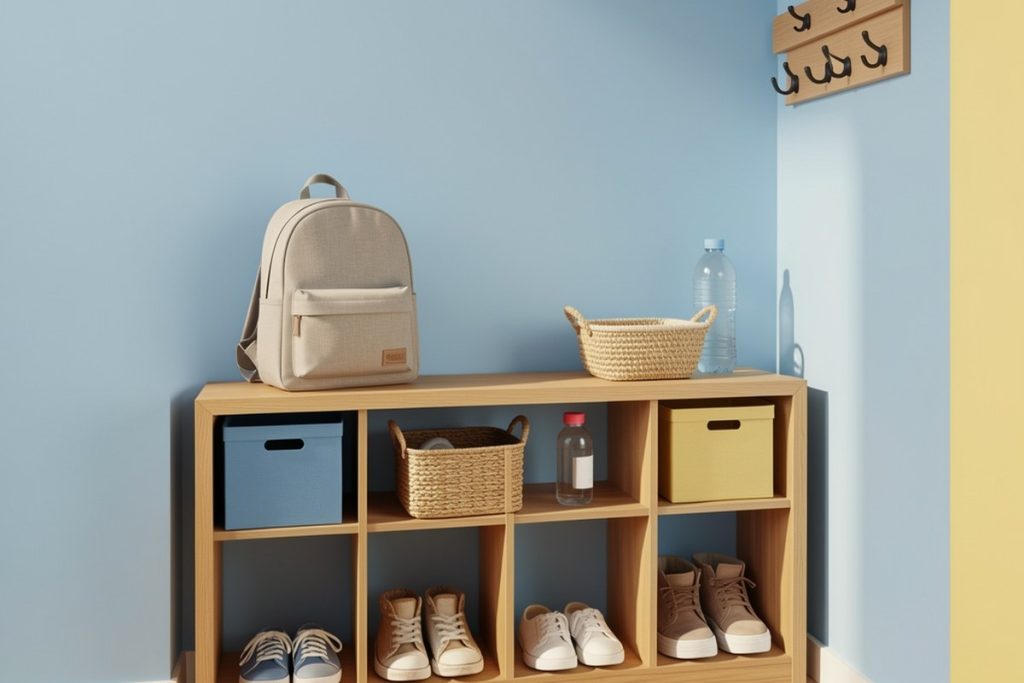
Create a back-to-school drop zone by assigning one small area near the entrance for bags, shoes, daily supplies, and papers. Measure the space first, use vertical storage where possible, and limit each category to one container or hook. The goal is not a perfect entryway; it is a repeatable landing routine that prevents school-day essentials from spreading through the house.
Key takeaways
- Choose the shortest path between the front door and the place where school gear is unpacked.
- Give each daily-use item a specific home: bag, shoes, small supplies, and incoming papers.
- Use a temporary “outgoing” basket for items that must leave the house the next morning.
- Review the drop zone weekly instead of waiting for clutter to become a whole-house project.
Why a small drop zone works better than a whole-house reset
Back-to-school organization often fails because it starts too broadly. A family tries to sort the bedroom, kitchen, office, and entryway in one weekend, then loses momentum before the daily routine even begins. A drop zone narrows the problem to one high-traffic transition: arriving home and leaving again.
Think of it as a landing pad, not a storage room. It should hold only the items that move through the doorway every day. Seasonal sports equipment, extra shoes, old art supplies, and rarely used bags belong elsewhere. The smaller the boundary, the easier it is to see when the system needs attention.
Pick the right location before buying anything
Watch the route home from the front door for two or three days. Notice where bags, shoes, lunch containers, and papers naturally land. That spot is usually more useful than an attractive organizer placed across the room.
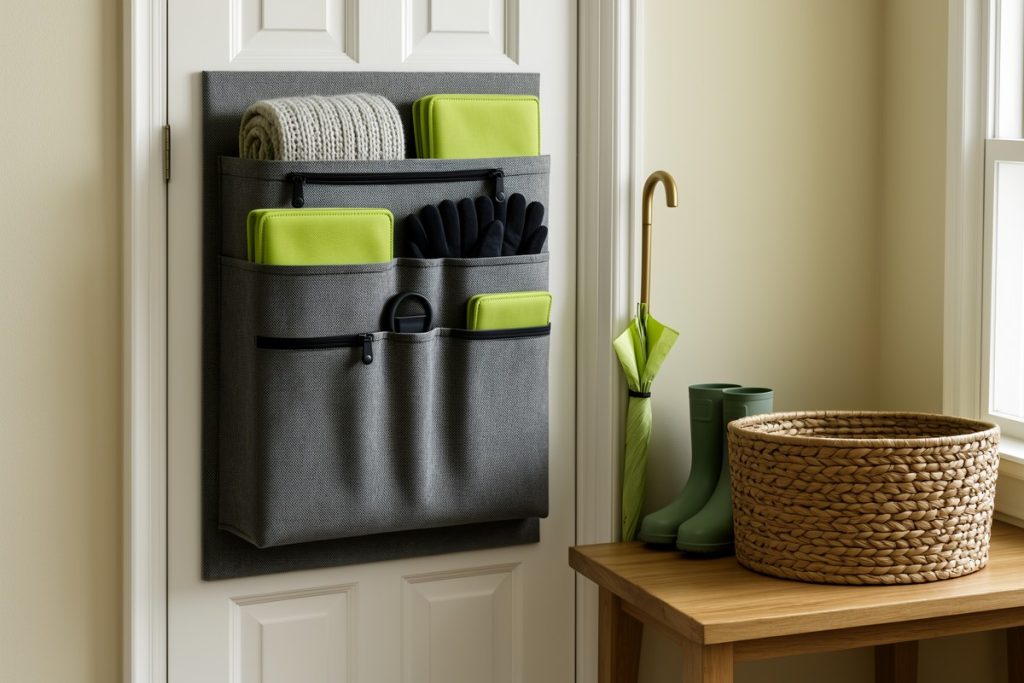
In a narrow entryway, a wall-mounted hook rail or shallow shelf may work better than a deep cabinet. In a rental, freestanding furniture and removable hooks can create the same zones without permanent changes. If the entry is already crowded, consider the first practical stopping point beyond it, such as a kitchen wall or the side of a mudroom cabinet.
Measure the available width, depth, and door clearance. Also note heating vents, electrical outlets, stairways, and the direction the door swings. A drop zone that blocks movement will be abandoned, regardless of how tidy it looks on day one.
Build the drop zone around four daily-use zones
You do not need a matching furniture set. Combine what you already own with one or two targeted additions, then give every item a clear limit.
| Zone | What belongs there | Simple boundary |
|---|---|---|
| Bag zone | One school bag or backpack per person | One sturdy hook or cubby per daily user |
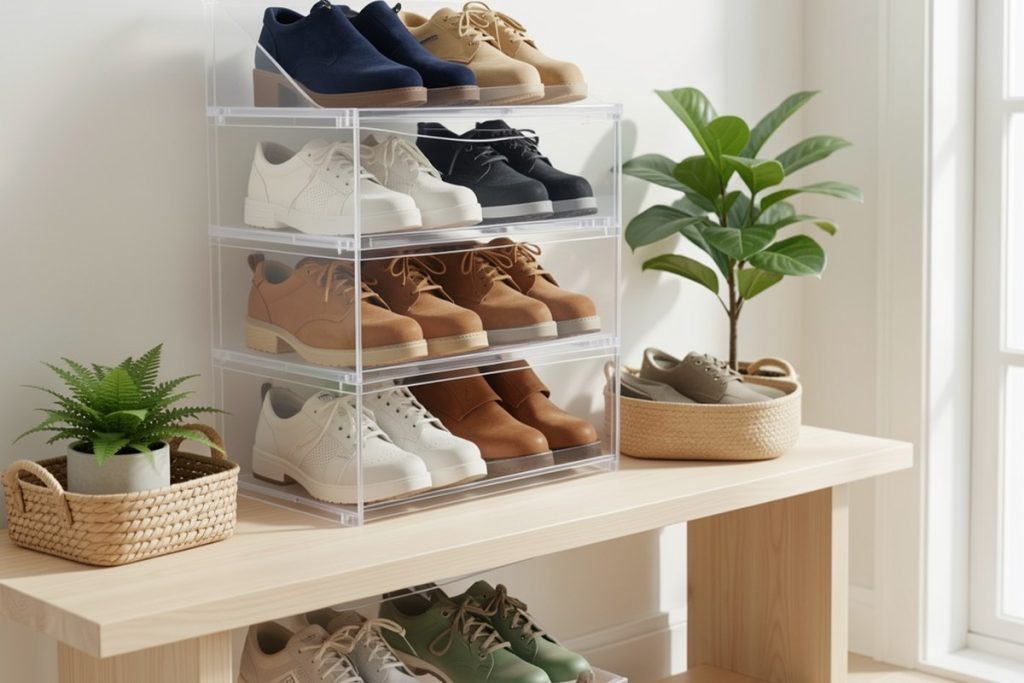
| Shoe zone | The pair most likely to be worn tomorrow | One tray or narrow shelf; relocate extras weekly |
| Small-item zone | Keys, glasses, chargers, or hair accessories | One small bowl or divided container |
| Outgoing zone | Items that must leave in the morning | One open basket placed near the exit |
The outgoing zone is the most important because it connects today’s preparation to tomorrow’s departure. Put permission forms, library materials, sports equipment, or packed bags there the evening before. Keep it open and visible; a lidded box can hide the very item someone needs to remember.
If several people share the space, assign zones by position rather than adding more containers. For example, the left hook can belong to one person and the right hook to another. A consistent location is easier to remember than a complicated sorting system.
Set up the system in one focused hour
Start by removing everything from the chosen area. Do not sort the entire house. Sort only what is in the entryway and what realistically needs to pass through it.
- Keep the essentials visible. Return only daily-use bags, shoes, and small items to the space.
- Create a temporary home for uncertain items. Place objects that need a decision in a box elsewhere, so indecision does not fill the drop zone again.
- Put storage at the right height. Frequently used items should be easy for the person using them to reach.
- Add the outgoing basket. Place it on the route to the door, not in a hidden corner.
- Test the exit. Walk through the area with a full bag and shoes. Move anything that catches, tips, or narrows the path.
For freestanding shelves, cabinets, or tall storage, follow the manufacturer’s anchoring instructions. The U.S. Consumer Product Safety Commission’s Anchor It! guidance explains why furniture should be secured to reduce tip-over hazards, especially in homes with children.
Use a five-minute evening reset
The drop zone stays useful when the reset is shorter than the mess. At the end of the school day, return shoes to the tray, empty lunch containers, move papers to the appropriate destination, and place anything needed tomorrow in the outgoing basket.
Set a limit of five minutes. If the area cannot be reset in that time, the system is probably holding too much. Remove duplicate supplies, move occasional gear to a secondary location, or reduce the number of items allowed in each zone.
Schedule a brief weekly review rather than a dramatic monthly purge. Check whether the current bag still fits the hook, whether shoes are accumulating, and whether the outgoing basket has become a permanent inbox. The system should change with the routine, not demand that the routine change to suit it.
Keep safety and maintenance in the plan
Leave stairs, doors, and walking paths unobstructed. Do not place loose bags or baskets beside heaters, and avoid stacking unstable items where they can fall into a walkway. For household fire planning, the U.S. Fire Administration recommends keeping escape routes usable and planning how everyone will exit; its home fire escape guidance is a useful reference when deciding where storage should not go.
Make the system easy to clean. Choose a wipeable tray for shoes, a washable basket liner if needed, and materials that can handle daily handling. For clothing, fabric bags, or removable covers, follow the care instructions rather than guessing; the Federal Trade Commission’s care-labeling rules explain why textile care information matters.
When an organization workbook is worth adding
A physical setup solves the location problem, but some households also need help deciding what belongs in the system. The The Home Edit Workbook: Prompts, Activities, and Gold Stars to Help You Contain the Chaos may be useful if prompts and guided activities make it easier to involve the household in sorting decisions.
It is not a substitute for hooks, shelves, measuring, or a daily routine, and it is not specifically a back-to-school entryway system. Treat it as an optional planning aid: use its organizational exercises to agree on limits, then adapt the result to your available space. If your needs are limited to one small landing area, a sheet of paper and a ten-minute conversation may be enough.
Small-entryway checklist
- Measure the usable wall and floor space.
- Remove items that do not leave the house regularly.
- Assign one home for each daily bag.
- Add a shallow shoe tray or shelf.
- Place one open outgoing basket near the exit.
- Test the route with bags, shoes, and the door fully open.
- Schedule a five-minute reset after the first week.
Last reviewed: 2026-08-24
Sources
- Anchor It! Furniture Tip-Over Prevention — U.S. Consumer Product Safety Commission