
Quick answer
Teach a teen to cook by starting with five simple meals that repeat core skills: measuring, chopping, boiling, sautéing, baking, and cleaning as they go. Demonstrate each skill once, let them take the lead, and use a food thermometer for meat. Begin with supervised practice, then gradually hand over planning, preparation, and timing.
Key takeaways
- Start with repeatable meals rather than complicated recipes.
- Teach knife, stove, oven, and food-safety habits before increasing difficulty.
- Let the teen do the work while an adult supervises from nearby.
- Use a five-meal progression to build confidence without creating unnecessary pressure.
By Tommy Ruiz, Everyday Problem Solver
Learning to cook is easier when it feels practical. A teenager does not need to master sauces, pastry, or restaurant-style presentation before making useful food. The best first lessons answer everyday questions: How do I make dinner when nobody is available to help? How can I tell whether chicken is cooked? What can I prepare with basic ingredients?
The goal is not to produce five perfect meals. It is to build a small set of skills that transfer from one recipe to the next. Choose dishes with short ingredient lists, clear stopping points, and enough flexibility for substitutions.
Set up the kitchen before the first lesson
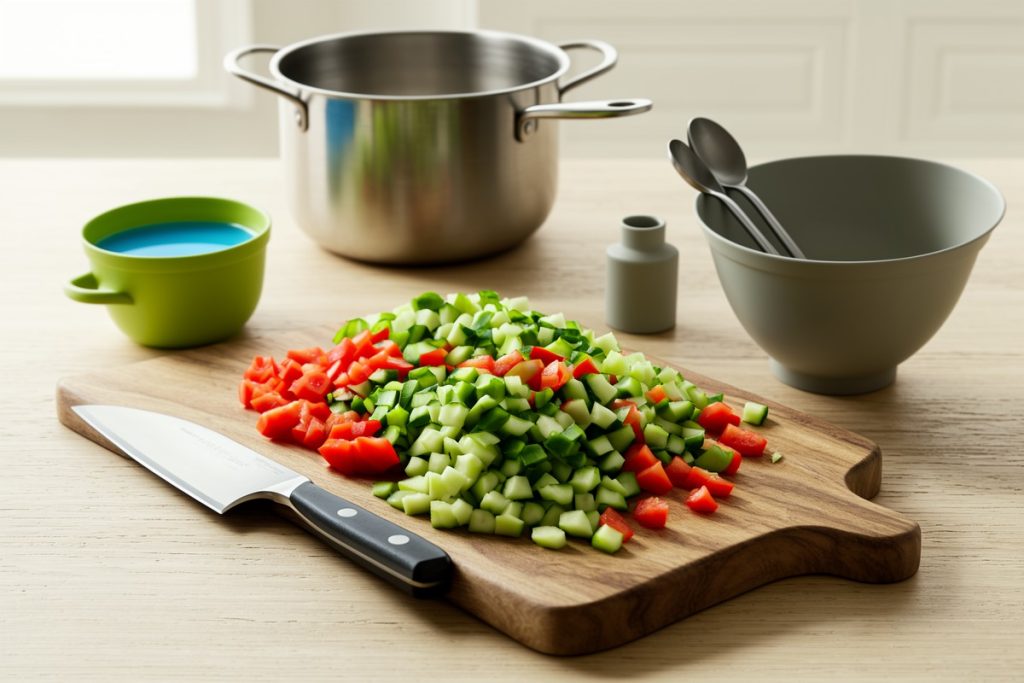
Before cooking, create a workspace that makes mistakes less likely. Clear the counter, put a damp towel under the cutting board to keep it from sliding, and place a bowl nearby for scraps. Read the entire recipe together before turning on the stove or oven.
Give the teen a simple safety briefing:
- Keep pot handles turned inward and use dry oven mitts.
- Carry a knife with the blade pointed down and cut slowly on a stable board.
- Keep raw meat and its packaging away from foods that will be eaten without cooking.
- Wash hands, utensils, and surfaces after handling raw meat.
- Use a thermometer instead of judging doneness by color alone.
USDA guidance recommends separating raw and ready-to-eat foods, cleaning surfaces, cooking food to a safe temperature, and refrigerating perishable food promptly. An adult should remain close during early lessons, especially when a sharp knife, hot oil, boiling water, or an oven is involved.
Five beginner meals that build real cooking skills
1. Vegetable omelet or scrambled eggs
This is a useful first meal because it teaches cracking eggs, whisking, seasoning, controlling heat, and noticing texture. Start with two eggs, a small amount of milk or water, shredded cheese, and one or two quick-cooking vegetables such as spinach, tomatoes, or bell pepper.
Have the teen chop the vegetables into small, evenly sized pieces. Cook them briefly in a lightly oiled nonstick pan over medium heat, then add the beaten eggs. Stir slowly for scrambled eggs, or leave the mixture still for an omelet. Remove the pan while the eggs are still slightly soft; residual heat will finish them.
Skill gained: low-to-medium heat control and timing.
2. Pasta with tomato and bean sauce
Pasta teaches boiling, reading package directions, reserving cooking water, and balancing flavor. For a simple sauce, combine canned crushed tomatoes, drained beans, garlic, dried herbs, and a little olive oil in a saucepan. Simmer while the pasta cooks.
Show the teen how to add salt after the water comes to a boil, stir the pasta during the first minute, and taste the sauce before adjusting it. A splash of pasta water can loosen a thick sauce. Beans add substance without requiring another complicated cooking technique.
Skill gained: coordinating two cooking tasks and seasoning gradually.
3. Sheet-pan chicken and vegetables
This meal introduces oven cooking with minimal stovetop work. Cut boneless chicken pieces and firm vegetables, such as carrots, broccoli, or potatoes, into similarly sized portions. Toss everything with oil, pepper, and a modest amount of seasoning, then spread it in a single layer on a baking sheet.
The important lesson is spacing. Crowded food steams instead of browning, and oversized vegetable pieces may remain firm while the chicken is done. Use a food thermometer in the thickest part of the chicken; USDA lists 165°F as the safe minimum internal temperature for poultry.
Skill gained: portioning, oven awareness, and checking doneness safely.
4. Stir-fry with rice
A stir-fry teaches preparation before heat. Slice vegetables and protein first, mix the sauce in a small bowl, and have cooked rice ready. Once the pan is hot, the cooking moves quickly, so there is little time to search for ingredients.
Cook the protein separately if needed, then add firm vegetables before softer ones. Finish with the sauce and return the protein to the pan. Keep the pieces small and consistent so they cook at roughly the same rate. This meal also makes substitutions easy: frozen vegetables, tofu, eggs, or leftover cooked meat can all work with an appropriately adjusted cooking time.
Skill gained: mise en place, fast sequencing, and flexible substitution.
5. Baked potatoes with a balanced topping bar
A baked potato is a low-pressure meal that teaches oven use and meal planning. Scrub the potatoes, pierce them with a fork, and bake until tender. Offer toppings such as beans, plain yogurt, shredded cheese, steamed vegetables, salsa, or leftover chicken.
Ask the teen to build a meal with at least one filling ingredient and one vegetable rather than treating toppings as decoration. This makes the lesson about assembling a satisfying dinner from available food, not following a rigid formula.
Skill gained: planning, portioning, and making useful choices from leftovers.
Use a gradual handoff instead of taking over
For the first meal, an adult can demonstrate the dangerous or unfamiliar parts while explaining what to watch for. On the second attempt, the teen should perform those steps with close supervision. By the third attempt, the adult can act as a safety check rather than the primary cook.
A helpful handoff has three stages:
- Show: Demonstrate one skill slowly, such as holding a knife or testing pan heat.
- Coach: Ask questions instead of reaching in immediately: “What needs to cook first?” or “How will you check that?”
- Review: Discuss what worked, what took too long, and what to change next time.
Correct safety problems immediately, but avoid correcting every preference. If the teen wants more garlic, a different vegetable, or a less polished presentation, that is part of learning how cooking works.
A practical first-week cooking checklist
- Choose one meal and read the recipe from beginning to end.
- Check that the required pan, knife, board, thermometer, and oven mitts are available.
- Wash and prepare ingredients before heating anything.
- Keep raw ingredients separate from cooked food.
- Set a timer for oven and stovetop steps.
- Check meat with a thermometer when applicable.
- Cool and store leftovers promptly according to food-safety guidance.
- Write down one improvement for the next attempt.
How a beginner cookbook can fit the routine
If a teen benefits from having recipes in one place, The How-To Cookbook for Teens: 100 Easy Recipes to Learn the Basics can serve as a structured source of practice ideas. Its stated focus is beginner recipes and foundational skills, which fits this gradual approach. It should be treated as a recipe guide, not a substitute for adult supervision, kitchen-safety instruction, or food-temperature guidance. Choose recipes that match the teen’s current ability and available equipment.
What success looks like
After five meals, success may be as simple as preparing breakfast without prompting, organizing ingredients before cooking, or knowing when to use a thermometer. Confidence grows through repetition, not through making every dish from scratch.
Once these meals feel familiar, increase the challenge one variable at a time. Let the teen plan a grocery list, scale a recipe, cook for another person, or turn leftovers into a new meal. Those are the habits that make cooking useful beyond a single lesson.
Last reviewed: 2026-09-04