
Quick answer
For digital nomad flights, organize your carry-on around access rather than packing density. Keep identity documents, essential electronics, medication, and comfort items in separate zones, with anything needed during boarding in one small pouch. Protect spare batteries in your cabin bag, avoid burying chargers under clothing, and test your setup before leaving home.
Key takeaways
- Pack by frequency of use: boarding essentials first, work gear second, backup items last.
- Keep spare lithium batteries and power banks in your carry-on, not checked luggage.
- Use one accessible organizer for small in-flight items, but keep valuable electronics secured separately.
- Check the organizer’s dimensions, attachment method, and your airline’s cabin-bag rules before buying.
By River Nakamura, Global Nomad Storyteller
Why carry-on organization matters for digital nomads
A short flight can become a surprisingly expensive interruption when your charger is buried, your headphones are tangled, or your laptop is packed somewhere you cannot reach without unpacking half your bag. For digital nomads, the problem is bigger than inconvenience. A missed charging opportunity, inaccessible adapter, or misplaced access card can affect a workday, a connection, or an arrival in an unfamiliar city.
The goal is not to carry more. It is to make the things you already carry predictable. Every item should have a location based on when you need it: before security, during the flight, while working, or only after arrival. That approach makes a compact carry-on feel calmer without turning it into a rigid packing project.
Build your carry-on around four access zones
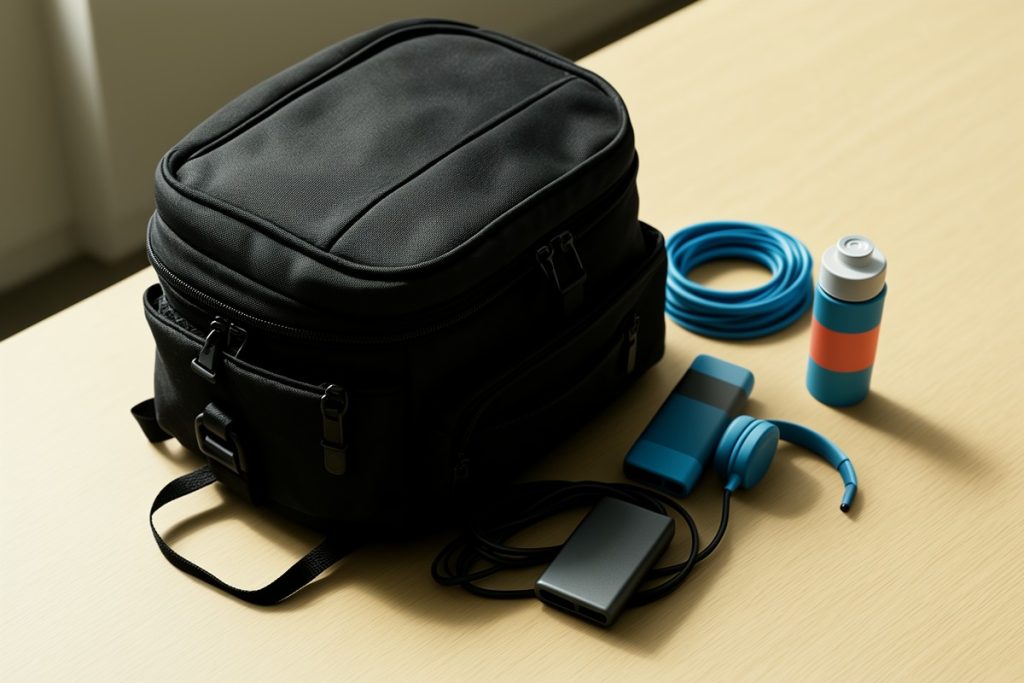
Instead of packing by object type alone, divide your bag into zones. This works particularly well when you move between airports, cafés, coworking spaces, and short-term rentals.
| Zone | What belongs there | Best location |
|---|---|---|
| Security zone | Items you may need to remove or present | Top compartment or exterior pocket |
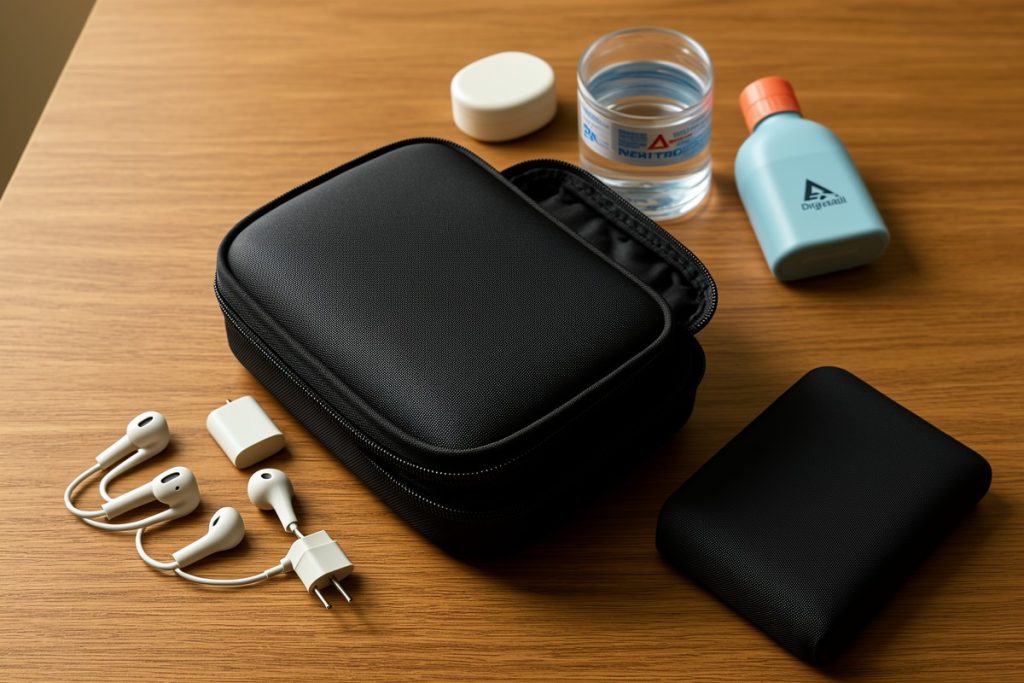
| Flight zone | Earbuds, charging cable, eye mask, small snack, and water bottle | Small organizer reachable from your seat |
| Work zone | Laptop, tablet, keyboard, charger, and adapter | Padded central compartment |
| Arrival zone | Backup cables, spare clothing, toiletries, and less-used accessories | Bottom or interior packing cubes |
This system prevents a common mistake: putting every small item in one large compartment. A single deep pocket is efficient when packing at home but frustrating at the gate. Separating “needed now” from “needed later” is more useful than arranging everything by color or brand.
Keep your work kit compact and easy to audit
A digital nomad work kit usually includes more cables than expected because different destinations create different problems. Before packing, decide what the next work session actually requires. A laptop charger, one charging cable for your phone, a universal adapter if needed, and headphones may be enough. A spare cable can be useful, but three versions of the same cable usually create clutter rather than resilience.
Use a simple rule: if an item has no clear job on the trip, leave it at home. If it has a clear job but is fragile, expensive, or essential, place it in a protected compartment rather than an open seat-back organizer. Small accessories can be accessible; your primary computer and backup drive deserve more security.
Power banks and spare lithium batteries should remain in your carry-on. The Federal Aviation Administration also advises protecting spare batteries from damage and accidental short circuits. Store them where you can reach them during screening or if airline staff ask about them, rather than burying them beneath clothing.
Choose a small organizer without overbuying
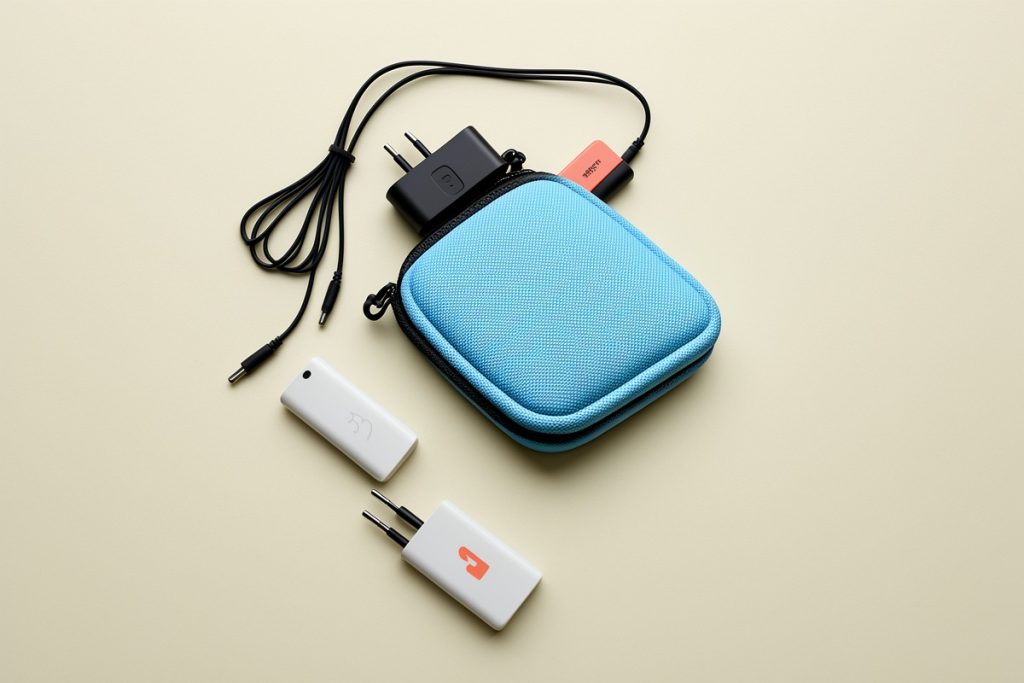
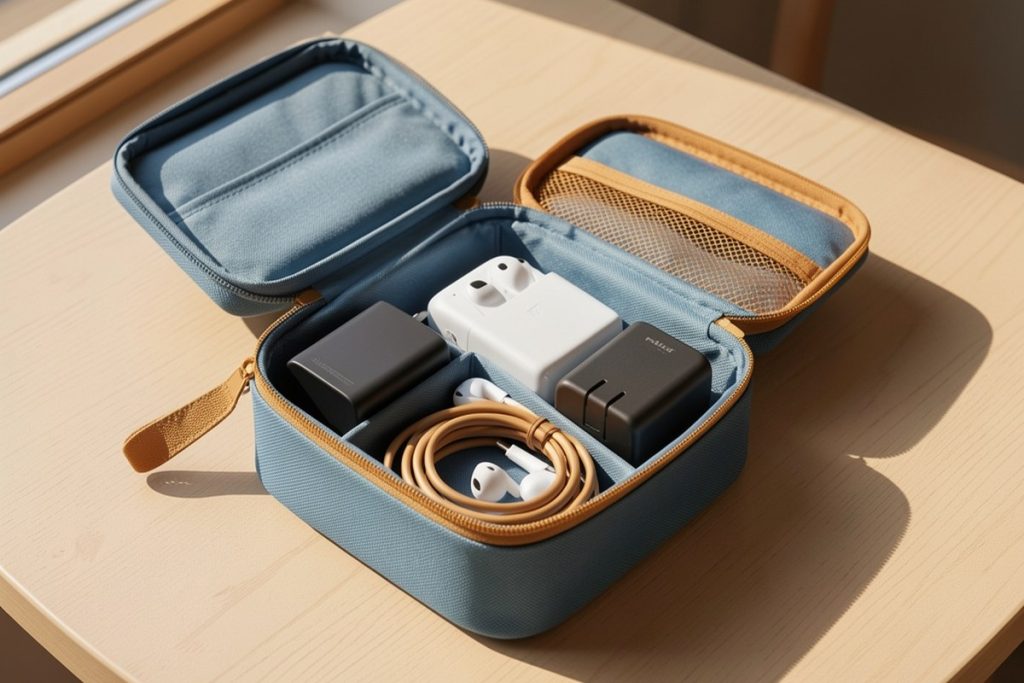
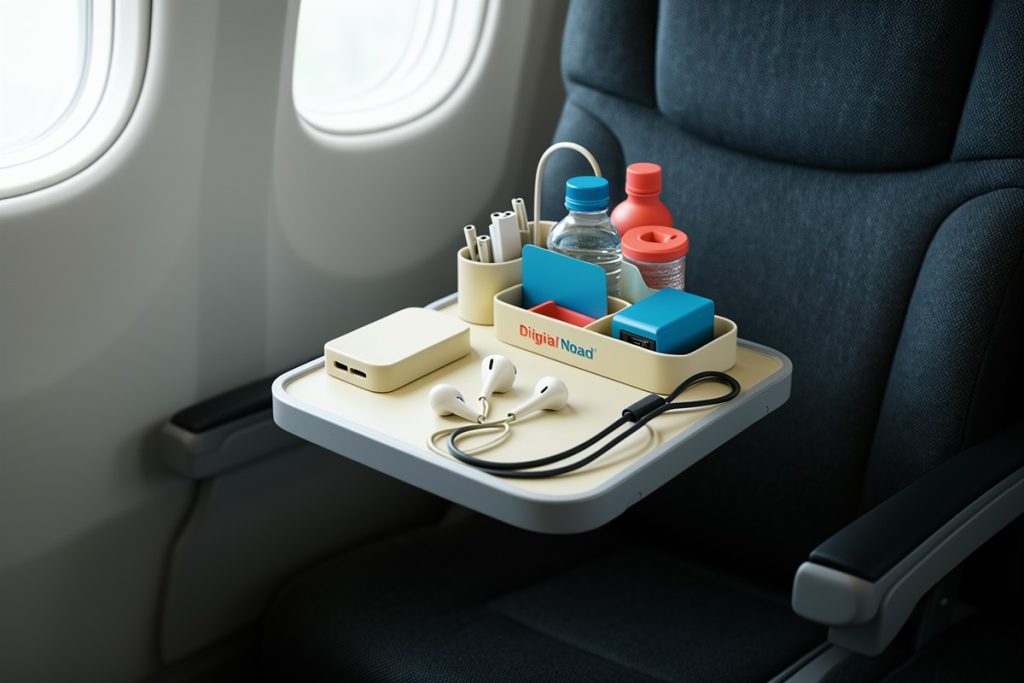
An in-flight organizer can solve a specific problem: keeping the handful of objects you use during a flight together and visible. The Airplane Pocket Organizer is a reasonable option to consider for travelers who want a seat-back or tray-table setup and a way to attach the pouch to luggage. Its usefulness will depend on the fit of your seat, the space available on the aircraft, and whether its compartments match what you carry.
Before choosing it, check the current listing for dimensions and attachment details. Consider whether the organizer will hold your actual flight kit without bulging, whether it can be removed quickly at security, and whether you would feel comfortable leaving anything valuable in it while sleeping. It should supplement your main bag, not replace a padded laptop compartment or a secure tech pouch.
That distinction matters because airplane layouts vary. A seat-back pocket may be shallow, occupied, or inconvenient, and some travelers prefer not to store personal items there. Treat the organizer as an access point for low-risk essentials, while keeping identification, money, primary electronics, and medication under your direct control.
Use this five-minute preflight checklist
- Charge your phone, laptop, and power bank before leaving.
- Confirm that spare batteries and power banks are in your carry-on.
- Put your most-used flight items in one accessible pouch.
- Test that every necessary device has the correct cable or adapter.
- Take a quick photo of your packed electronics before departure so you can notice what is missing after arrival.
For flights departing from the United States, use the Transportation Security Administration’s current item checker for questions about what may pass through screening. Rules can differ by item and may change, so an old packing routine is not a substitute for checking before departure.
Create a boarding-to-arrival routine
Organization works best when it includes a repeatable routine. Before leaving home, place the flight organizer in the same outer pocket every time. At security, remove only what the screening instructions require and return each item to its assigned zone immediately. Once seated, take out the items you expect to use and keep the rest of your bag closed.
During the flight, avoid spreading your entire work kit across the tray table. Keep one active device, one charging setup, and one small comfort item in reach. When the cabin prepares for landing, return everything to the organizer before the seat-back table is stowed. This creates a clear end-of-flight check and reduces the chance of leaving a cable or adapter behind.
On arrival, move the organizer back into your luggage before entering a busy terminal or transport queue. The objective is a smooth transition, not a permanent display of your travel gear.
Last reviewed: 2026-09-21