
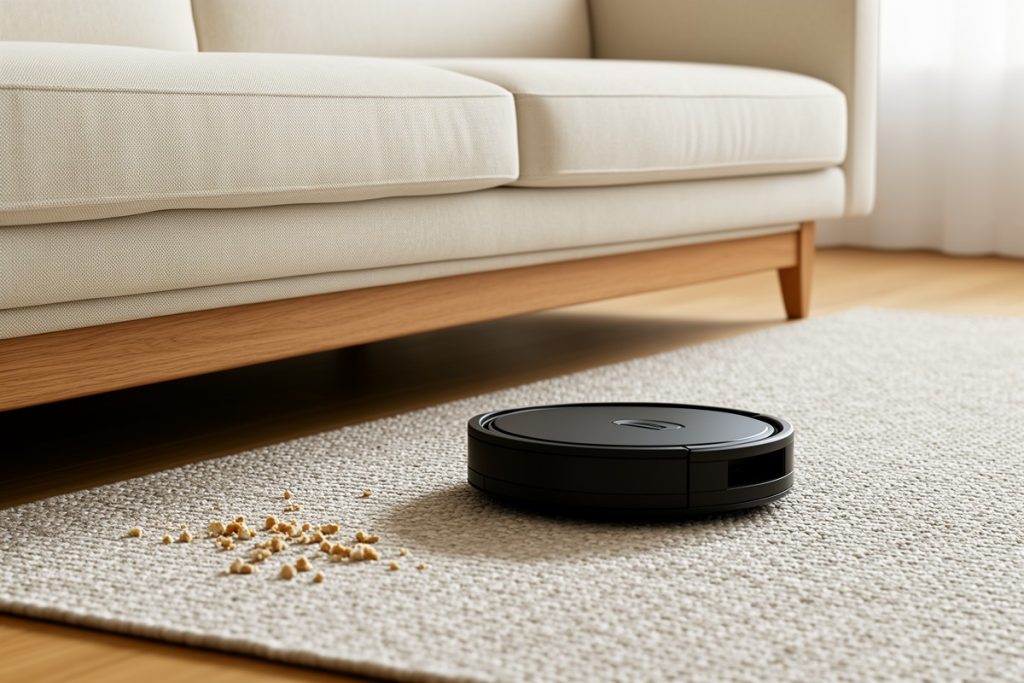
Quick answer
For homes with low furniture and a mix of hard floors and medium-pile carpet, compare a robot vacuum by clearance, floor compatibility, charging behavior, controls, maintenance, and safety—not by headline features alone. A slim, self-charging model can be a practical fit, but measure furniture gaps, check carpet depth, and confirm that the cleaning pattern suits your rooms before buying.
Key takeaways
- Measure the lowest furniture clearance and compare it with the vacuum’s actual height.
- Confirm that the manufacturer specifically lists both hard floors and your carpet type.
- Self-charging is useful, but it does not replace emptying the dustbin or clearing tangled debris.
- For a simple setup, fewer app and mapping features may be an advantage rather than a weakness.
Start with the problem your vacuum must solve
“Best robot vacuum” is too broad to be useful. The right choice depends on what repeatedly makes floor cleaning inconvenient in your home. Low sofas and beds create one problem: clearance. Mixed flooring creates another: the vacuum must transition between hard surfaces and carpet without becoming unreliable. Pet hair, long hair, crumbs, thresholds, and clutter each change the decision again.
For this comparison, the useful long-tail question is: which robot vacuum is practical for low furniture and medium-pile carpet? That question narrows the field to features you can verify before purchasing. It also prevents a common mistake: choosing a model because it has an impressive feature list even though it cannot fit under the furniture or handle the surfaces in your home.
Compare the specifications that affect daily use
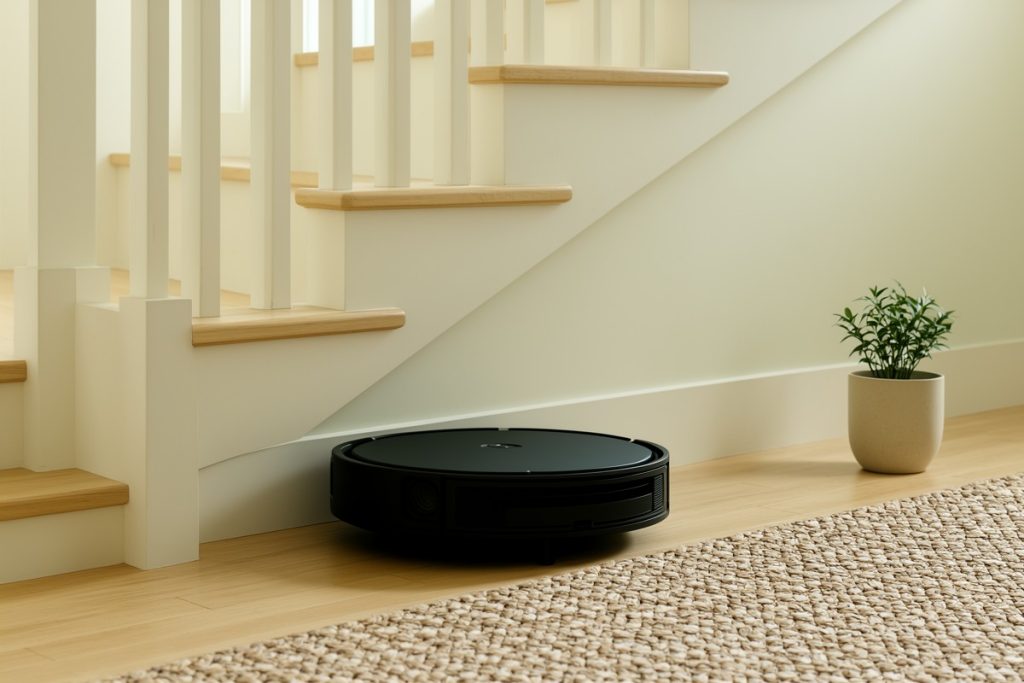
Begin with physical dimensions. Measure the clearance beneath your sofa, bed, cabinets, and other areas you expect the robot to clean. Measure from the floor to the lowest obstruction, including sagging fabric or trim. Leave a little margin rather than choosing a vacuum that barely fits. A robot that becomes wedged will need more supervision, defeating much of the convenience.
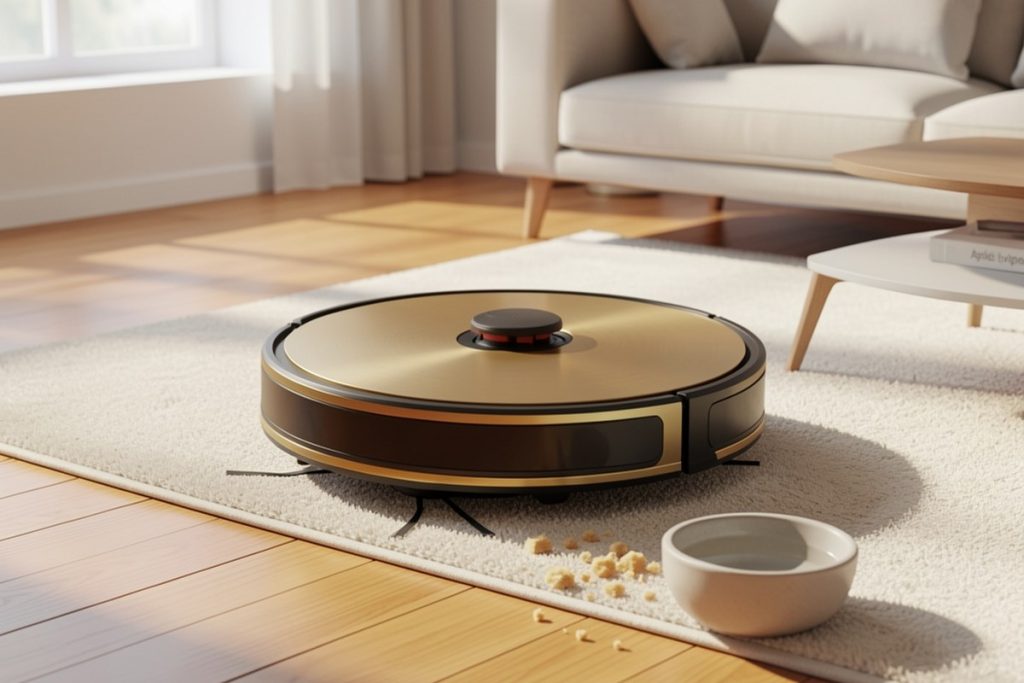
Next, check the manufacturer’s stated floor compatibility. “Carpet” is not a single surface: low-pile rugs, medium-pile carpet, shag, and thick bath mats place different demands on a small machine. Look for explicit compatibility with medium-pile carpet, and inspect whether the product documentation identifies any surfaces to avoid. Do not assume that a vacuum suitable for hard floors will perform equally well on every rug.
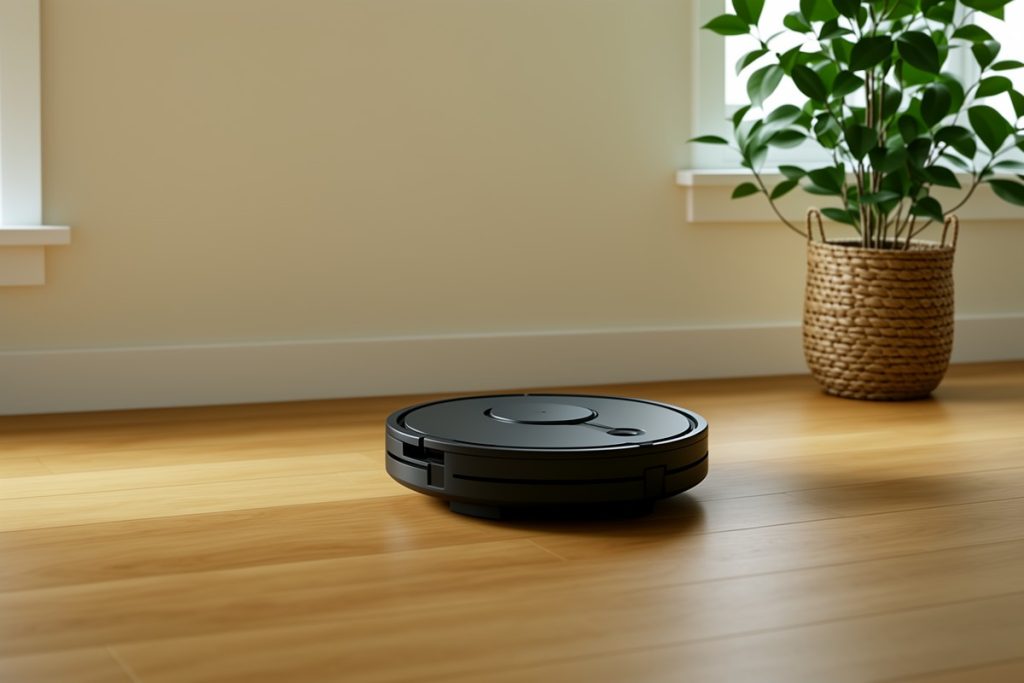
The approved candidate, eufy 11S MAX Robot Vacuum Cleaner, is described in its listing as super-thin, quiet, self-charging, and suitable for hard floors to medium-pile carpets. Those details make it relevant for this use case. They do not, by themselves, prove that it will navigate every room, remove every type of debris, or fit beneath your particular furniture. Measurements and household conditions still decide the fit.
Use this comparison table before you buy
| What to compare | Why it matters | What to verify |
|---|---|---|
| Height and clearance | Determines whether it can reach under furniture without getting stuck. | Actual product height, dock placement, and your lowest gap. |
| Floor compatibility | Shows whether the device is intended for your hard floors and carpet. | Manufacturer’s listed surfaces and carpet limitations. |
| Charging behavior | Affects whether the robot is ready for the next cleaning cycle. | Self-charging details and whether the dock needs an unobstructed path. |
| Maintenance | Small dustbins and tangled brushes can create frequent interruptions. | Dustbin access, brush cleaning, filter care, and replacement parts. |
| Navigation and controls | Determines how much supervision the robot needs. | Included controls, room restrictions, scheduling, and obstacle handling. |
When a simpler robot vacuum is the better comparison
More features are not automatically better. Mapping, room-by-room controls, obstacle recognition, and app integration can be valuable in a large or complicated home. They can also add setup steps, compatibility requirements, and another layer of maintenance. If your priority is routine surface cleaning in a relatively open layout, a simpler device may be easier to understand and operate.
That trade-off needs to be explicit. A basic robot may suit someone who wants regular cleaning with minimal interaction, but it may be a poor match for a home with multiple floors, many loose cables, narrow transitions, or rooms that need selective cleaning. If you cannot tell the robot where to go or where not to go, you may need to prepare the floor more carefully before each cycle.
Similarly, “self-charging” means the unit is designed to return to its charging base under the conditions described by the manufacturer. It does not mean the robot will always find the base from every location. Place the dock where the instructions recommend, keep the approach clear, and consider whether furniture or room dividers could block the route.
Do not overlook maintenance and floor preparation
Robot vacuums reduce the need to push a full-size vacuum around, but they do not eliminate cleaning work. Before buying, identify the parts you will be expected to empty, brush, wash, or replace. Hair can wrap around brush components, fine dust can load filters, and a full dustbin can reduce the usefulness of another scheduled run.
Floor preparation matters too. Pick up charging cables, socks, small toys, and loose cords. Secure rug edges that curl upward. Check for thresholds the robot must cross, and keep the charging area open. These steps are especially important with a simple model that may have fewer tools for recognizing hazards or avoiding restricted areas.
For households sensitive to dust, remember that vacuuming is only one part of indoor-air management. The U.S. Environmental Protection Agency recommends approaches that include reducing pollutant sources and improving ventilation where appropriate. A robot vacuum can support a cleaning routine, but it should not be presented as a complete solution for allergies or indoor air quality.
A practical buying checklist
- Measure the lowest furniture gap and compare it with the listed vacuum height.
- Confirm hard-floor and medium-pile-carpet compatibility in the manufacturer’s documentation.
- Decide whether you need room mapping, restricted zones, or only basic automated cleaning.
- Check where the charging dock can sit without being blocked.
- Look up how to access the dustbin, brush, and filter before committing.
- Plan how you will manage cords, rugs, pet toys, and other floor obstacles.
- Separate verified specifications from assumptions about suction, runtime, navigation, or results.
Who should consider this type of model?
A slim, straightforward robot vacuum is worth considering when your main goals are automated maintenance cleaning, access beneath low furniture, and compatibility with hard floors plus medium-pile carpet. It is most appealing when you prefer a less complicated setup and are willing to prepare floors and perform routine maintenance.
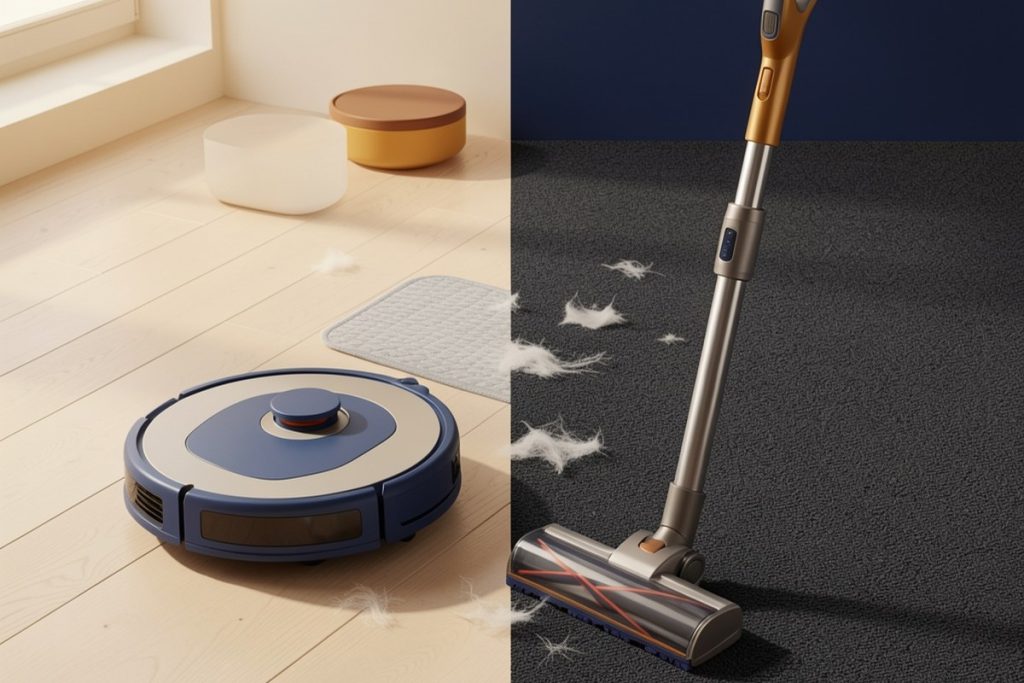
Look for another category if you need detailed room mapping, strong control over no-go zones, advanced obstacle avoidance, deep-cleaning performance for thick carpet, or a system designed around extensive pet-hair management. Those needs do not make a simpler model defective; they simply make the comparison criteria different.
This article is a buying framework, not a hands-on test. The sensible conclusion is therefore conditional: the candidate’s listed design and floor coverage align with a low-clearance, mixed-floor problem, but your measurements, room layout, maintenance tolerance, and required controls should determine the final decision.
Last reviewed: 2026-09-25