
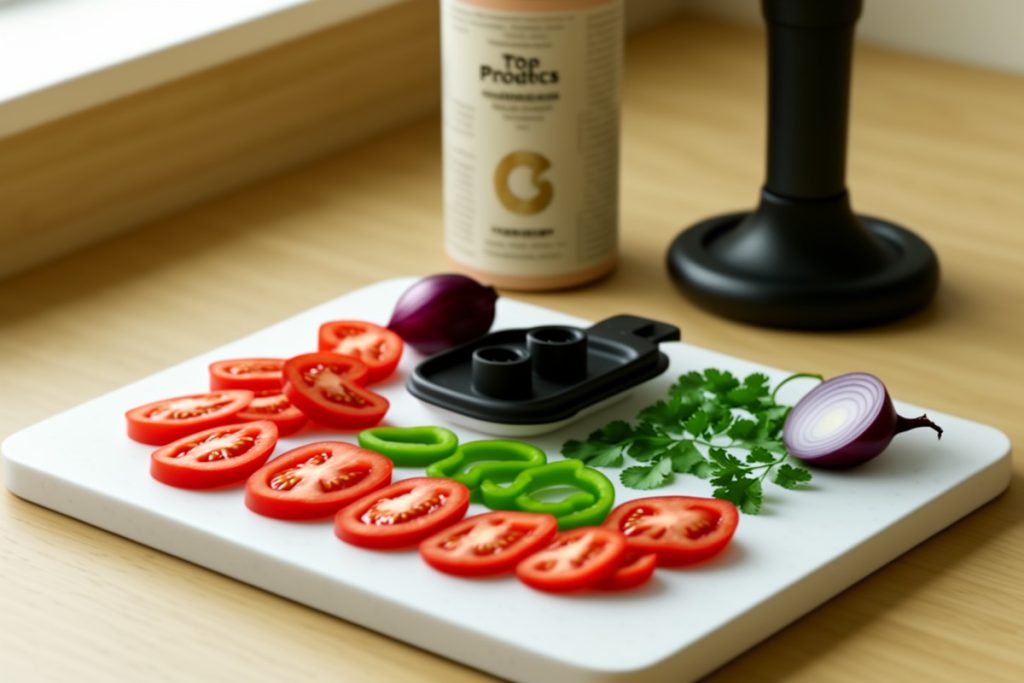
Quick answer
For chunky homemade salsa, cut firm ingredients into similarly sized pieces, drain watery tomatoes, and add delicate herbs only after the main vegetables are prepared. A countertop chopper can make onion and pepper pieces more consistent, but it may turn soft tomatoes into pulp if overused. Use short pulses, check the texture often, and refrigerate finished salsa promptly.
Key takeaways
- Use a chopper mainly for firm ingredients such as onion, bell pepper, and jalapeño.
- Remove excess tomato liquid before chopping if you want thicker salsa.
- Short pulses are safer than holding the blade down continuously.
- Mix cilantro, lime juice, and salt at the end so the salsa stays fresh and balanced.
Chunky salsa looks simple, but the texture depends on a few choices made before the ingredients reach the bowl. Uneven cuts can leave one bite dominated by onion and the next mostly tomato. Overworked tomatoes can make the mixture watery, while large pepper pieces can overpower the softer ingredients.
The goal is not perfectly uniform restaurant-style dice. It is a salsa with enough structure to scoop, enough liquid to distribute flavor, and enough variation to feel fresh. The right tool can reduce preparation time, but technique matters more than owning a particular gadget.
Start with the texture you want
Decide whether you want a chunky, medium, or smoother salsa before cutting anything. For a chunky version, aim for pieces roughly similar in size to a small bean. Medium salsa can use smaller pieces, while a smoother salsa may be pulsed briefly after everything is combined.
Keep the tomato pieces slightly larger than the onion and pepper. Tomatoes soften quickly and release juice as they sit. If every ingredient starts at the same size, the tomato can disappear into the mixture while the firmer vegetables remain noticeably sharp.
For a thicker salsa, cut tomatoes in half and scoop out some of the loose seeds and gel before chopping. You do not need to remove every seed; the aim is simply to reduce excess liquid. Roma tomatoes are often convenient for this purpose because they tend to have a firm, meaty texture, but any ripe tomato can work.
Prepare each ingredient differently
Different vegetables need different handling. Treating them all the same is one of the quickest ways to lose the texture you want.
- Tomatoes: Remove the stem and drain or scoop out excess liquid. Cut them into manageable pieces, then chop gently or fold them in after the firmer vegetables.
- Onion: Peel it and cut it into large chunks before using a chopper. This helps the blade work evenly and reduces the chance of leaving large pieces behind.
- Bell pepper: Remove the stem, seeds, and inner ribs. Because peppers are firm, they usually respond well to short pulses.
- Jalapeño: Remove the seeds and ribs for less heat, or leave some in if you want a hotter salsa. Wash your hands carefully after handling hot peppers, and avoid touching your eyes.
- Cilantro: Add it near the end. Chopping it too aggressively can bruise the leaves and spread a dull, grassy flavor through the whole bowl.
Keep the pieces dry where possible. Rinsing produce is useful, but wet vegetables add water to the bowl. After rinsing, let them drain or pat them dry with a clean towel before cutting.
Where a countertop chopper fits
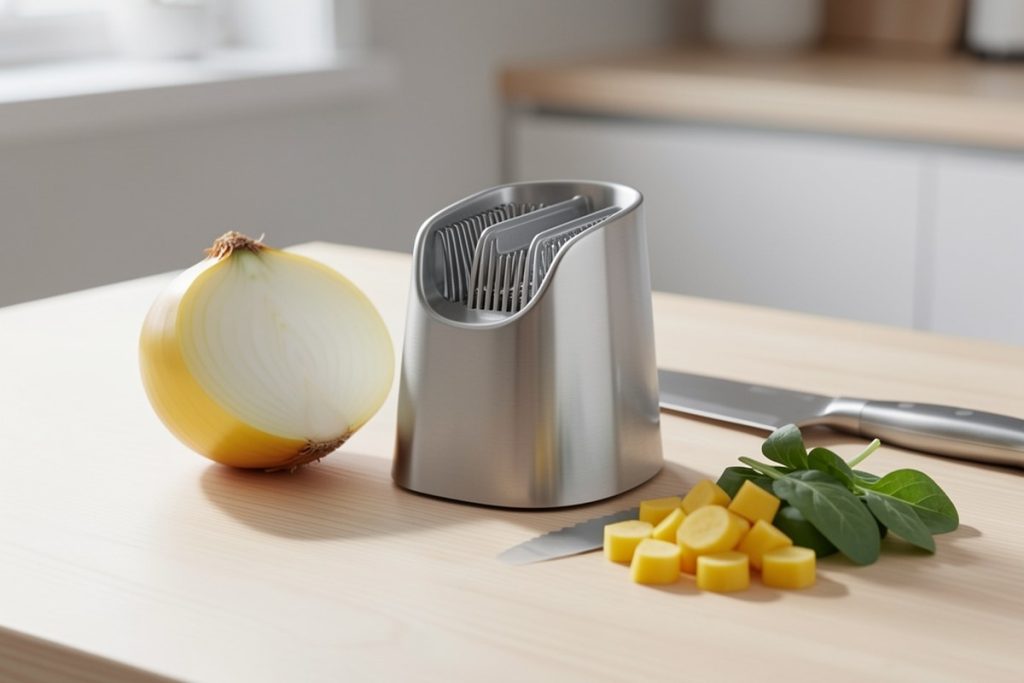
A countertop chopper is most useful when your main problem is repetitive cutting rather than a lack of knife skills. The Fullstar Pro Original Vegetable Chopper & Mandoline Slicer is listed as a six-in-one tool with stainless steel blades and a collection container. Those features may make it worth considering for someone who regularly prepares onions, peppers, or other firm vegetables in small batches.
It is not automatically the right tool for every salsa. A multi-function gadget can be less convenient than a knife when you need to adjust one ingredient’s size by eye, and soft tomatoes can become crushed if they are processed too long. The container also does not eliminate the need to wash, trim, and inspect the produce first.
Before buying or using any countertop chopper, check how the inserts are meant to be fitted and cleaned. Sharp blades require deliberate handling, and small parts can be easy to misplace. The product listing should be treated as a feature description, not proof that the tool will produce a particular salsa texture for every ingredient.
A practical salsa-prep workflow
- Wash and organize. Clean the produce, remove damaged areas, and set out the bowl, cutting surface, tool, and storage container.
- Prep the tomatoes. Core them, remove some excess liquid if necessary, and set them aside.
- Chop the firm vegetables first. Use the chopper for onion, bell pepper, and jalapeño in separate batches. Pulse briefly, then inspect the pieces.
- Combine gently. Add the tomatoes to the bowl and fold everything together rather than repeatedly processing the complete mixture.
- Finish the flavor. Stir in cilantro, lime juice, and salt. Taste after a few minutes because the onion, pepper, and citrus flavors will become more noticeable as they sit.
- Adjust the texture. If the salsa is too wet, drain a little liquid. If it is too sharp, add more tomato or let it rest briefly before making another adjustment.
| Ingredient | Best approach | Common mistake |
|---|---|---|
| Tomato | Drain and chop gently | Processing until puréed |
| Onion | Short pulses in even chunks | Leaving large pieces underneath the blade |
| Bell pepper | Remove ribs and pulse separately | Adding wet, seeded pieces |
| Cilantro | Fold in at the end | Over-chopping the leaves |
Use this quick checklist before serving
- Are the largest pieces small enough for easy scooping?
- Is there enough tomato to balance the onion and pepper?
- Does the salsa need more lime or salt, or is it already bright enough?
- Has the bowl been covered and refrigerated if it is not being served immediately?
Fresh salsa is a perishable food, so preparation hygiene and storage matter as much as texture. The FDA recommends washing hands before and after preparing produce, rinsing produce under running water before cutting or peeling, and refrigerating perishable produce at or below 40°F. It also advises against using soap or commercial produce wash on fruits and vegetables.
For the best texture, serve the salsa soon after mixing. If you are preparing it ahead, store it in a clean, covered container in the refrigerator and use a clean utensil when serving. Discard it if it develops an unusual smell, appearance, or texture rather than trying to rescue it with extra seasoning.
When a knife is the better choice
A knife may be preferable when you are making one small bowl, want very precise pieces, or are working mostly with ripe tomatoes and herbs. It also gives you more control over each ingredient’s size. A chopper becomes more appealing when you prepare salsa frequently, dislike repetitive onion and pepper cutting, or want a faster way to create reasonably consistent pieces.
In other words, the best approach is often mixed: use a chopper for the firm vegetables, handle tomatoes separately, and fold in the herbs by hand. That combination preserves control without turning every salsa-making session into a long cutting task.
Last reviewed: 2026-09-25
Sources
- 7 Tips for Cleaning Fruits and Vegetables — U.S. Food and Drug Administration
- Fruits and Vegetables: Safe Food Handling and Preparation — U.S. Department of Agriculture Food Safety and Inspection Service