
Quick answer
Store holiday baking ingredients according to their needs: keep flour, sugar, grains, and unopened baking supplies in a cool, dry, dark pantry; refrigerate ingredients that spoil easily, such as eggs, cream, and some fillings; and freeze items such as nuts when you will not use them soon. Use clean, completely dry airtight containers, keep original date information, and check every ingredient before baking.
Key takeaways
- Cool, dry, and dark conditions protect most shelf-stable baking ingredients from moisture, pests, and flavor loss.
- Nuts, whole-grain flours, and other oil-rich ingredients may stay fresher in the refrigerator or freezer.
- Airtight containers help prevent clumping and pantry pests, but they do not make spoiled food safe.
- Separate baking staples from strongly scented foods and keep perishable fillings refrigerated.
Start by sorting ingredients by storage need
Holiday baking usually combines three different storage groups. Treating everything as a pantry item is the easiest way to create stale flour, soft brown sugar, rancid nuts, or unsafe dairy-based fillings.
| Ingredient group | Best general location | What to watch for |
|---|---|---|
| White flour, granulated sugar, cornstarch, baking soda, baking powder, cocoa, and unopened dry mixes | Cool, dry pantry | Moisture, clumps, pests, and lost leavening power |
| Whole-grain flour, nuts, seeds, coconut, and some dried fruit | Pantry for short-term use; refrigerator or freezer for longer storage | Rancid or stale odors, oily surfaces, and changes in texture |
| Eggs, cream, cream cheese, custard, and prepared fillings | Refrigerator | Time at room temperature and package-specific storage instructions |
| Butter, chocolate, and decorations | Follow the package; use a cool, dry place or refrigeration when directed | Heat, condensation, blooming, or odors from nearby foods |
This is a starting framework, not a replacement for the package instructions. Some products have special handling requirements, and the USDA FoodKeeper guidance can help you check a particular ingredient.
Build a pantry setup that prevents common holiday problems
Before buying extra baking supplies, inspect the space where they will live. A pantry beside a dishwasher, oven, radiator, or sunny window can become warmer and more humid than it feels in the rest of the kitchen. Choose an interior shelf away from heat and direct light.
- Clean the shelf. Remove old spills, crumbs, and any packages with visible insects or damage.
- Use dry containers. Even a small amount of water can create clumps or encourage mold in dry ingredients.
- Keep ingredients off the floor. This reduces exposure to moisture and makes spills easier to spot.
- Group by use. Keep everyday baking staples together, then place specialty ingredients such as nuts and extracts in a separate area.
- Preserve date information. Keep the original package nearby or record the best-by date before transferring an ingredient.
- Use older supplies first. Put newly purchased items behind the ingredients you already have.
Do not pour a new batch into a container that still holds the previous batch. Empty it completely, wash it when appropriate, and dry it thoroughly. Mixing old and new ingredients makes it harder to identify an off smell, infestation, or quality problem.
Choose airtight containers for the ingredients that need them
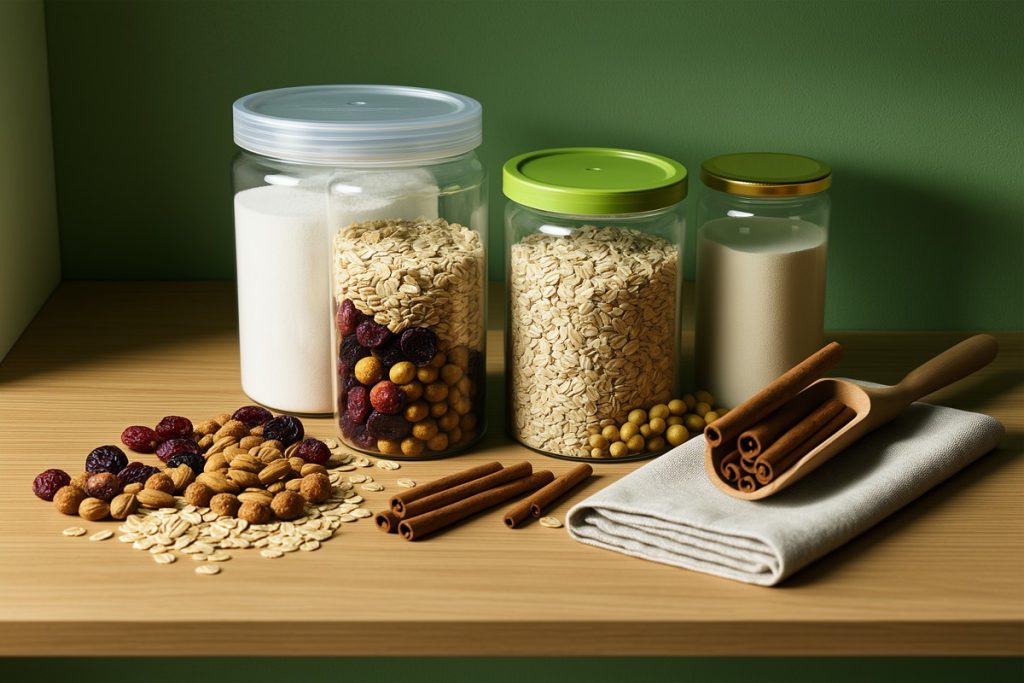
Flour and sugar attract moisture, while open bags can be difficult to close securely. A properly fitted lid helps maintain a more stable environment and gives pantry pests fewer opportunities to reach the food. It also makes measuring easier because the container can be opened without wrestling with a torn paper bag.
For a mixed holiday baking pantry, the Vtopmart Airtight Food Storage Containers with Lids are a practical option to consider. The set includes 24 pieces in multiple sizes, is listed as BPA-free, and includes labels. The containers are dishwasher safe, but the product information specifies that the lids are not. That means they may be useful for separating flour, sugar, pasta, snacks, and other dry goods, but you should still confirm that each container is fully dry before refilling it.
There are also reasons not to buy a large set automatically. If your pantry has limited shelf height, many containers may not fit efficiently. If you prefer keeping ingredients in their original packaging for allergy information or date tracking, a sealed storage bin may be more convenient. The right container is the one you can clean, dry, identify, and use consistently.
Know which ingredients benefit from colder storage
Whole-grain flour, nuts, seeds, and shredded coconut contain natural oils that can develop stale or paint-like odors over time. If you bake only occasionally, refrigeration or freezing can help preserve quality. Use a tightly sealed, moisture-resistant container and allow cold ingredients to come closer to room temperature before opening when condensation could be a concern.
Freezing is especially useful when you buy a seasonal ingredient in a larger quantity than you will use soon. Divide it into practical portions so you do not repeatedly warm and cool the entire supply. Mark the storage date and inspect the ingredient after thawing. A freezer can slow quality loss, but it cannot restore an ingredient that was already stale.
Brown sugar often hardens because it loses moisture, while powdered sugar and flour can clump when they absorb humidity. An airtight container can reduce those problems, but avoid adding improvised moisture sources directly to food unless the product instructions specifically recommend them. For baking, unexpected moisture can change the intended texture and weight of an ingredient.
Use a simple pre-baking safety check
On baking day, take two minutes to inspect everything before combining it. Look for damaged packaging, insects, unusual webbing, mold, wet spots, or odors that do not belong. When in doubt, discard the questionable ingredient rather than trying to hide the problem with spices or chocolate.
- Check refrigerated ingredients for proper storage and use them within the package guidance.
- Smell nuts, whole-grain flour, and seeds before measuring.
- Break up dry clumps only after confirming they are caused by harmless compression rather than moisture or mold.
- Use clean measuring tools and avoid returning unused ingredients to a container after contact with wet batter.
- Refrigerate finished items with cream, custard, cream cheese, or other perishable fillings according to food-safety guidance.
A seasonal storage routine that saves time later
Set up the pantry before the busiest baking week, not after it. Take inventory, identify what needs refrigeration or freezing, and transfer only the ingredients that benefit from sealed storage. Keep specialty items visible enough that they do not disappear behind everyday staples.
After the holiday, review what remains. Move long-term ingredients to the coldest suitable storage location, discard anything questionable, and make a short list of supplies worth buying again. This approach keeps seasonal baking organized without turning the pantry into a permanent stockpile.
Last reviewed: 2026-10-05