Quick answer
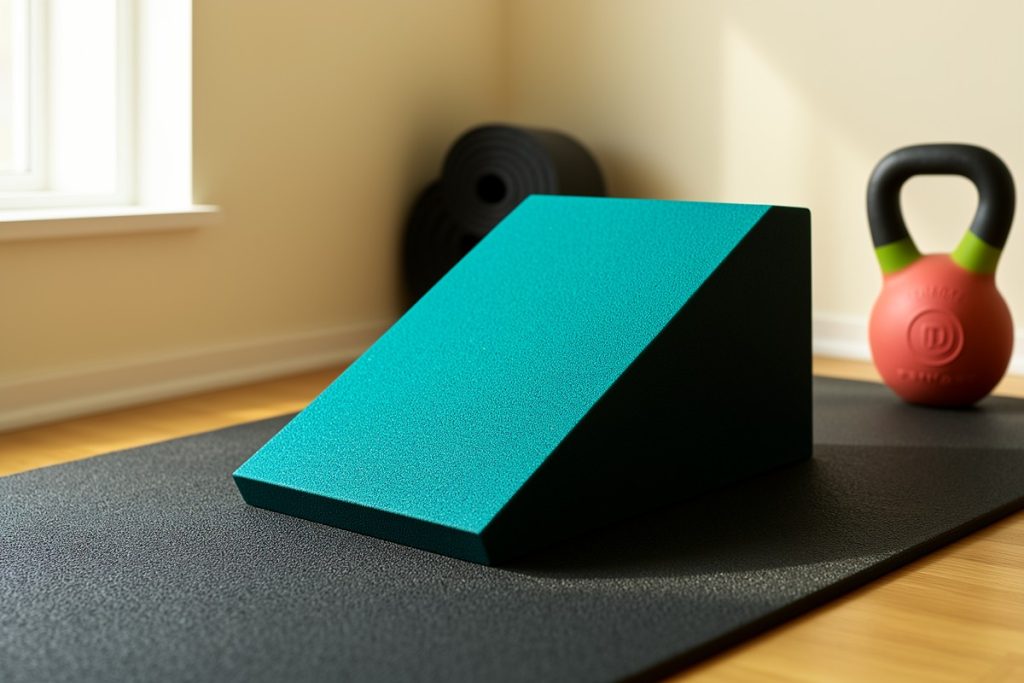
To improve ankle mobility for deeper squats at home, train knee-over-toe movement consistently rather than forcing depth. Warm up, perform controlled knee-to-wall rocks, hold a gentle calf stretch, and practice bodyweight squats. A slanted wedge can temporarily reduce the ankle angle needed, helping you train comfortably, but it should support—not replace—gradual mobility work or evaluation of persistent pain.
Key takeaways
- Limited ankle dorsiflexion can make your heels lift or your torso tip forward, but squat depth also depends on hip mobility, stance, proportions, and control.
- Use a pain-free knee-to-wall drill and compare both sides before choosing a mobility strategy.
- Perform a short routine consistently: warm up, mobilize, stretch gently, then practice the squat pattern.
- A squat wedge can make practice more accessible, but gradually reduce assistance as your control improves.
Why ankle mobility matters in a squat
Ankle mobility usually refers to how far your shin can move forward over your foot while your heel stays grounded. In a squat, that movement helps your knees travel forward as your hips lower. When the ankle does not move comfortably, your body may find another route: your heels rise, your feet turn outward, your knees collapse inward, or your chest drops sharply.
That does not mean every squat problem comes from tight ankles. Hip structure, stance width, footwear, balance, leg length, strength, and familiarity with the movement all influence depth. Treat ankle work as one part of the solution, not a universal fix.
The goal is not to force your knees as far forward as possible. The goal is controlled movement through a range that feels stable and pain-free. A deeper squat is useful only when you can maintain balance, breathing, and sensible control.
Test your ankle movement before training it
A simple knee-to-wall check can show whether one ankle moves differently from the other. Stand facing a wall with one foot flat. Keep your heel down and slowly drive your knee toward the wall. Move the foot back until you can just reach the wall without the heel lifting. Repeat on the other side and notice the difference in comfort, distance, and control.
This is a practical comparison, not a diagnosis. A small left-to-right difference may be worth monitoring, while a sharp pinch at the front of the ankle, swelling, numbness, or pain that changes your walking deserves professional assessment. Do not turn the test into a competition or bounce into the end position.
A simple eight-minute ankle mobility routine
Use this sequence before lower-body training or as a brief standalone session. Move slowly enough to notice what your foot and ankle are doing. You should feel effort or a mild stretch, not sharp pain.
| Movement | Starting dose | Useful cue |
|---|---|---|
| Easy marching or brisk walking | 2 minutes | Warm the whole body before targeting one joint. |
| Knee-to-wall rocks | 2 sets of 8 per side | Keep the heel and the base of the big toe connected to the floor. |
| Straight-knee calf stretch | 20–30 seconds per side | Stay tall and avoid forcing the heel downward. |
| Supported bodyweight squats | 2 sets of 6 | Use a doorframe or sturdy support and stop before your form changes. |
After the first round, repeat the knee-to-wall rocks and supported squats. The second set may feel smoother, but it should not feel dramatically more painful or unstable. Perform the routine several times per week and judge progress by quality: a steadier foot, smoother knee movement, and better control are more useful than chasing a particular depth.
How to use a squat wedge at home
If your heels lift before you can reach a comfortable squat position, a wedge can provide immediate assistance. It raises the heel and reduces the amount of ankle bend required, making it easier to practice the rest of the movement. That can be useful for supported squats, goblet squats, split squats, and calf stretching.
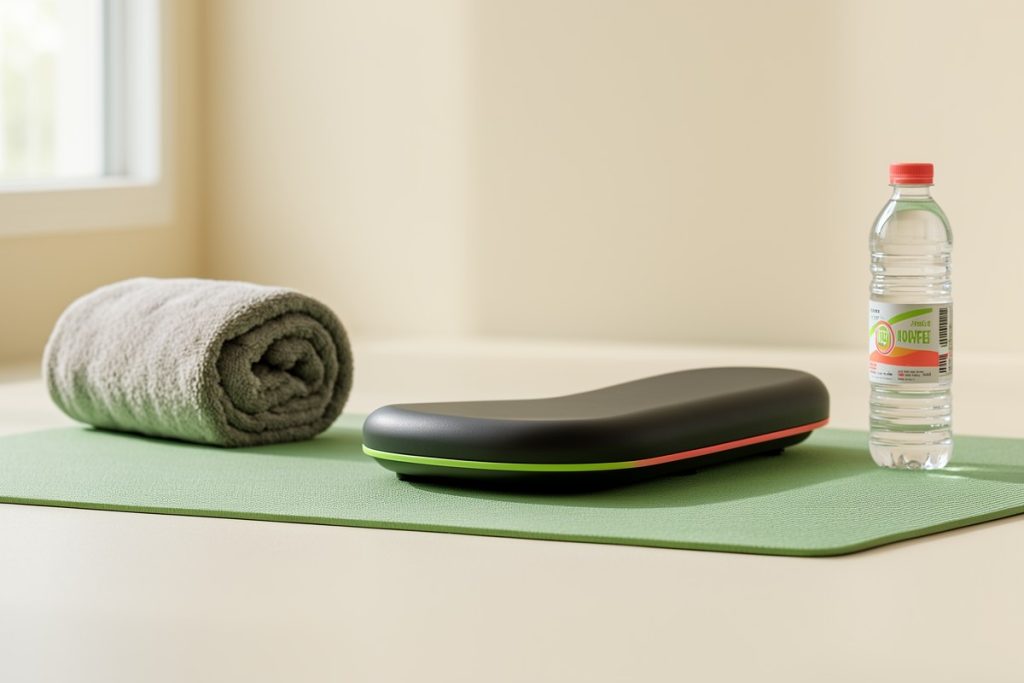
One home option is this five-angle squat wedge block. Its listing describes a 960-pound capacity, five adjustable angles, non-slip yoga foam, and an included training poster. Those listed features may make it versatile for home practice, but capacity is not the same as guaranteed stability for every user or surface. Place it on a level, dry floor and inspect the foam before each session.
Start with the lowest angle that lets you keep your feet balanced. Keep your weight spread across the foot instead of dumping it into the toes. Use the wedge to rehearse a controlled squat, then occasionally repeat the movement on the floor to see whether your unassisted control is improving. If the wedge is the only way you can move without pain, do not assume the underlying issue is simply flexibility.
Mobility drills versus a wedge: which should you choose?
| Option | Best use | Limitation |
|---|---|---|
| Mobility drills | Building comfort and control through available ankle movement | Progress can be gradual and requires consistency |
| Squat wedge | Practicing squat mechanics when ankle bend is the immediate barrier | Changes the movement demand rather than permanently improving mobility |
| Professional evaluation | Persistent pain, swelling, instability, or a major side-to-side difference | Cannot be replaced by an online routine or equipment |
How to progress without forcing depth
Choose one variable at a time. You might add a small amount of depth, reduce your support, lower the wedge angle, or increase repetitions. Do not change all four at once. A useful progression is to begin with supported bodyweight squats, move to unassisted squats, and then add a light load only when your feet remain planted and your knees track comfortably.
Film a side view occasionally if you want an objective check. Look for a stable foot, controlled descent, even pressure through both sides, and a torso angle that does not suddenly collapse. Depth is optional; repeatable technique is the foundation.
Stop and seek advice from a qualified clinician if you have ongoing ankle or knee pain, swelling, recent injury, numbness, repeated giving-way, or symptoms that worsen during normal activity. Mobility work should help you move better, not convince you to ignore a warning sign.
Last reviewed: 2026-11-16
Sources
- Physical Activity Guidelines for Americans, 2nd edition — U.S. Department of Health and Human Services.
- Adult Physical Activity Guidelines — Centers for Disease Control and Prevention.