
Quick answer
For a small laundry room, the most useful winter setup is a simple flow: dirty clothes enter one zone, clean clothes leave through another, and bulky seasonal items go upward rather than across the floor. Sort only where it saves time, use breathable storage for dry garments, and keep the washer and dryer clear. A slim hanging organizer can add capacity when floor space is the real constraint.
Key takeaways
- Separate everyday laundry from bulky winter items before choosing storage.
- Use vertical space for lightweight, frequently handled categories.
- Keep clean, damp, and repair-needed clothing in different zones.
- Check garment care labels before changing wash or drying settings.
Start with a winter laundry audit
Winter creates a different laundry problem than summer. Sweaters, thermal layers, scarves, heavier socks, coats, and blankets take up more room, even when your household is washing clothes just as often. Before buying containers or rearranging shelves, observe what actually piles up.
For one week, note three things: which items wait longest before washing, which clean items have nowhere to go, and which pieces end up on chairs, doorknobs, or the floor. That short audit will show whether you need more hamper capacity, a drying area, or a temporary home for clean clothing.
Do not automatically create a separate bin for every fabric or family member. In a small room, too many categories create extra decisions and occupy valuable floor space. Start with three practical groups:
- Everyday wash: clothing and towels that can follow your normal routine.
- Bulky or delicate: sweaters, wool items, bedding, and garments that need special handling.
- Not ready for washing: lightly worn pieces that need airing before they return to the closet.
Create a clear path from dirty to put away
A good laundry room should make the next action obvious. Place the main hamper closest to where clothes enter the room, then reserve a separate landing spot for clean items. If clean laundry regularly sits on top of the washer, move a basket, shelf, or narrow cart into that position rather than fighting the habit.
Keep “not ready for washing” clothing out of the dirty hamper. A hook, open basket, or ventilated section gives sweaters and jeans somewhere to air without mixing them with damp towels or genuinely soiled clothing. The goal is not a perfectly sorted laundry room; it is preventing clean clothes from becoming dirty again.
For winter items, avoid compressing damp or recently worn clothing into closed plastic storage. Let pieces dry fully before folding them away. If an item smells musty, feels damp, or has visible soil, send it through the appropriate care routine instead of storing it with clean garments.
Use vertical storage when floor space is limited
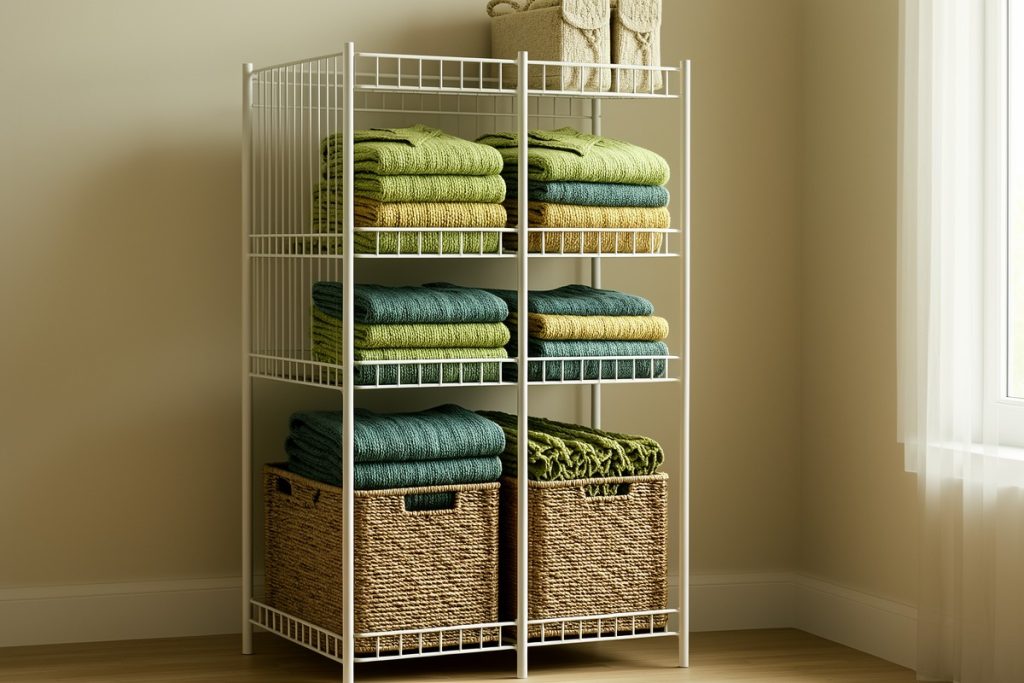
In a narrow laundry room, the walls and the unused space above a hamper often matter more than the floor. Vertical storage works best for lightweight items that you handle often: socks, accessories, cleaning cloths, folded base layers, and small laundry supplies.
One option is the 3-Tier Hanging Laundry Basket Organizer, a foldable wire shelf and basket-style organizer with rotating hooks. It may suit a closet or compact laundry area where adding another floor-standing cabinet would make the room harder to move through. Before choosing it, measure the available height and width, confirm how it attaches, and check the intended load against what you plan to store. A hanging organizer is useful for light, accessible categories, but it may not replace a large hamper or sturdy shelving unit for heavy blankets.
Open wire construction can also make contents easier to see than opaque bins. That is helpful during busy winter weeks because you can spot a nearly full category before it becomes an overflowing pile. However, visible storage only works if each tier has one job. Assign a shelf to accessories, one to clean folded items, and one to supplies, rather than creating a mixed catch-all.
Protect sweaters and delicate winter clothing
Winter clothing often needs more attention than ordinary cotton basics. Check the care label before selecting a wash temperature, cycle, or drying method. The label is the best starting point because fibers and finishes can respond differently to heat, agitation, and moisture.
Fold knitwear instead of hanging it from narrow shoulder seams, which can distort the shape over time. Use a flat drying surface when the care instructions call for it, and leave enough air around damp garments to reduce slow drying and unpleasant odors. Keep hooks and shelves for items that can safely hang or sit there; do not treat every winter garment as interchangeable.
For scarves, gloves, and hats, a small open basket near the exit of the laundry room is often more useful than a deep storage box. It creates a “return home” zone for items that are clean but used daily. At the end of the season, wash or clean these pieces according to their labels before storing them in a dry, protected location.
A simple weekly laundry-room checklist
| Task | What to check |
|---|---|
| Clear the floor | Remove stray clothing, empty packaging, and anything blocking access. |
| Reset hampers | Move full loads into the next step instead of adding a second pile. |
| Inspect winter items | Separate damp, damaged, stained, and clean clothing. |
| Restock supplies | Keep only the detergent and tools you use regularly within reach. |
| Review storage | Move rarely used seasonal items higher or farther back. |
Avoid these small-space laundry mistakes
Using every available surface: A shelf packed edge to edge leaves no landing area for a clean load. Keep one working surface partly clear.
Storing damp clothing in closed containers: This can create odors and make the next laundry session harder. Give wet items the drying space they need first.
Sorting by an ideal routine instead of a real one: If three hampers cause confusion, use one main hamper and a smaller category only for items that truly need separate care.
Putting heavy items on light-duty organizers: Check dimensions, attachment points, and load guidance before storing detergent bottles, blankets, or full baskets overhead.
Letting seasonal overflow become permanent clutter: Winter accessories should have a defined home, but rarely used items should not occupy prime access space all year. Reassess the setup when the season changes.
Make the reset easier to repeat
The best small laundry room is not the one that looks perfect immediately after organizing. It is the one that can recover quickly after a busy week. Give every frequently used category one obvious home, keep the path to the machines open, and reduce the number of decisions required to put clothes away.
Start with one shelf, one hamper, or one wall section rather than reorganizing the entire room at once. After a week, notice what still collects in the wrong place. That recurring pile is useful information: it may indicate that the category needs to be closer, more visible, or stored differently. Adjust the system around your household’s real winter habits, not an imagined routine.
Last reviewed: 2026-11-23
Sources
- Care Labeling of Textile Wearing Apparel and Certain Piece Goods — Electronic Code of Federal Regulations.
- ENERGY STAR Clothes Dryers — U.S. Environmental Protection Agency and U.S. Department of Energy.
- Textiles: Material-Specific Data — U.S. Environmental Protection Agency.