
Quick answer
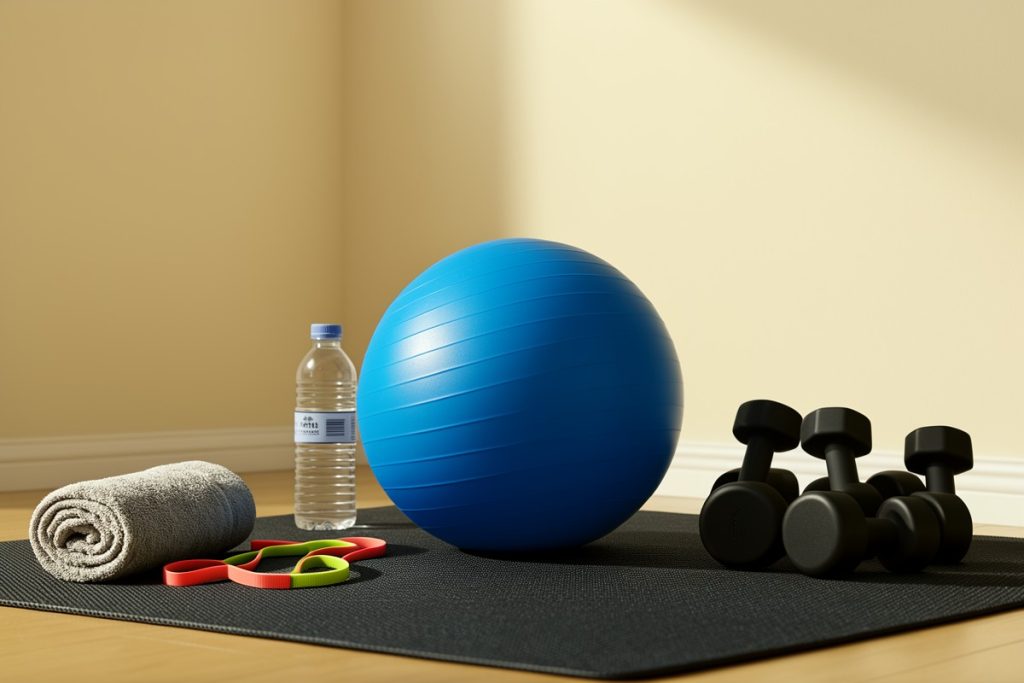
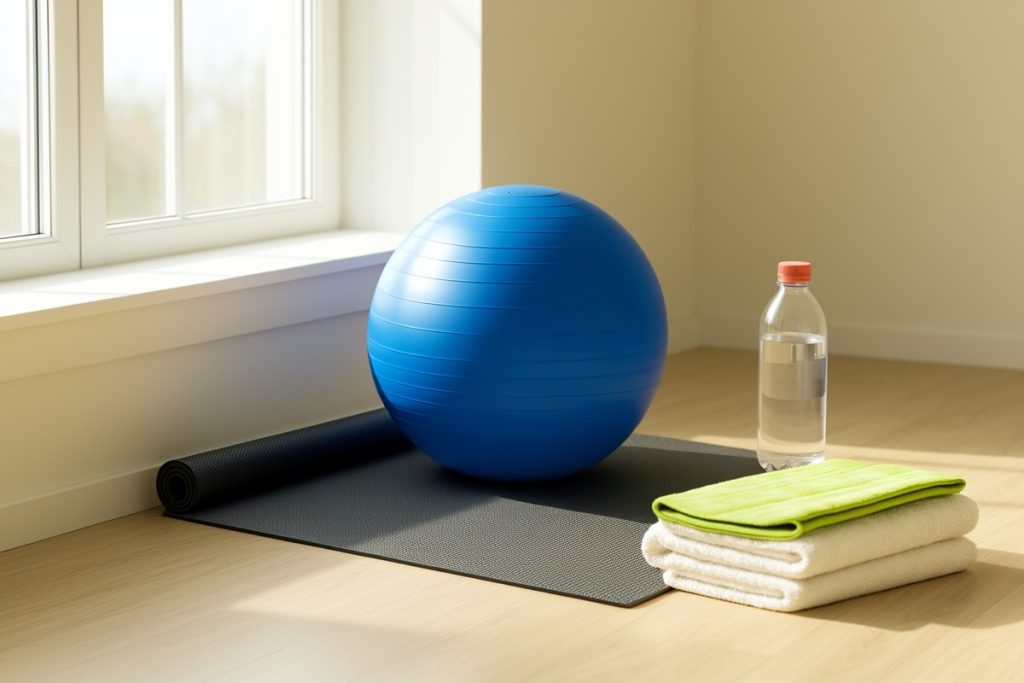
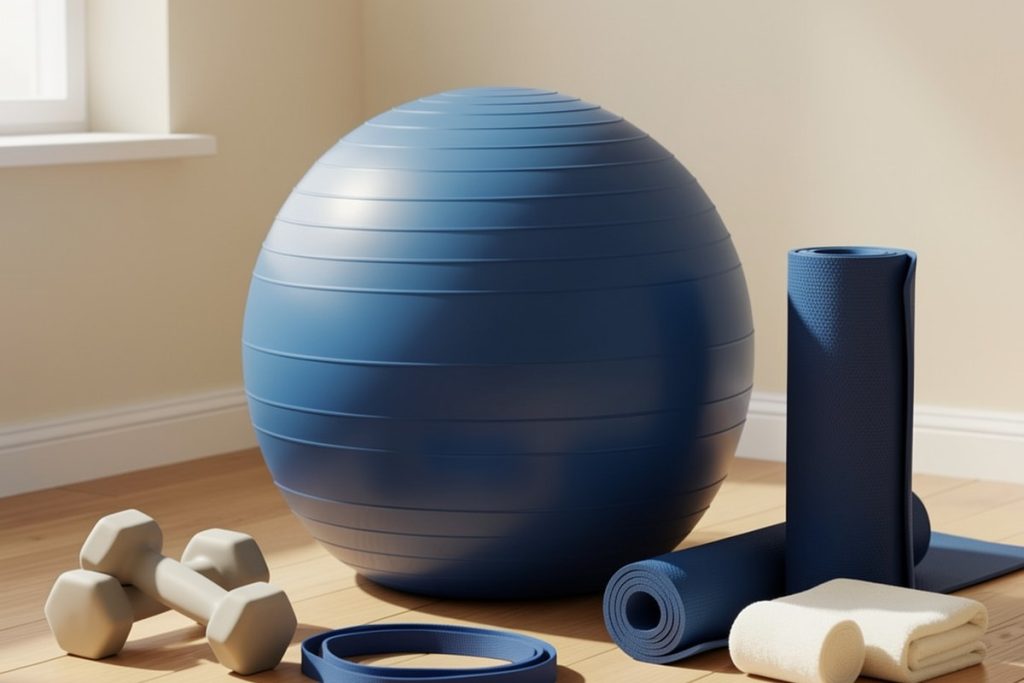
An exercise ball can make a small home workout more versatile by adding support, gentle instability, and a comfortable way to train your core, hips, and upper body. Start with simple movements such as wall squats, glute bridges, seated marches, and incline push-ups. Choose the correct size, inflate it firmly, and progress only when you can control every repetition without pain.
Key takeaways
- Use an exercise ball to add variety and controlled instability to low-impact home workouts.
- Prioritize ball size, inflation, and floor space before choosing exercises.
- Begin with supported movements and stop if you feel pain, dizziness, or loss of control.
- A 15- to 20-minute routine can complement, but does not replace, regular strength and aerobic activity.
Home workouts often fail for a practical reason: the equipment is either too bulky to leave out or too limited to keep your routine interesting. An exercise ball sits between those extremes. It takes up less space than a bench, can support several movement patterns, and gives you a simple way to adjust difficulty without immediately adding heavy weight.
That does not mean every exercise ball movement is automatically better. The ball should help you move with control, not turn basic exercises into a balance contest. The most useful approach is to treat it as a tool for support, positioning, and gradual challenge.
What an exercise ball can add to a home workout
An exercise ball can support your back during floor exercises, raise your hands for a gentler incline push-up, or create a moving surface for controlled core work. It may also make familiar exercises feel different because your body has to maintain a steady position while you move.
For sustainable fitness, that variety matters. You are more likely to maintain a routine when it fits your space, feels manageable, and offers enough options to prevent boredom. However, instability is not the same as intensity. If you are wobbling, holding your breath, or rushing to finish, make the movement easier rather than trying to “activate” more muscles.
Adults should still build toward the broader activity targets recommended by public-health guidance: regular moderate aerobic activity and muscle-strengthening work on at least two days each week. A ball routine can contribute to the strengthening portion when the exercises challenge your muscles, but it works best as one part of a complete weekly plan.
How to choose the right ball size
Ball diameter should match your height, leg length, available space, and the movements you plan to perform. When sitting on an inflated ball, your knees should generally be close to hip level rather than noticeably higher or lower. Your feet should rest flat, with enough room around you to step off safely.
Size charts are useful starting points, but they cannot account for every body shape or how firmly the ball is inflated. A ball that is too small may place you in a cramped position. One that is too large may make your feet unstable or force your hips too high. If you are between sizes, consider the manufacturer’s guidance and the height of your ceiling, furniture, and workout area.
| Check before using it | What to look for |
|---|---|
| Fit | Comfortable seated position with feet flat and knees near hip height |
| Surface | Firm, level flooring free of rugs that slide or sharp objects |
| Clearance | Enough room to move, step away, and avoid furniture |
| Condition | No cuts, cracks, damaged valve, or unusual soft spots |
A simple 20-minute exercise ball routine
Warm up for three minutes with easy marching, shoulder circles, and bodyweight hip hinges. Then complete two rounds of the following sequence. Rest for about 30 to 60 seconds between movements, and take longer breaks whenever your technique deteriorates.
1. Wall-supported ball squat
Place the ball between your lower back and a wall. Walk your feet slightly forward, brace your midsection, and lower only as far as you can keep your knees tracking in line with your toes. Press through your whole foot to stand. Aim for 8 to 12 slow repetitions.
2. Seated march
Sit near the center of the ball with your feet wide enough to feel stable. Keep your spine tall and gently lift one foot at a time without leaning toward the opposite side. Use a wall or sturdy surface nearby for support. Continue for 30 to 45 seconds.
3. Glute bridge with calves on the ball
Lie on your back and place your calves on top of the ball. Start with your knees bent and arms resting beside you. Press through your heels to lift your hips, pause briefly, then lower slowly. If the ball rolls too much, bring it closer to your body or switch to a regular floor bridge. Complete 8 to 12 repetitions.
4. Incline push-up
Place your hands on the ball against a wall or on a stable elevated surface rather than balancing the ball freely on the floor. Walk your feet back, keep your body in one long line, and bend your elbows to lower your chest. Push away without letting your shoulders shrug. Perform 6 to 10 controlled repetitions.
5. Dead bug with ball press
Lie on your back and hold the ball gently between your hands and thighs, with your hips and knees bent. Press into the ball without straining, then slowly extend one arm or leg at a time while keeping your lower back comfortable. Alternate sides for 6 to 8 repetitions per side.
Where the Amazon Basics ball may fit
If you want one inexpensive-looking, compact tool for supported squats, seated work, bridges, and gentle core exercises, the Amazon Basics Anti-Burst Exercise Ball with Pump, 23–26-inch diameter is a reasonable option to investigate. Its listed anti-burst design and included pump address two practical needs, but you should still confirm the diameter, inflation instructions, and user-height guidance before buying.
As an Amazon Associate, GetWitty may earn from qualifying purchases.
This type of ball is not a substitute for a stable bench, heavy strength equipment, or professional coaching. It may also be a poor fit if your floor is crowded, you need a very large ball, or you are recovering from an injury that affects balance. Compare the product dimensions with your space, inspect it after inflation, and follow the manufacturer’s safety directions.
How to progress without making balance the goal
Progress one variable at a time. First, make each repetition slower. Next, add one or two repetitions while maintaining the same range of motion. Then add a third round or increase the work interval slightly. Only after the movement feels stable should you consider reducing support or adding light resistance.
Keep at least one point of contact with the floor or wall for exercises that feel unfamiliar. A stable version of an exercise is still effective. Your long-term goal is repeatable training, not performing the most dramatic variation on the first day.
Use a simple effort check: you should finish most sets feeling that you could complete two or three more quality repetitions. Mild muscle fatigue is expected; sharp pain, joint pinching, numbness, dizziness, and unusual shortness of breath are signals to stop. If you have a medical condition, recent surgery, or a history of falls, ask a qualified healthcare professional whether these movements are appropriate.
Practical setup checklist
- Inflate the ball according to its instructions rather than guessing from firmness alone.
- Test seated balance near a wall before beginning the routine.
- Wear shoes with dependable traction or use a clean, nonslip surface.
- Keep pets, cords, tables, and sharp objects out of the workout area.
- Inspect the ball regularly and replace it if the material or valve is damaged.
- Record the exercises and repetitions you complete so progression stays gradual.
An exercise ball earns its place in a home routine when it makes training easier to start and easier to repeat. Use it for controlled support and modest challenge, combine it with walking or other aerobic activity, and build strength at a pace your joints and schedule can sustain.
Last reviewed: 2026-08-17