
Quick answer
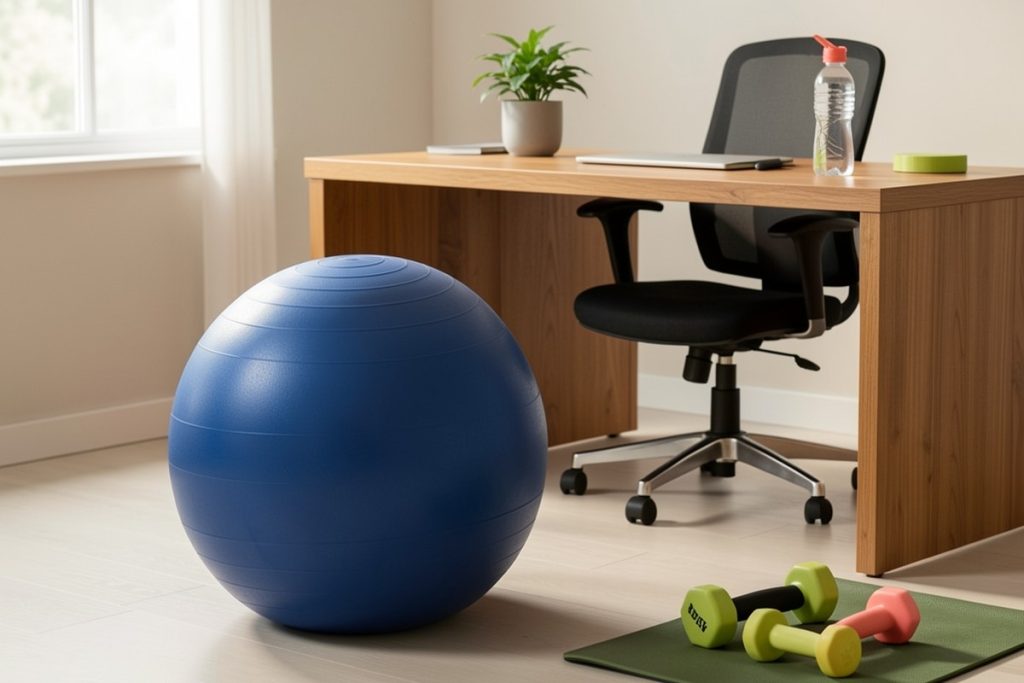
A stability ball can make desk time more movement-friendly when used for short, controlled periods—not as an all-day chair. Keep both feet flat, maintain a tall but relaxed posture, and switch back to a stable chair before you feel tired or unsteady. Pair brief ball sessions with walking and standing breaks for a safer, more useful workday routine.
Key takeaways
- Use a stability ball as a short active-sitting tool, not a permanent office-chair replacement.
- Your hips should sit slightly higher than your knees, with both feet firmly supported.
- Start with two to five minutes, then switch to a stable chair or take a walking break.
- Clear the floor, remove trip hazards, and stop if you feel pain, dizziness, numbness, or instability.
By Jax Morrison, High-Energy Motivator
Why use a stability ball during desk time?
Long stretches at a desk can make movement disappear from your day. A stability ball gives you a simple reminder to change position, stand up, walk around, and avoid settling into one posture for hours. That is the real benefit: more variety, not a magical “core workout” while you answer emails.
National activity guidance recommends moving more and sitting less, but it does not require turning every work session into exercise. A few minutes of easy movement can be a practical bridge between focused work blocks. The ball may also make sitting feel more active because it responds to small shifts in balance. However, that instability can become tiring quickly, especially if your workspace is not arranged safely.
Think of the ball as a movement prompt. It should encourage a position change, not force you to brace constantly or concentrate on staying upright.
Set up the ball before you sit
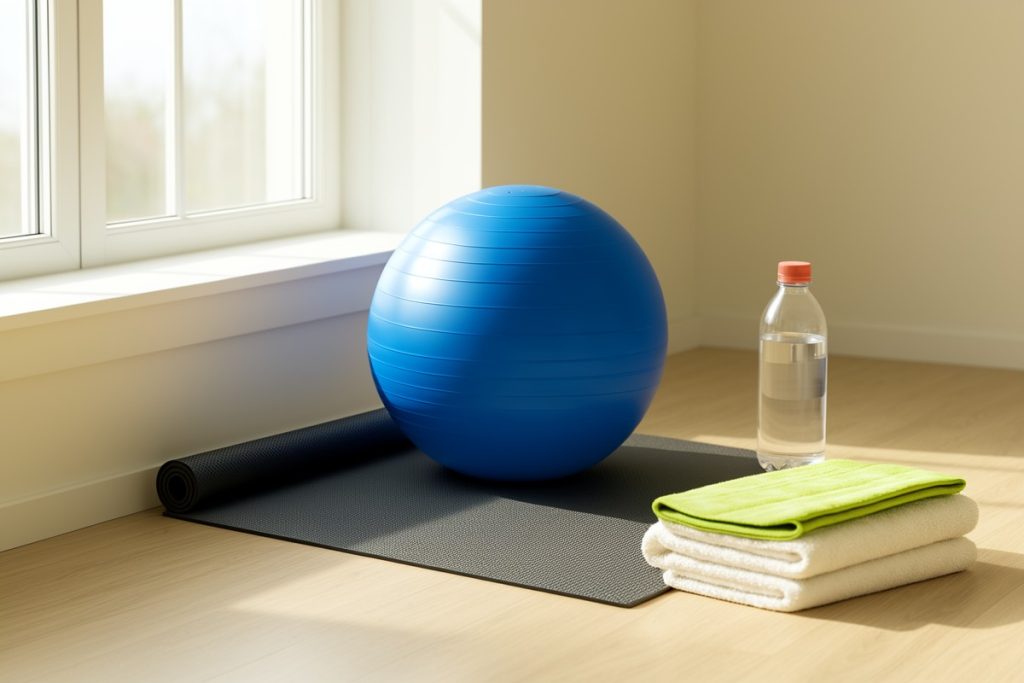
Safety starts with the room, not the equipment. Put the ball on a level, nonslip surface with enough open space around it. Move away from stairs, sharp furniture corners, loose rugs, pets, and anything you could hit if the ball rolled. Keep your desk close enough that you do not have to lean or stretch to reach essential items.
When seated, aim for a tall, relaxed position. Your feet should rest flat and fairly wide apart. Your knees should point in the same general direction as your toes, and your hips should be slightly higher than your knees. Keep your shoulders relaxed instead of pulling them back aggressively. If you must reach upward, twist repeatedly, or lean forward to see your work, the setup needs adjusting.
Do not inflate the ball until it feels rock hard simply to make it “more challenging.” A ball that is too firm or too small can make balance harder and encourage awkward positioning. Follow the current instructions for the specific model, and check it for damage before use.
Try this five-minute active-sitting reset
This routine is designed to break up desk time, not replace a complete workout. Use a timer so the ball does not become another reason to stay seated.
- Minute one: Stand up, walk around the room, and let your eyes look away from your near work.
- Minute two: Return to the ball and settle your feet wide. Take slow breaths while checking that your shoulders and jaw are relaxed.
- Minute three: Make small weight shifts from left to right without lifting your feet or bouncing.
- Minute four: Stand and perform a few comfortable sit-to-stands from your stable chair, or walk while drinking water.
- Minute five: Choose the position that feels most supported. If that is the regular chair, use it without guilt.
Repeat the reset every 30 to 60 minutes if your schedule allows. The important habit is alternating positions. A stability ball session that leaves you fatigued, sore, or distracted has lasted too long.
Ball or regular chair? Use the right tool
| Situation | Better choice | Reason |
|---|---|---|
| Long focused work block | Adjusted stable chair | Provides consistent support and makes it easier to maintain a comfortable position. |
| Short movement reminder | Stability ball | Encourages a position change and gentle balance adjustments. |
| Feeling tired or unsteady | Stable chair or standing break | Reduces the chance of losing balance or compensating with poor posture. |
| Walking or mobility break | Open floor space | Changing location usually creates more movement than staying seated on any surface. |
How to choose a stability ball for home use
Start with fit and your intended use rather than color or extra accessories. When seated, you should be able to place both feet securely on the floor without your knees rising noticeably above your hips. The ball should also fit beneath your desk without forcing your shoulders upward or your wrists into an awkward angle.
Inspect the product information for the recommended user height, diameter, maximum load, and inflation instructions. Those details vary by model and should come from the current manufacturer listing. If the ball is intended for several activities, decide whether your main goal is stretching, balance work, occasional active sitting, or another use. A product that fits one purpose may not be the best choice for every task.
For a home fitness setup, the Trideer Yoga Ball for Exercise, Pilates, Core & Balance Training is a reasonable option to investigate because its listing covers exercise, stretching, physical therapy, and active sitting. Check the current size and safety information before purchasing. It should be treated as a short-session tool, not proof that sitting on a ball all day is healthier than using a properly adjusted chair.
Know when to stop
Discomfort is useful feedback. Stop using the ball if you feel sharp pain, numbness, tingling, dizziness, unusual shortness of breath, or a loss of balance. Do not keep going because you think discomfort means the session is “working.” If you have an injury, balance limitation, significant joint pain, or a condition that affects movement, ask a qualified healthcare professional whether this setup is appropriate.
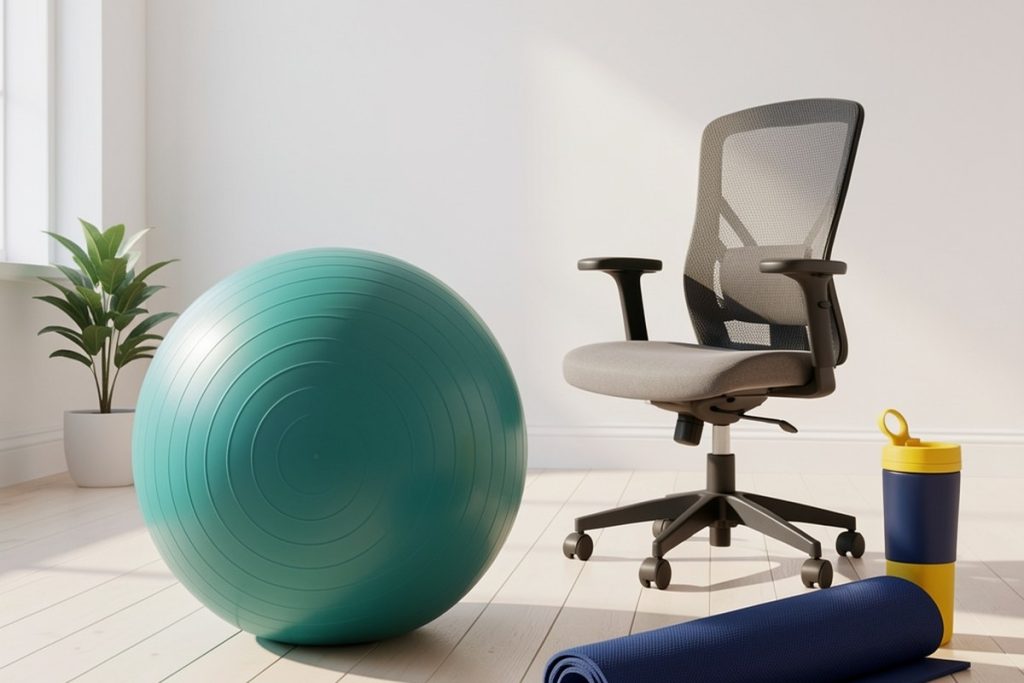
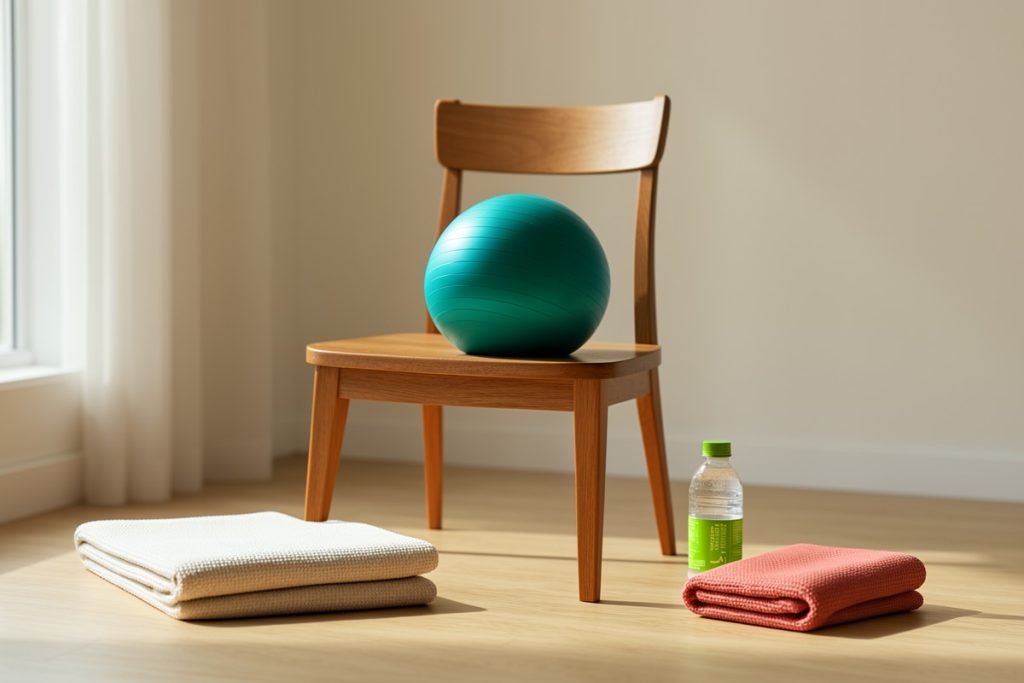
Even without a medical concern, beginners should keep the first sessions brief and supervised if possible. Avoid bouncing, rolling the ball beneath a desk, or trying to multitask while your balance is compromised. Keep a stable chair nearby so switching positions is easy.
Make movement the goal, not the equipment
A stability ball can be useful when it helps you interrupt long sitting and build a repeatable movement rhythm. It is less useful when it becomes another seat that keeps you planted for hours. Combine short ball sessions with standing, walking, regular workouts, and a desk setup that supports comfortable alignment.
The win is simple: change position before stiffness builds, use the ball only while you feel controlled, and choose support over ego. That approach turns a piece of home fitness equipment into a practical reminder to move throughout the day.
Last reviewed: 2026-10-12
Sources
- Adult Activity: An Overview — Centers for Disease Control and Prevention
- Computer Workstations eTool — Occupational Safety and Health Administration
- WHO Guidelines on Physical Activity and Sedentary Behaviour — World Health Organization