
Quick answer
A 10-minute exercise ball mobility routine can loosen the hips, ankles, spine, and shoulders after long periods of sitting without turning into a core workout. Use the ball for gentle seated shifts, upper-body rotation, ankle mobility, and supported stretching. Move slowly, keep the ball on a stable surface, and stop if you feel sharp pain, numbness, dizziness, or loss of balance.
Key takeaways
- Use the ball as a moving support, not as a replacement for every chair or workout.
- Start with gentle mobility drills and keep your feet planted for stability.
- A correct ball height lets your knees sit roughly level with, or slightly below, your hips.
- Take a short movement break every day rather than forcing one intense session.
Why an exercise ball can help with desk stiffness
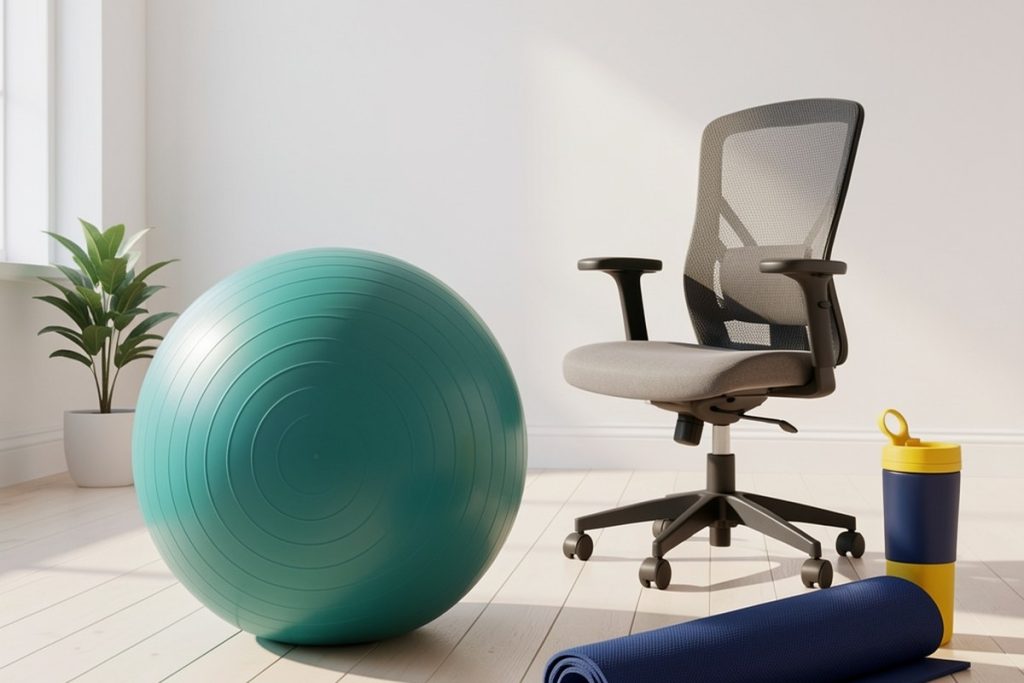
Hours at a desk often leave you feeling stuck in one position. Your hips stay bent, your ankles barely move, and your upper back may spend most of the day facing the same direction. An exercise ball gives you a rounded, unstable surface that encourages small position changes while you perform controlled mobility exercises.
That does not make the ball a magic posture tool, and it does not mean you should sit on it for an entire workday. The useful idea is simpler: use it for a brief movement reset. Ten minutes of easy motion can break up sedentary time and help you notice where you feel restricted before stiffness turns into a reason to skip your next workout.
This routine is designed for general mobility, not strength training, rehabilitation, or pain treatment. Keep the effort light enough that you can breathe normally and speak in complete sentences.
Check your setup before you start
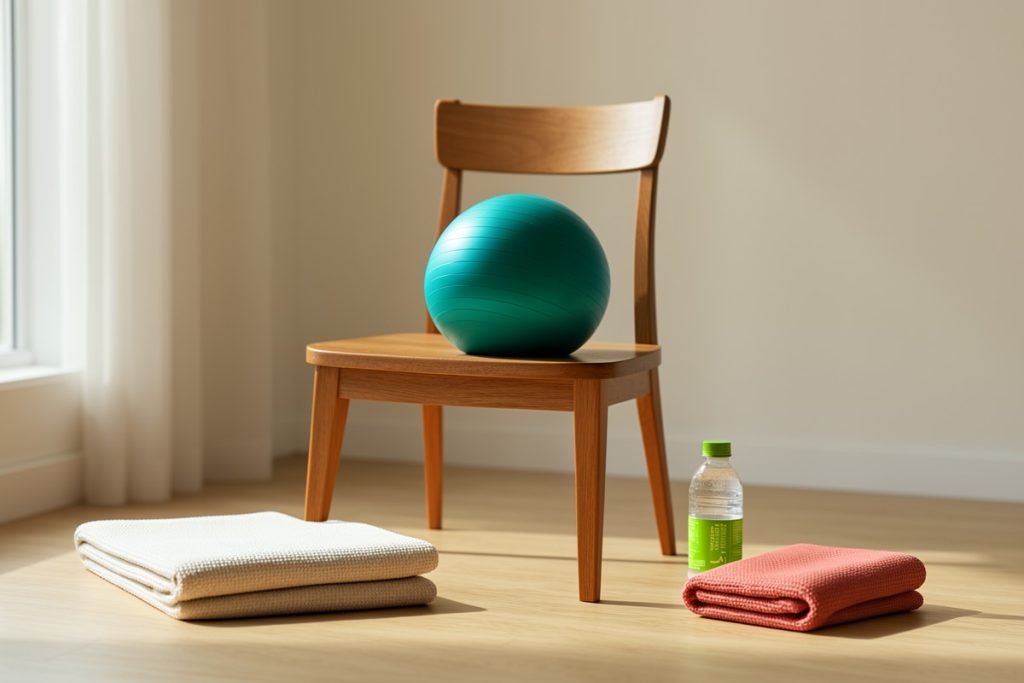
Choose a clear area away from sharp furniture, loose rugs, and hard obstacles. Place the ball on a level, nonslip surface. Wear shoes or exercise barefoot only if you can keep steady contact with the floor. Your feet should be about hip-width apart, with most of each foot touching the ground.
Ball size matters. When seated, aim for knees that are approximately level with your hips or a little lower. If your knees rise high toward your chest, the ball may be too small, underinflated, or unsuitable for your proportions. If your feet cannot stay planted, do not use the ball for seated mobility until you have a safer setup.
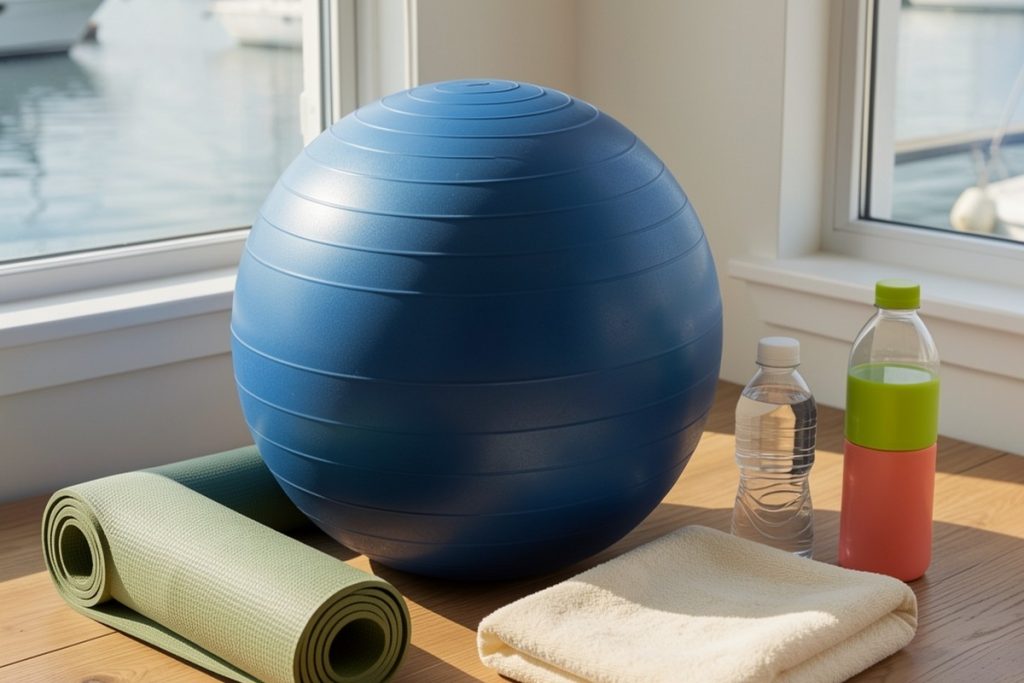
The Amazon Basics Anti-Burst Exercise Ball with Pump, 23-26" Diameter may suit someone who needs a compact ball for floor-based mobility or seated drills, but the listed diameter range is not a universal fit. Check your body proportions, available space, and the manufacturer’s setup guidance before buying.
The 10-minute mobility routine
Move through the sequence in order. The ball should support comfortable motion, not force a deeper stretch. If balancing feels difficult, place the ball against a wall or skip any drill that requires you to sit on it.
| Time | Movement | How to do it | Useful sensation |
|---|---|---|---|
| 1 minute | Grounded breathing | Sit tall with both feet planted. Inhale through your nose and exhale slowly while relaxing your shoulders. | Less tension in the neck and jaw |
| 2 minutes | Seated hip shifts | Make small side-to-side shifts, keeping your chest relaxed and your feet connected to the floor. | Gentle movement around the hips and waist |
| 2 minutes | Ankle pumps and circles | Keep one heel down while lifting the toes, then reverse. Add slow circles in both directions. | Warmth and range of motion around the ankles |
| 2 minutes | Seated upper-back rotations | Cross your arms over your chest and rotate slightly right and left without forcing the neck to lead. | Easy movement between the shoulder blades |
| 2 minutes | Supported hamstring reach | Extend one leg with the heel down, keep your back long, and hinge forward only a little. Switch sides. | A mild stretch behind the thigh |
| 1 minute | Standing reset | Stand beside the ball, reach your arms overhead, then take several relaxed breaths while walking around. | A refreshed, less fixed feeling |
How to perform each move without overdoing it
For seated hip shifts, imagine your rib cage floating above your pelvis. The motion should be small enough that you never feel as if the ball will roll away. Do not collapse into one side or bounce. Slow, even movement is more useful here than a large range.
During upper-back rotations, keep your hips facing forward and let your chest turn only as far as it comfortably can. Avoid pulling your head around to create extra range. Your neck should follow the torso, not whip ahead of it.
For the hamstring reach, keep the extended knee softly bent if straightening it creates strain. A stretch should feel mild and manageable. You do not need to reach your toes, and you should not round aggressively through your lower back to get closer to the floor.
A practical checklist for daily use
- Clear the floor and check that the ball is fully inflated according to its instructions.
- Test three seated breaths before starting any movement.
- Keep both feet planted during seated drills.
- Use a smaller range of motion if you feel unstable.
- Stop for sharp pain, tingling, numbness, dizziness, or unusual shortness of breath.
- Walk for a few minutes afterward instead of immediately returning to the same seated position.
How often should you do this routine?
Use the routine once during a workday, after travel, or before a low-impact workout. If ten minutes feels like too much, perform only the breathing, hip shifts, ankle work, and standing reset. Consistency matters more than completing the full sequence every time.
For broader health benefits, treat this routine as a supplement to regular activity rather than your entire fitness plan. The U.S. physical activity guidelines recommend a combination of aerobic activity and muscle-strengthening activity across the week. Mobility work can help you move more comfortably, but it does not replace progressive strength training or cardiovascular exercise.
After one or two weeks, assess the result honestly. Are you moving more easily when you stand up? Can you rotate without forcing the motion? If yes, keep the routine. If a drill repeatedly causes discomfort, remove it and consider professional guidance instead of trying to push through it.
When to choose a different approach
An exercise ball is not the best tool for everyone. Skip seated ball work if you cannot keep your feet grounded, have a recent injury or surgery, or have a condition that affects balance unless a qualified clinician has cleared the activity. A stable chair, a wall, or floor-based mobility may be a better starting point.
Persistent pain also deserves more than a home routine. Contact a healthcare professional if symptoms keep returning, worsen with ordinary movement, or come with weakness, numbness, swelling, or loss of coordination. The goal is to build a repeatable movement habit—not to prove that you can tolerate discomfort.
Last reviewed: 2026-10-26
Sources
- Physical Activity Guidelines for Americans, 2nd edition — U.S. Department of Health and Human Services.
- Adult Activity: An Overview — Centers for Disease Control and Prevention.