
Quick answer
An exercise ball can work as a short-duration desk seat, but it should not replace a supportive, adjustable chair for the entire workday. Set it on a stable floor, adjust your desk so your shoulders stay relaxed, begin with 10 to 15 minutes, and alternate with standing and regular seated work. Stop if you develop pain, numbness, dizziness, or unusual fatigue.
Key takeaways
- Use an exercise ball as a brief seating option, not an all-day chair.
- Keep your feet flat, knees near hip height, and shoulders relaxed.
- Start with short intervals and increase only when your body feels comfortable.
- A ball may encourage small movements, but it does not replace planned exercise.
By Coach Amy Lin, Sustainable Fitness Coach
Why use an exercise ball at a desk?
Sitting on a stability ball changes the task from simply resting on a chair to lightly managing your balance. You may shift position more often, move your ankles, or gently adjust your trunk while working. For some people, that makes a long desk session feel less rigid.
However, “more active” does not automatically mean “better.” A ball has no backrest, armrests, or reliable lumbar support. If you have to brace constantly to stay upright, your neck, back, or hips may become tired. The goal is not to balance impressively. The goal is to find a comfortable position that lets you work without creating new aches.
The Occupational Safety and Health Administration notes that there is no single correct workstation posture for everyone. It recommends general design goals such as relaxed shoulders, a head and neck aligned with the torso, supported elbows, and feet flat on the floor. Those principles still matter when your seat is a ball.
Set up the ball before you adjust your desk
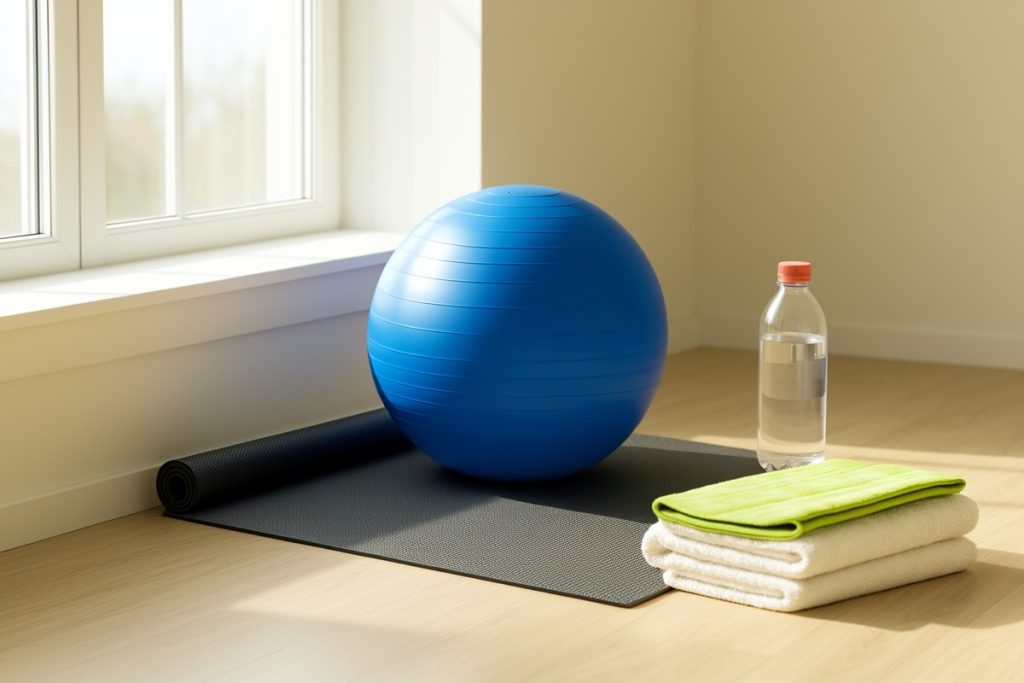
Start with the ball on a clear, hard, non-slip surface. Keep it away from sharp furniture edges, heat sources, and clutter that could interfere if it rolls. Inflate it according to the manufacturer’s instructions rather than guessing. A softer ball may feel unstable, while an overinflated ball can make it difficult to keep your feet grounded.
Sit near the center of the ball with both feet about hip-width apart. Your knees should be close to a right angle, or slightly lower than your hips, without your thighs pressing sharply into the edge of the desk. Your feet should remain flat rather than balancing on your toes.
Next, check the work surface. Your elbows should stay close to your sides, with your forearms roughly level as you use your keyboard or other desk tools. Keep your shoulders away from your ears. If you must shrug, lean forward, or reach excessively, change the desk height or use your regular chair.
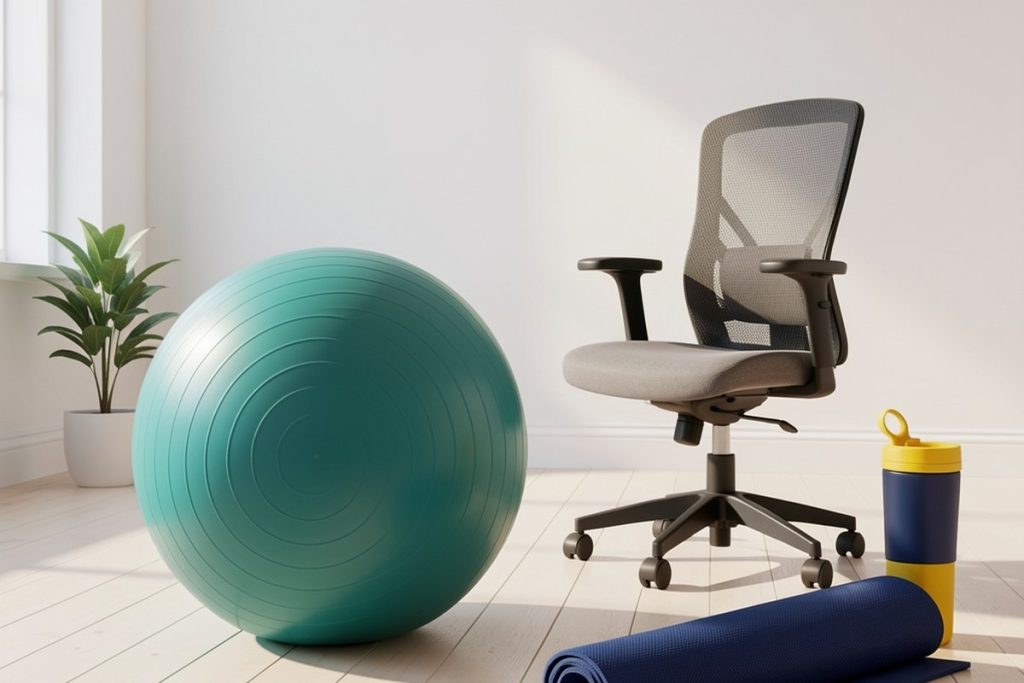
Exercise ball versus regular office chair
| Consideration | Exercise ball | Adjustable office chair |
|---|---|---|
| Back support | Minimal; you must maintain your own position | Usually includes back support and lumbar adjustment |
| Movement | Encourages small shifts and balance adjustments | Allows movement through seat tilt, wheels, and position changes |
| Best use | Short, intentional intervals | Longer work sessions when properly adjusted |
| Main risk | Fatigue, rolling, or loss of balance | Poor adjustment or staying still too long |
This is not a competition between the two seats. A supportive chair is usually the better default for focused work, especially when you need to sit for extended periods. The ball can be one option in a rotation that also includes standing, walking, and changing tasks.
Use a gradual desk-chair transition plan
Do not begin by sitting on the ball for several hours. Your first session can be 10 minutes during an easy task, followed by at least 20 to 30 minutes in your normal chair or standing position. Pay attention to how you feel later that day, not only while you are seated.
If your body feels normal, try one or two short sessions the next day. After several comfortable sessions, you can add a few minutes at a time. There is no benefit to forcing a longer duration. Sustainable fitness is built through repeatable habits, not through tolerating discomfort.
- Week 1: One or two 10- to 15-minute sessions per day.
- Week 2: Two or three sessions of up to 20 minutes if comfortable.
- After that: Keep the ball as an optional change of position rather than your only seat.
Use a timer if you tend to lose track of time. A timer turns the ball into a planned movement break instead of an unstructured endurance test.
Pair active sitting with real movement breaks
An exercise ball should not be treated as a replacement for walking, strength training, or cardiovascular exercise. The U.S. Department of Health and Human Services recommends that adults get 150 to 300 minutes of moderate-intensity aerobic activity each week, plus muscle-strengthening activity on at least two days. Sitting on a ball does not automatically meet those recommendations.
Instead, connect your desk setup to simple breaks. Every 30 to 60 minutes, stand up and walk to refill your water, perform a few gentle shoulder rolls, or take a brief lap around the room. For a longer break, do a few controlled bodyweight movements such as sit-to-stands or wall push-ups if they are appropriate for your ability.
Think of the ball as a reminder to change position, not as a way to exercise secretly while working. If your concentration drops because you are constantly correcting your balance, the setup is working against you.
Know when to stop using it
Stop the session if you notice back pain, sharp hip discomfort, numbness, tingling, dizziness, headache, or unusual fatigue. A minor adjustment may solve a positioning issue, but persistent symptoms deserve attention rather than more practice.
Use extra caution if you have a recent injury, balance concerns, a condition affecting sensation or coordination, or if you are pregnant or considering the ball for rehabilitation. Ask a qualified healthcare professional or physical therapist whether this type of seating is appropriate for you.
Also check the physical condition of the ball regularly. Look for cracks, deep scratches, leaks, or a valve that is not secure. Keep pets, children, and rolling obstacles away during use, and avoid treating the ball as a substitute for a purpose-built office chair when stability is a concern.
What to look for when choosing one
Choose the correct size for your height and desk rather than buying based only on color or advertised versatility. The ball should let you place both feet firmly on the floor while keeping your working surface at a comfortable height. Measure the space under your desk before ordering, and consider whether you have room to store a regular chair nearby.
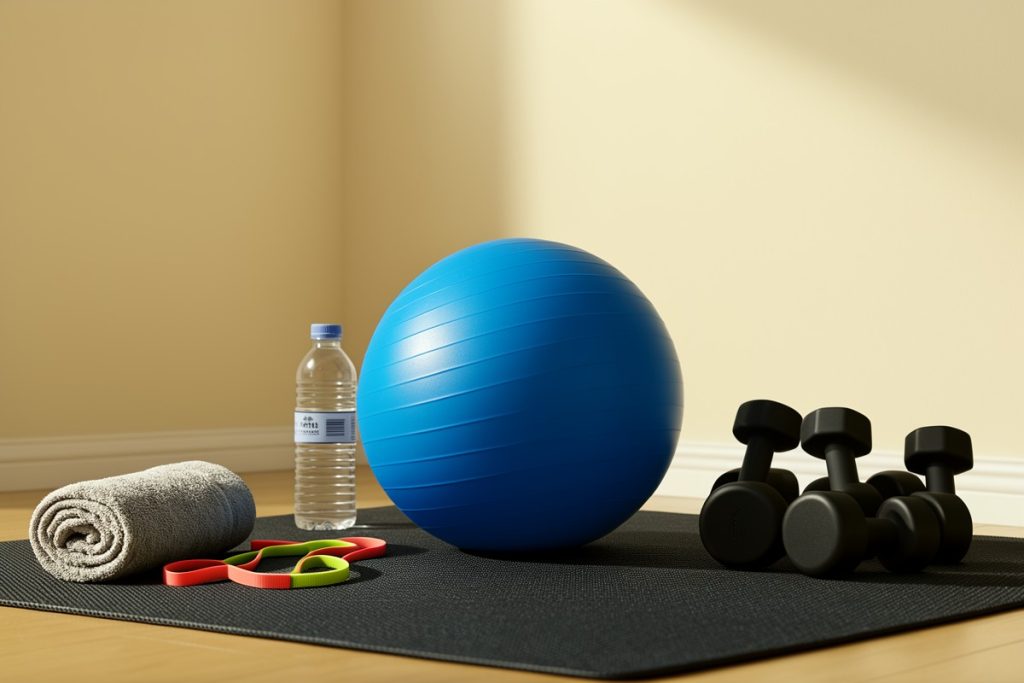
The Exercise Ball – Yoga Ball for Pilates & Fitness is one example of a ball marketed for home, office-chair, balance, and rehabilitation-related use, and its listing includes a pump. Those features may be convenient, but they do not guarantee the right fit, stability, or suitability for your body. Confirm the size, weight guidance, care instructions, and return terms before using it as a desk seat.
A simple desk-ball checklist
- The floor is clear, level, and not slippery.
- The ball is properly inflated and free from visible damage.
- Both feet stay flat while you sit.
- Your shoulders remain relaxed and your elbows stay close to your body.
- You can switch easily to a regular chair or standing position.
- You have a timer or natural stopping point for each session.
Used this way, an exercise ball can be a practical variation for people who dislike staying in one position. Keep the sessions short, prioritize a safe workstation setup, and let comfort—not novelty—decide whether it belongs in your routine.
Last reviewed: 2026-08-21
Sources
- Computer Workstations eTool — Occupational Safety and Health Administration.
- Physical Activity Guidelines for Americans, 2nd edition — U.S. Department of Health and Human Services.