
Yes—walking with a weighted vest is one of the most effective, low-impact ways to burn more calories and improve endurance without the joint stress of running. For most healthy adults, adding an external load equal to 5 to 10 percent of body weight can raise heart rate, increase energy expenditure, and engage the core during an otherwise ordinary walk. If you are looking for a sustainable home fitness strategy that respects your knees and your schedule, weighted vest walking deserves a spot in your routine.
I’m Coach Amy Lin, a sustainable fitness coach, and I prioritize methods you can repeat for years. Running works, but not everyone can tolerate the impact. Treadmill sprints are efficient, yet they require recovery. Walking, on the other hand, is the ultimate sustainable activity—until your body adapts and fat loss stalls. That is where a weighted vest becomes a long-term tool rather than a gimmick.
Why Your Daily Walk Stops Working
The human body is an adaptation machine. A 30-minute walk that once left you slightly breathless eventually becomes a casual stroll. Without progressive overload—the gradual increase of stress placed on the body—metabolic demand drops and plateaus follow. You are still moving, which benefits mental health and circulation, but the fat-loss signal weakens.
Many people respond by adding speed or distance. Some turn to jogging, which can trigger knee, hip, or ankle issues if connective tissue is not prepared. Others simply quit. There is a middle path: keep the pace comfortable and the duration reasonable, but add external resistance. A weighted vest does exactly that without changing the mechanics of walking into something unrecognizable.
What Changes When You Add a Weighted Vest
Research consistently shows that loading the torso with additional weight increases oxygen consumption and calorie burn during walking. Because the weight is distributed across your upper body and held close to your center of mass, the metabolic cost rises without the pounding associated with running. You will likely notice your heart rate climb into a moderate conditioning zone, your posture muscles engage to stay upright, and your breathing deepen.
Unlike holding dumbbells or ankle weights—which can alter gait and strain the shoulders or hips—a well-designed vest keeps the load stable. The result is a scalable workout: start with a light load, add weight incrementally, and continue challenging your cardiovascular system without sacrificing joint health.
Weighted Vest Walking vs. Regular Walking
It helps to see the differences side by side. Both activities are valuable, but the weighted version introduces progression where standard walking offers none.
| Factor | Regular Walking | Weighted Vest Walking |
|---|---|---|
| Calorie burn | Baseline | Moderate increase |
| Joint impact | Very low | Low to moderate |
| Core engagement | Minimal | Moderate to high |
| Progression method | Speed or distance | Adjustable load |
| Best for | Recovery and daily movement | Fat loss and strength endurance |
The takeaway is not to abandon regular walks. Use them for recovery and stress relief. Use weighted vest walks as your focused, progressive training sessions two to three times per week.
How to Start Safely at Home
Safety comes first. Adding load to movement is powerful, but only when you respect the process. Follow this checklist before your first session:
- Check with your physician if you have spine, hip, or cardiovascular concerns.
- Start at 5% of your body weight or less, even if the vest can hold more.
- Tighten all straps so the vest sits high on your torso and does not bounce.
- Choose flat terrain for the first two weeks; avoid steep hills initially.
- Limit your first walk to 15–20 minutes and monitor your posture.
- Increase duration by 5 minutes each week before adding more weight.
- Rest between weighted days; do not wear the vest for back-to-back sessions.
Pay attention to your form. If you find yourself leaning forward or taking shorter, choppy steps, the weight is too heavy or the fit is too loose. You should walk as naturally as possible; the only difference should be the extra demand on your lungs and legs.
Choosing a Vest That Fits Your Goals
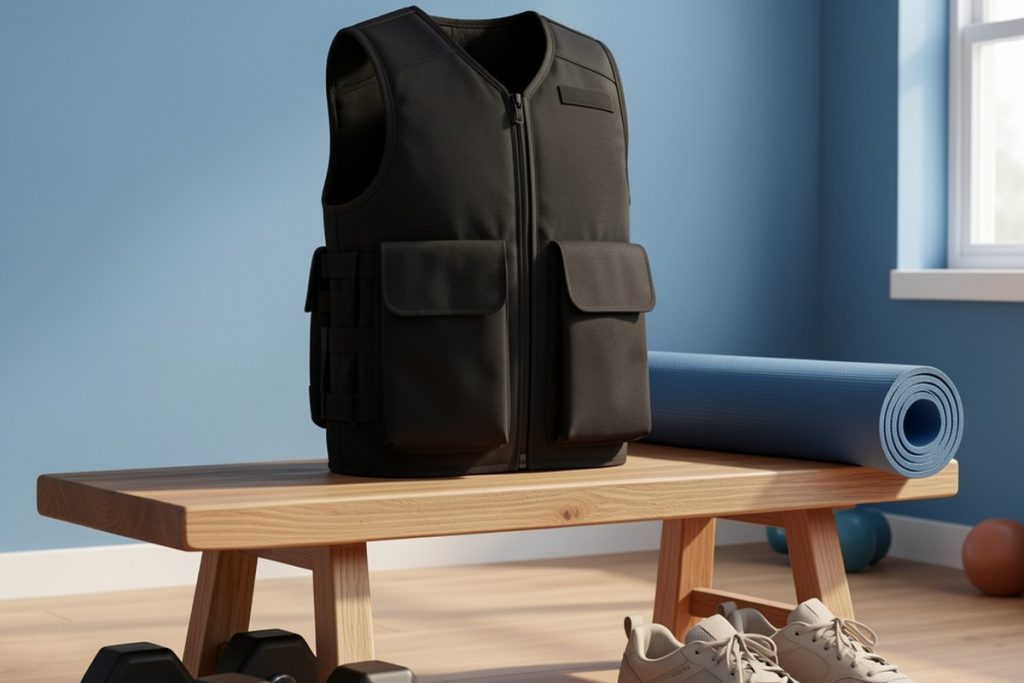
Not all weighted vests are built for walking. Some are designed for high-intensity CrossFit with minimal padding and awkward weight distribution. For sustainable home use, look for an adjustable model that lets you start light and progress gradually. Secure straps, breathable fabric, and a snug fit around the shoulders and chest matter more than maximum capacity.
One option that fits these criteria is the Adjustable Weighted Vest, available in 20-, 30-, and 40-pound configurations with reflective striping for early-morning or evening walks. The adjustability matters because it allows you to add load in small increments as your fitness improves, aligning with the principle of gradual progression.
Reflective details are worth noting if you walk outdoors near traffic. A vest that can transition from walking to light strength-training movements—such as squats or lunges—also adds value to a compact home gym setup.
Common Mistakes to Avoid
Even a simple tool can cause problems when misused. Skip these pitfalls:
- Going too heavy too soon. A 40-pound vest sounds impressive, but if it compromises your gait, you increase injury risk and reduce the metabolic benefit.
- Wearing it for every workout. Your body needs unloaded movement for recovery. Alternate weighted and unweighted sessions.
- Ignoring upper-body tightness. The extra load can round the shoulders forward. Counter it with door-frame stretches or band pull-aparts.
- Using it like a backpack. If the weight sits low on your torso or swings, it strains the lower back. Adjust until it feels like a firm hug around your chest.
Making It Part of Your Long-Term Routine
Sustainable fitness is about accumulating good weeks, not crushing a single session. Aim to incorporate weighted vest walks two to three times weekly, keeping each session between 20 and 45 minutes depending on your experience level. Pair these walks with two days of unweighted walking, and leave at least one day for complete rest or gentle mobility work.
Track your sessions by noting the weight used, the distance covered, and your average heart rate if you wear a monitor. When your heart rate at a given weight and pace starts to drop, you will know it is time to add a pound or two—or simply pick up the pace slightly. This data keeps you honest and prevents the randomness that stalls progress.
Walking with a weighted vest bridges the gap between low-impact daily movement and structured fat-loss training. It respects your joints, requires minimal equipment, and scales with your fitness level for years. Start light, progress slowly, and treat the vest as a long-term investment in a stronger, healthier body—not a quick fix.
Last reviewed: 2026-08-05